







Antique Biscuit Porcelain
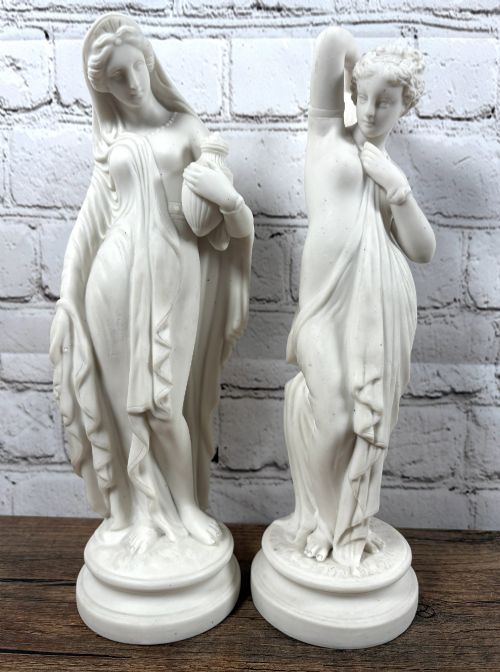
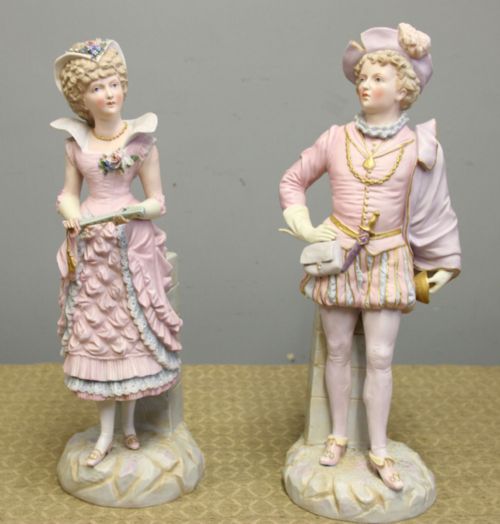
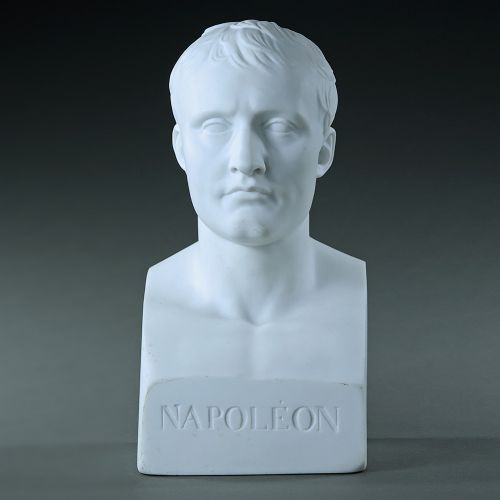
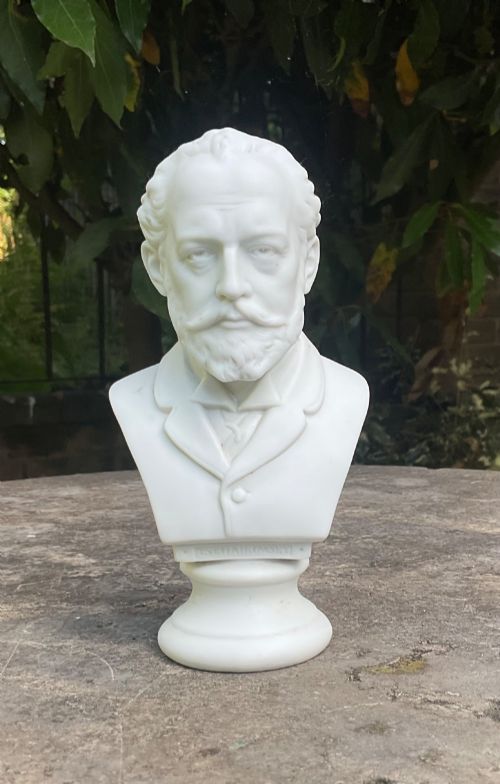
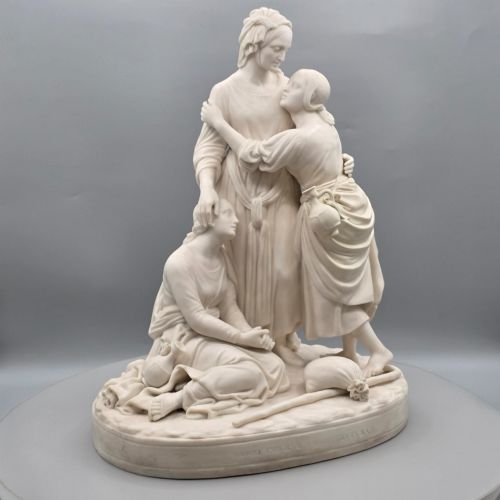
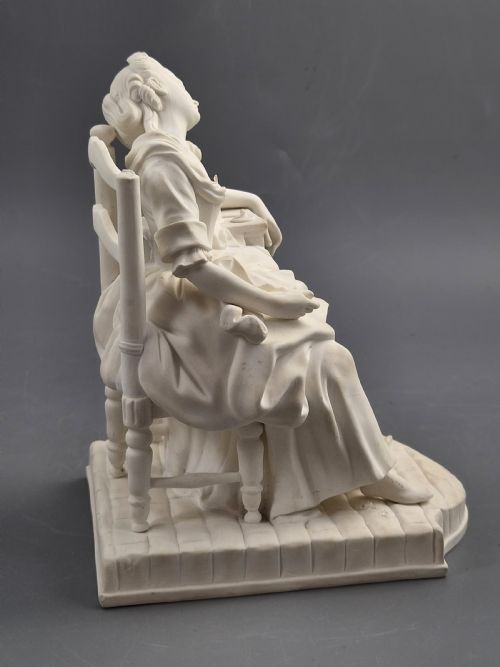
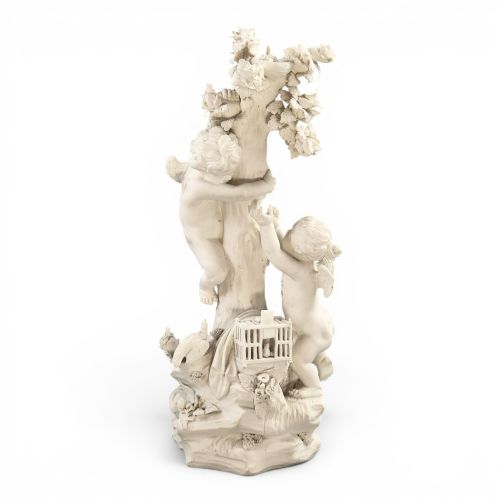
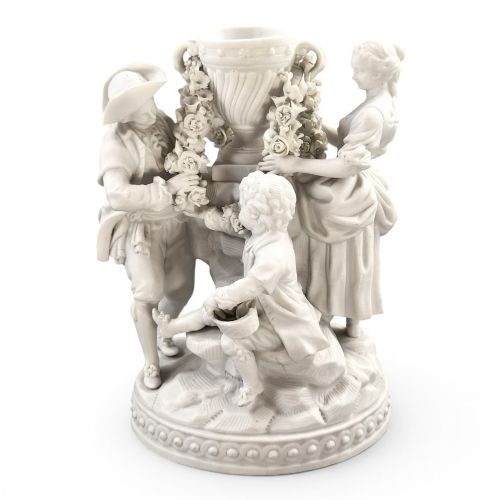
These antique biscuit porcelain pieces, including unglazed figures, busts and barrels from the Georgian to the Edwardian eras, offer a tactile matt surface that captures classical detail.
Antique Biscuit Porcelain
When you search for antique biscuit porcelain, you encounter unglazed ceramic objects that range from delicate Georgian and Victorian figurative groups to utilitarian biscuit barrels designed for the dining table. The term covers both fine white biscuit wares such as Parian and French bisque, alongside enamel-decorated or coloured pieces from European and Asian traditions.
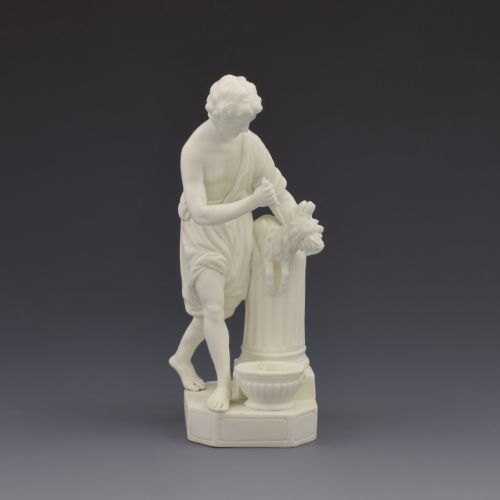
You are most likely to meet nineteenth-century figures and sculptural groups on this page, reflecting the immense popularity of biscuit porcelain during the Victorian period. These pieces frequently draw upon neoclassical motifs, French Rococo revival designs, and historical portraiture modelled after famous sculptors.
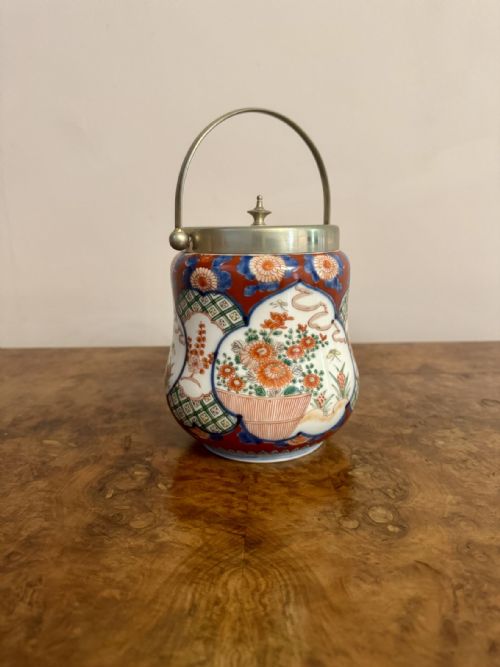
Beyond purely decorative sculptures, the selections include functional lidded jars for storing dry biscuits, often fitted with silver plate mounts. These functional items combine ceramic bodies with metalwork, bridging the gap between parlour display and household utility.
How they were made
Makers produced biscuit porcelain by firing the ceramic body without a surface glaze, leaving a porous, marble-like finish that highlights fine modelling. Parian ware, a specific development of the nineteenth century, utilised a lower-firing porcelain body containing a high proportion of feldspar to imitate carved marble.
Finer figures required multiple mould parts to capture complex drapery, facial expressions, and floral garlands before being carefully hand-finished. Enamelled and gilt-bronze accents were occasionally added to the unglazed bodies, combining matte porcelain surfaces with metallic mounts and hand-painted details.
Antique Biscuit Porcelain Retail Price Guide 2026
Typical asking prices for biscuit porcelain among the pieces listed under this phrase on Sellingantiques today, from the lower quarter to the upper quarter. They describe what is for sale here now, not the wider market.
Listings feature unglazed figures, busts, and lidded jars spanning the eighteenth century through to the Edwardian era.
What varies in quality
The reputation of the maker and the scale of the piece also dictate standing. Monumental groupings, large-scale studies after known sculptors, and marked works from notable European factories command greater attention than smaller, unmarked utilitarian vessels.
Minton·Royal Dux·Vion et Baury·Ernst Bohne and Sohne·Copeland
The Antique Biscuit Porcelain Glossary
- Biscuit porcelain
- Unglazed ceramic fired at a high temperature, leaving a matte, porous surface resembling marble. It is also frequently referred to as bisque.
- Parian ware
- A type of fine white Parian porcelain developed in the nineteenth century to imitate carved marble. It contains high feldspar content, giving it a distinctive vitreous texture.
- Bisque
- An alternative term for biscuit porcelain, commonly used to describe unglazed French and German figurative sculptures from the nineteenth century. The material absorbs light differently than glazed ceramics.
- Biscuit barrel
- A ceramic or glass lidded jar used for storing biscuits or dry goods on the dining table. They frequently feature silver-plate collars and swing handles.
- Neoclassical
- A style spanning the eighteenth and nineteenth centuries that draws inspiration from classical Greek and Roman art. It is characterised by restrained ornamentation, classical drapery, and mythological subjects.
Antique Biscuit Porcelain: Frequently Asked Questions
What is the difference between biscuit and bisque porcelain?
There is no material difference between the two terms. Biscuit is the traditional English description, while bisque is the French equivalent frequently applied to nineteenth-century decorative figures.
Both terms describe porcelain that has been fired without a final surface glaze. This leaves a matte texture that absorbs light and shows sculptural detail with great clarity.
How do I clean antique biscuit porcelain?
Because the surface is unglazed and porous, biscuit porcelain absorbs dirt and moisture easily. You should avoid using water or chemical cleaners that can stain the ceramic body.
Instead, use a soft, dry artist's brush or a dry microfibre cloth to gently remove dust from the crevices. For stubborn marks, a specialist dry cleaning sponge can sometimes be used with extreme caution.
What was a biscuit barrel used for?
A biscuit barrel served as a lidded container kept on the sideboard or dining table to store dry sweet biscuits during Victorian and Edwardian tea services. The fitted lid helped keep the contents fresh.
These jars were made from ceramic, glass, or porcelain and often fitted with metal mounts. The silver-plated swing handle made them easy to pass around the table.
How can I tell Parian ware from standard porcelain?
Parian ware has a heavier, denser weight and a creamy, translucent quality that closely mimics carved marble rather than standard shiny porcelain. It lacks the glossy glass-like sheen found on glazed ceramics.
When you examine the surface closely, it feels cooler and slightly more granular to the touch. This material became popular during the Victorian era for producing reduced-scale copies of classical sculptures.