





Antique Birch Drawers
Antique birch drawers bring warm figure and clean proportion into a room, offering practical storage through handsome nineteenth-century timber.
Antique Birch Drawers
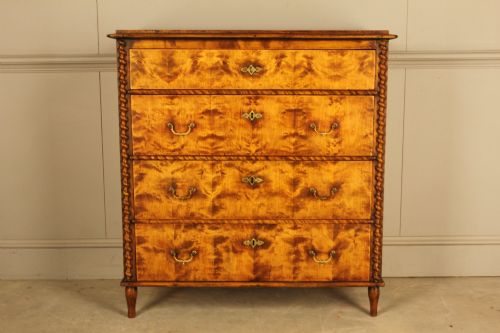
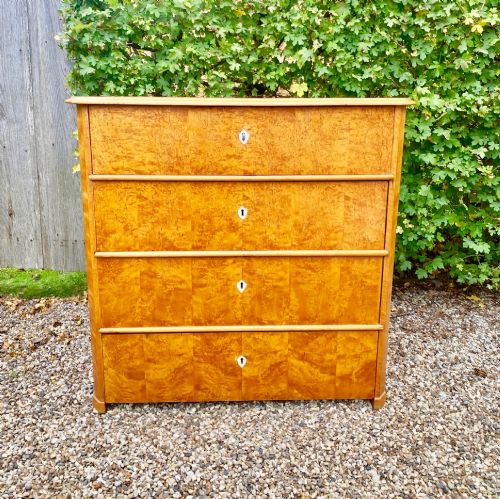
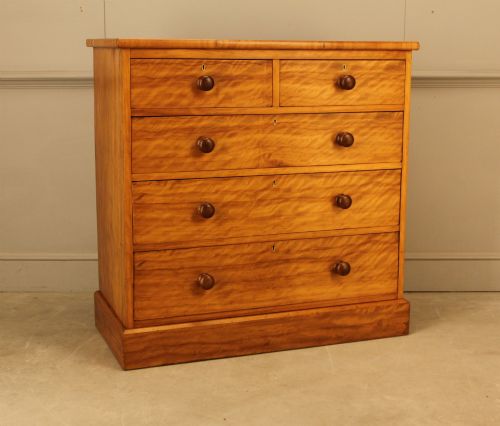
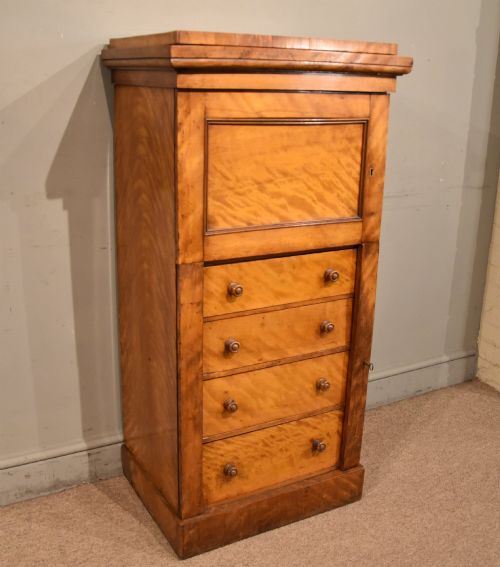
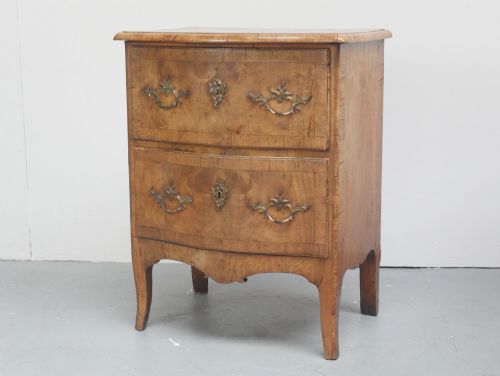
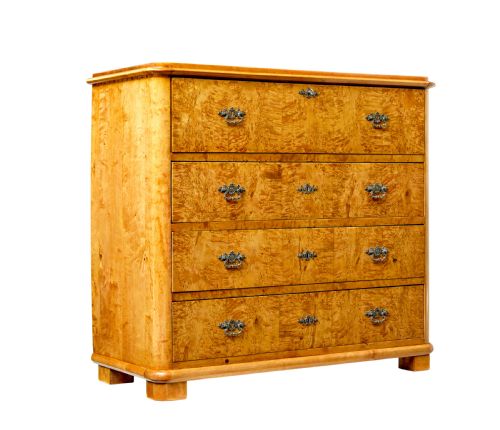
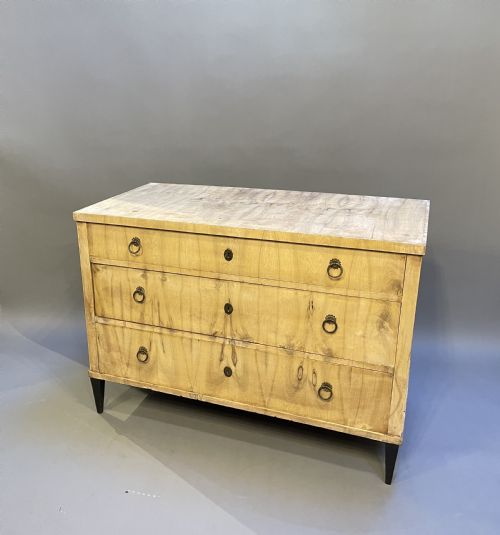
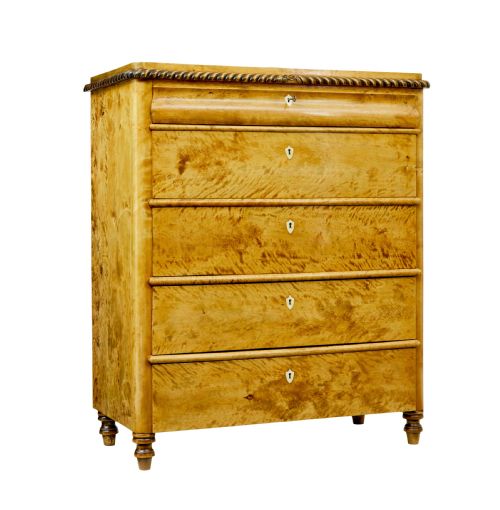
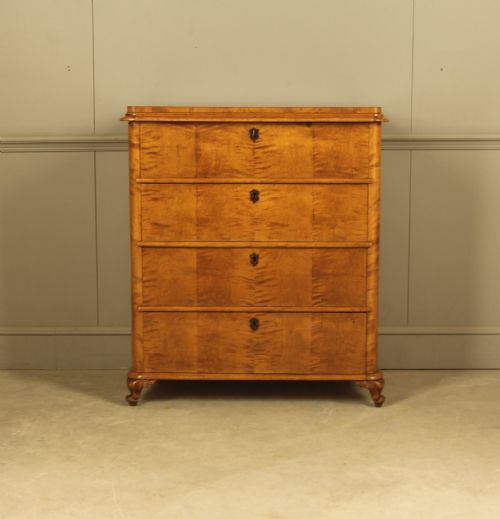
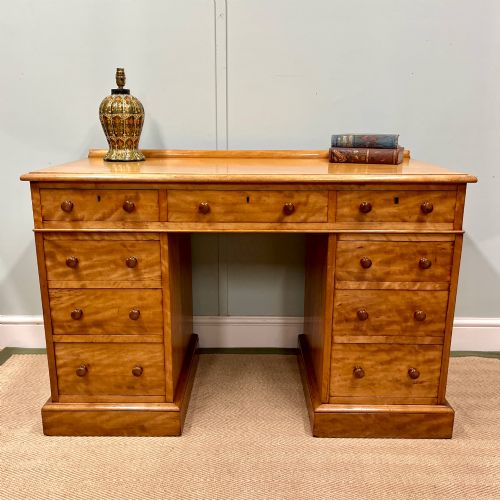
When searching for antique birch drawers, a buyer encounters chests of drawers, secretaire chests, and smaller bedside or writing tables originating from Victorian Britain and Scandinavian workshops. The most frequent pieces on this page are nineteenth-century Swedish chests displaying striking grain figures, alongside British Victorian items in satin birch.
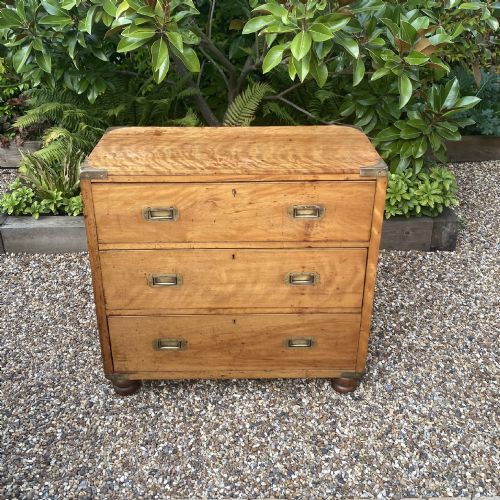
Forms range from tall upright Wellington chests and campaign pieces fitted with brass hardware to restrained Biedermeier commodes and Empire Revival designs. Makers and workshops utilised the blonde and amber tones of the wood to brighten interiors, often pairing the primary timber with contrasting details in ebonised wood, bone, or leather.
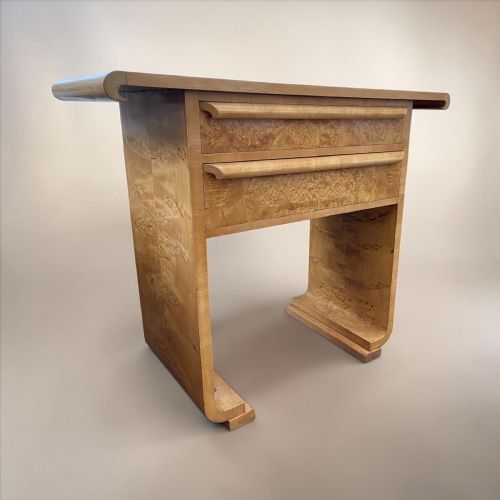
The selection encompasses both utilitarian household furniture and finer decorative items such as sewing tables and collectors' cabinets. Regional traits emerge clearly, distinguishing the substantial proportions of British Victorian production from the pale, luminous surfaces favoured in Scandinavian country and Biedermeier pieces.
Materials and construction
Cabinetmakers selected birch, satin birch, burr birch, flame birch, and tiger birch for their distinct figuring, frequently applying veneers over secondary woods such as pine to showcase intricate grain patterns. Surfaces were often polished to a smooth finish that accentuated the natural chatoyancy of the timber without obscuring the organic movement within the wood.
Hardware played an essential structural and decorative role, with brass handles, escutcheons, and campaign mounts fastened securely to drawer fronts and corners. Secondary materials like leather inserts on writing surfaces, bone inlay, and ebonised mouldings added functional contrast and visual depth to the finished items.
Antique Birch Drawers Retail Price Guide 2026
Typical asking prices for birch drawers among the pieces listed under this phrase on Sellingantiques today, from the lower quarter to the upper quarter. They describe what is for sale here now, not the wider market.
Some sewing tables still contain their original fitted compartments and contents.
Judging quality and execution
Quality rests upon the selection of the birch veneer and the precision with which the grain matches across multiple drawers. Pieces utilising exceptionally figured flame, burr, or tiger birch sit at the higher end of the scale, requiring skilled hand-veneering to achieve symmetrical patterns.
Construction integrity separates standard utility items from masterwork pieces, visible in the tightness of the drawer dovetails and the smooth operation of secondary compartments. The integration of auxiliary materials like brass hardware and bone details also defines the level of craftsmanship invested in the individual chest.
Fortnum and Mason·Heal and Son·J Shoolbred·Gemla Fabrikers·Howard and Sons·Holland and Sons
The Antique Birch Drawers Glossary
- Satin birch
- A dense, light-coloured wood with a natural sheen resembling satin, frequently utilised for high-status Victorian and Edwardian furniture.
- Flame birch
- Timber veneer characterised by a distinctive undulating grain pattern that resembles flickering flames across the surface of the drawer front.
- Biedermeier
- A Central European style dating from the nineteenth century focusing on clean lines, utilitarian comfort, and minimal ornamentation.
- Wellington chest
- A tall, narrow chest of drawers secured by a hinged vertical locking bar on one side that fastens with a key.
- Campaign chest
- Portable furniture built in sections with recessed brass handles and corner brackets, designed for easy dismantling and transport during military service.
Antique Birch Drawers: Frequently Asked Questions
How do I clean antique birch drawers?
Dust surfaces regularly with a soft, dry cloth to prevent grit accumulation on the polished timber. Avoid modern silicone sprays or harsh chemical cleaners that can damage historic veneer and finishes.
Apply a microcrystalline wax sparingly once or twice a year if the wood appears dry, buffing gently to maintain the natural lustre. Keep the furniture away from direct heat sources and strong sunlight to prevent the birch veneer from warping or fading.
Where should I place a birch chest?
These chests work well in bedrooms, hallways, and living spaces where their warm blonde tones can brighten dark corners. Ensure the chosen spot maintains a stable room temperature with moderate humidity to protect the nineteenth-century construction.
Allow sufficient clearance around drawers and drop-front secretaires so they operate without obstruction. Pairing the piece with neutral walls allows the natural grain patterns of the birch to remain the visual focal point.
Are these pieces suitable for daily use?
Most chests and tables remain entirely functional for everyday storage and writing tasks when handled with reasonable care. The substantial build quality from the nineteenth century ensures drawers slide properly and frames stay rigid under normal household loads.
Take care not to overload deep drawers and avoid dragging items across unpadded wooden surfaces. Regular use helps keep the timber conditioned, provided the indoor climate remains stable.
How can I tell Swedish pieces apart?
Swedish pieces often feature pale flame, burr, or tiger birch veneers combined with restrained neoclassical proportions or Biedermeier curves. Cabinetmakers in Scandinavia favoured light, luminous surfaces designed to maximise natural daylight in northern interiors.
British equivalents tend to utilise satin birch with slightly heavier carcase construction and distinct Victorian moulding profiles. Examining the interior secondary woods, such as pine or oak, frequently provides further clues regarding regional origin.