




Antique Bible Rest
An antique bible rest is a sturdy support for sacred texts, prized by collectors for bringing historic craftsmanship and scholarly character to any room.
Antique Bible Rest
When you search for an antique bible rest, you are looking at functional book supports and reading desks designed to hold heavy religious volumes or study books. These pieces serve both domestic and ecclesiastical purposes, holding open large texts for reading or display.
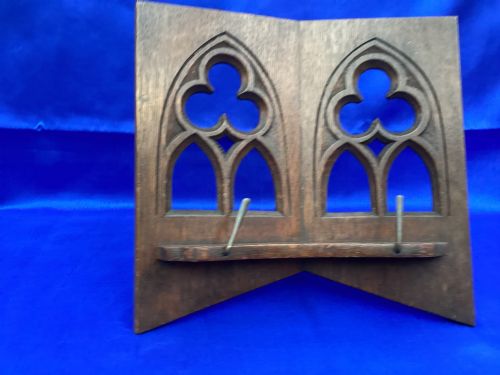
The selection spans several periods, including the 18th century, the Victorian era, and the early 20th century. Styles vary from Gothic Revival and Baroque to utilitarian designs and oriental folding pedestals.
How they were made
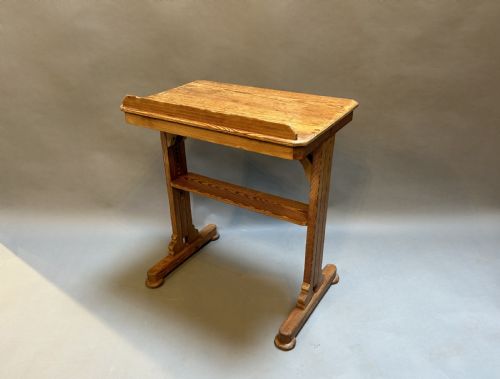
Makers utilised sturdy timbers such as oak, pine, and walnut to construct the main bodies and folding mechanisms of these stands. Wood was frequently carved to depict symbolic figures like eagles, or joined to create portable folding book pedestals.
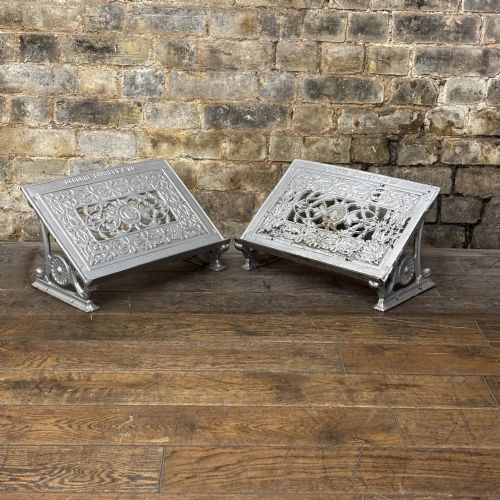
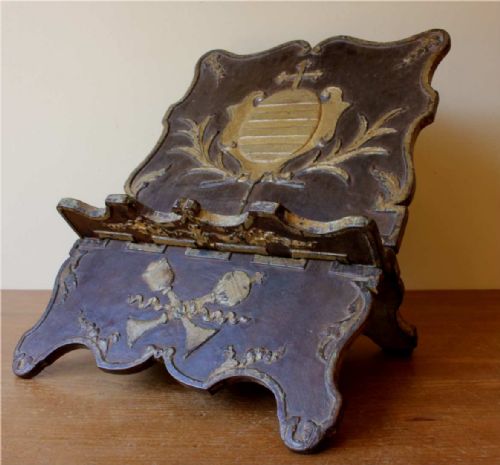
Metals played an equally important role, with brass, cast iron, and gold leaf appearing across various ecclesiastical and domestic pieces. Cast iron church book rests were produced by firms like Osborne Garrett and Co, while others featured intricate gilt and gesso work.
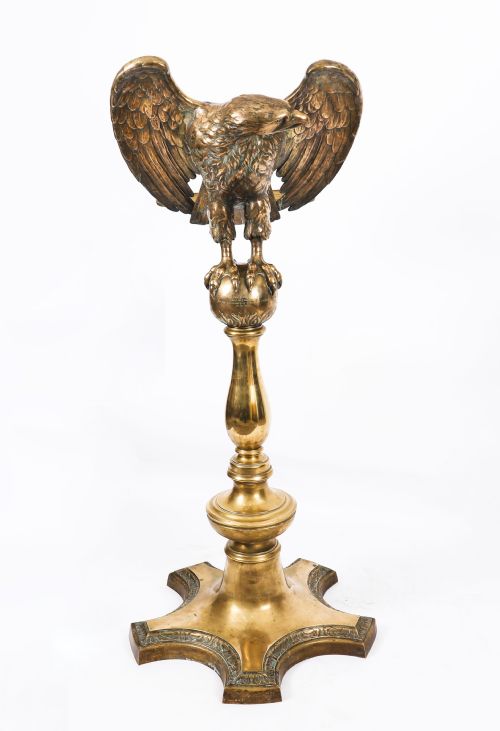
Object forms span simple domestic bookstands and folding reading desks to large church lecterns depicting carved eagles.
What varies in quality
The distinction between standard examples and finer pieces lies in the ambition of the carving and the substance of the materials. Hand-carved wooden eagles with detailed plumage represent a higher standard of craftsmanship than plain folding tables.
Metalwork quality is defined by the weight of the brass or cast iron and the crispness of the casting. Pieces bearing specific maker marks or originating from ecclesiastical settings tend to demonstrate superior structural integrity and artistic detail.
Osborne Garrett & Co
The Antique Bible Rest Glossary
- Lectern
- A tall stand with a slanted top used to hold a book for a standing reader. These often take the form of monumental brass or carved wooden eagles.
- Gothic Revival
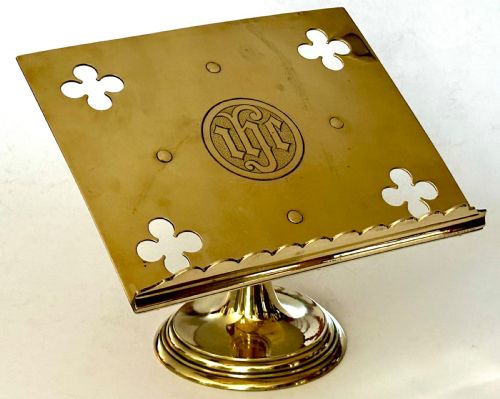
- An architectural and decorative style popular during the Victorian period. It draws inspiration from medieval ecclesiastical design, featuring pointed arches and ornate tracery.
- Missal Stand
- A specialised folding desk designed to hold a missal or service book on an altar. French and Italian examples often feature compact folding mechanisms for mobility.
- Gesso
- A plaster-like mixture applied to wood surfaces as a base for paint or gold leaf. It allows for crisp moulded details and gilded finishes on decorative stands.
Antique Bible Rest: Frequently Asked Questions
What is an antique bible rest?
An antique bible rest is a dedicated reading stand or lectern designed to support heavy religious texts during study or worship. These pieces keep large volumes open at a readable angle.
They appear in various forms, from small folding wooden stands for home use to large brass and iron lecterns made for churches.
How were these stands used?
These pieces were positioned on tables, desks, or church altars to hold heavy ecclesiastical books, missals, and bibles. Folding versions allowed readers to move them or store them easily when not in use.
Scholars and clergy utilised them to read large volumes comfortably without having to support the full weight of the book by hand.
What materials are common?
The listings show a strong presence of heavy timbers like oak, walnut, and pine alongside durable metals such as brass and cast iron. Some decorative pieces incorporate gesso, gold leaf, and gilt finishes.
Ecclesiastical examples frequently utilise polished brass or solid carved hardwoods to withstand regular use in churches.
How do I identify the period?
Dating relies on stylistic clues and construction methods, with pieces spanning the 18th century, the Victorian era, and the early 20th century. Gothic Revival and Baroque ornamentation are typical of 19th-century church items.
Simpler utility designs and oriental folding pedestals point towards later Edwardian or 1930s manufacturing periods.