


Antique Bed Posts
These antique bed posts offer structural presence and architectural character, bringing period timber and turned detail into a room.
Antique Bed Posts
When you search for antique bed posts, you encounter architectural salvage and remnants from grander four-poster frames, alongside intact beds featuring prominent vertical supports. The examples seen here span the 19th Century, Regency, Victorian, and Edwardian eras, reflecting changing domestic tastes in sleeping arrangements.
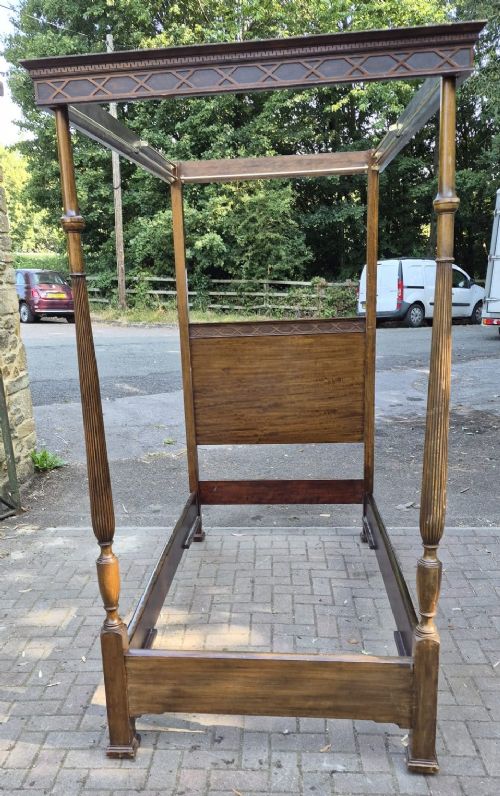
You are most likely to meet single posts carved from mahogany, oak, or rosewood, or complete bedframes where the vertical supports anchor the design. These pieces often arrive as matched pairs salvaged from larger tester or four-poster beds.
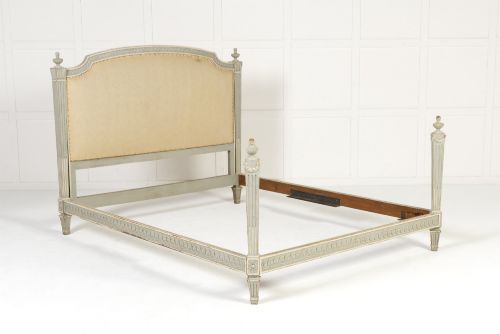
The selection ranges from substantial colonial and Georgian styles to lighter French Louis XVI painted items and decorative column stands. Each piece demonstrates the specific turning and joinery techniques of its period of origin.
Materials and construction methods
Craftsmen utilised dense timbers such as mahogany, tiger maple, oak, and rosewood, selected for stability and responsiveness to deep carving. Turning on a lathe shaped the cylindrical profiles, while hand-carving added fluting, spiral details, and foliate motifs.
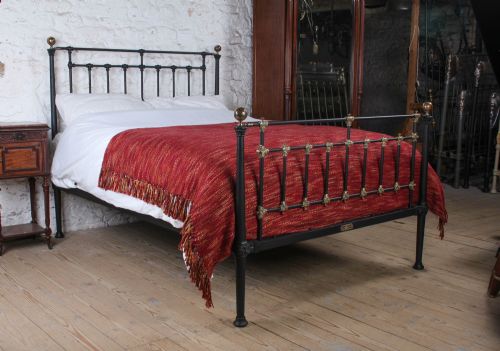
Surface treatments varied from polished wood highlighting the natural grain to applied paint, gilding, and brass or iron components. Metal fixtures and cast iron elements appeared on later iron and brass frames to provide structural rigidity.
Judging quality in vertical supports
Depth and crispness of the hand-carving separate standard turned timber from exceptional examples, where details remain sharp and well-defined. The choice of primary wood, such as figured mahogany or tiger maple, dictates the visual richness of the surface.
Structural integrity depends on the original turning proportions and how cleanly the posts were salvaged from their parent beds. Matched pairs with uniform grain patterns and identical dimensions command greater appreciation among collectors.
Howard and Sons·Winfield
The Antique Bed Posts Glossary
- Four poster bed
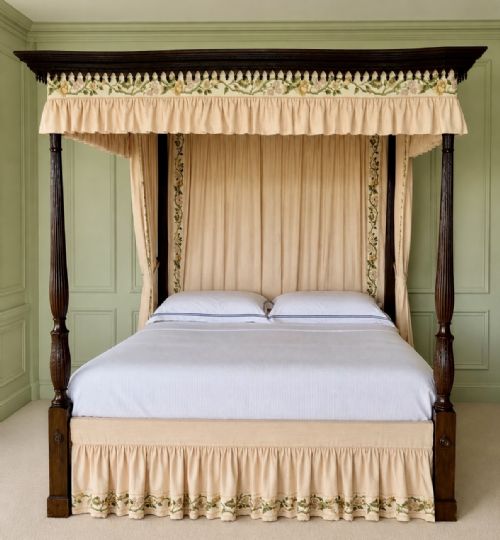
- A bed with four vertical columns that support an upper tester or canopy frame. These structures dominated grand bedrooms in earlier centuries.
- Tester
- The wooden canopy or ceiling framework suspended above a four-poster bed. It often featured decorative cornices or fabric drapery.
- Architectural salvage
- Building elements and furniture parts rescued from older structures before demolition. This category includes isolated bed posts repurposed as decorative stands.
- Tiger maple
- Hard maple wood featuring a distinctive striped grain pattern resembling tiger stripes. It was prized in American Federal furniture.
- Spiral carved
- A decorative twisting pattern cut into the shaft of a column or bed post. This technique creates a dynamic sense of movement along the wood.
Antique Bed Posts: Frequently Asked Questions
How were antique bed posts used originally?
Original posts served as the main structural corners of large four-poster and tester beds, supporting heavy ceiling canopies and hanging curtains that kept drafts away from sleepers.
Over time, many full beds were dismantled, leaving individual posts to survive as decorative architectural elements or converted column stands.
Can I use stray bed posts as decor?
Matched pairs of posts frequently find new life as decorative column stands, pedestals, or sculptural elements placed in hallways and corners.
Their substantial turned timber and period carving bring immediate architectural weight to modern interiors without requiring a full bed frame.
How do I date a set of bed posts?
Dating relies on identifying the timber species, the turning style, and the character of any hand-carved motifs like reeding or spiral fluting.
Regency and Victorian pieces display heavier proportions and specific wood selections, while Edwardian revivals often emulate earlier Georgian or French Louis XVI styles.
What woods should I expect to find?
Mahogany is the most frequent timber encountered, appearing across 19th Century, Georgian, and Victorian examples in varying grain depths.
Other pieces utilise oak, rosewood, tiger maple, or incorporate cast iron and brass elements depending on the specific manufacturing period.