
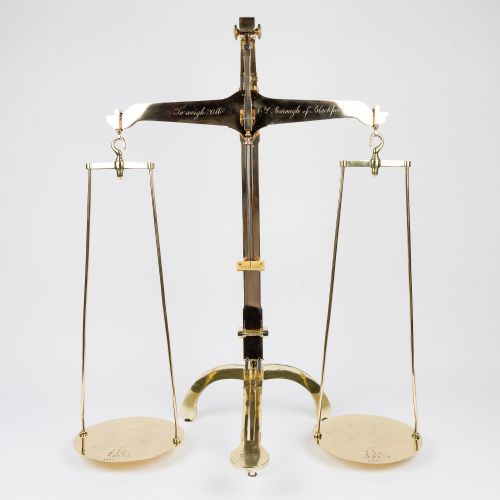

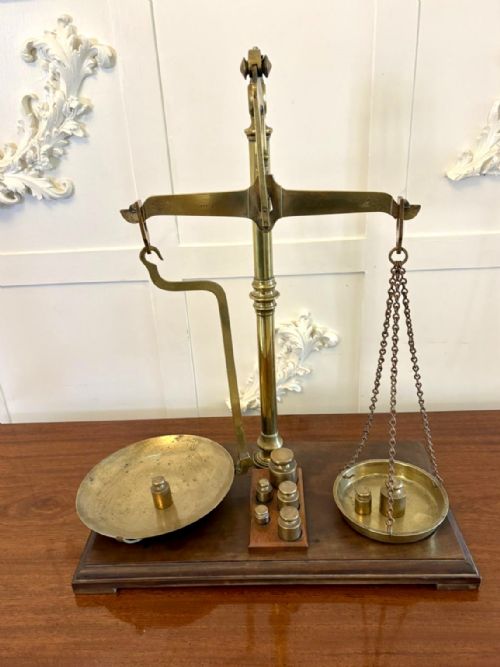
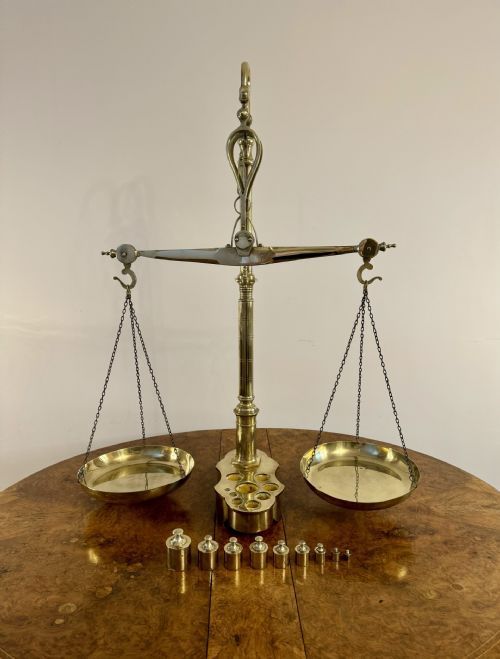
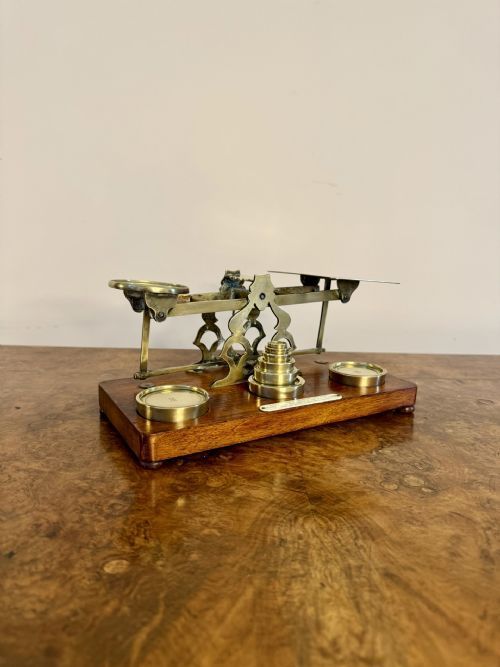


Antique Balance Scale Weights
Antique balance scale weights measure out the domestic and commercial life of past centuries in brass, ceramic and iron.
Antique Balance Scale Weights
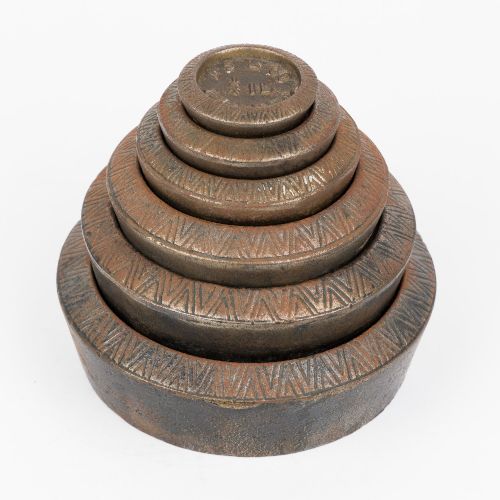
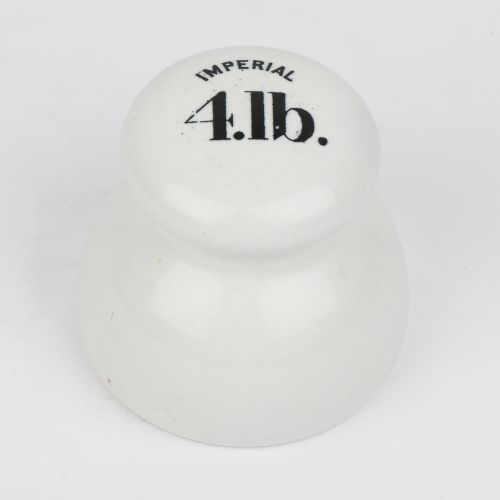
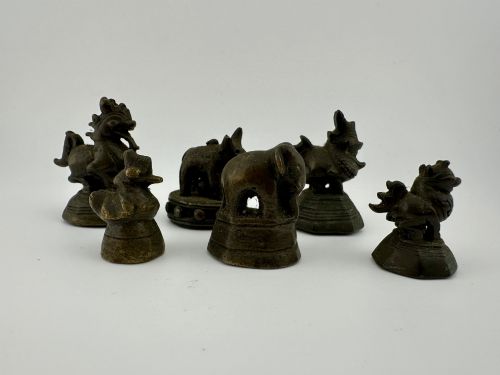
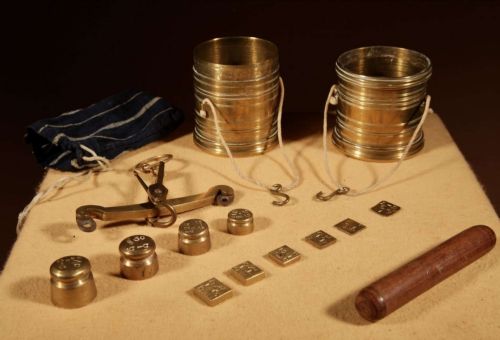
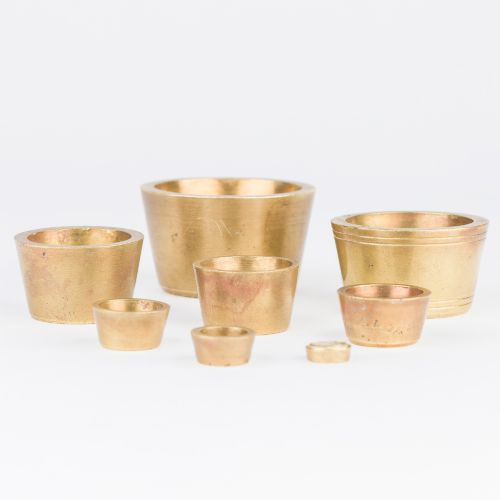
When you search for antique balance scale weights, you encounter the tangible units that once kept trade honest in shops, dispensaries and households. The selection includes nested imperial stacking weights, ceramic pieces, and individual brass standards designed for precise measurement.
The versions most commonly met here stem from the Victorian and Edwardian eras, alongside functional items from the nineteenth century. These range from heavy commercial sets down to delicate apothecary subsets housed in original wooden blocks.
How they were made
Makers shaped these objects primarily from cast brass, iron, and bronze, often pairing them with fitted mahogany, oak or walnut bases. Many weights received stampings denoting verification by local authorities, city boroughs and inspectors.
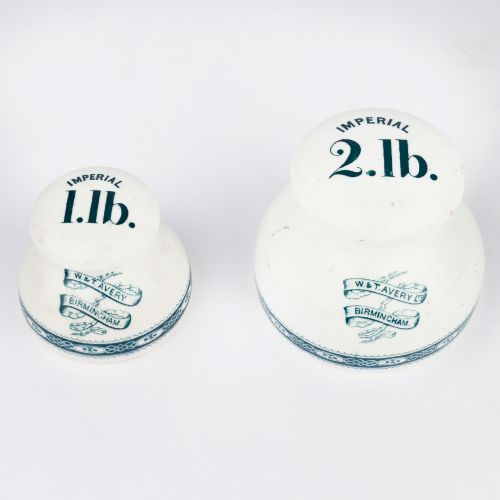
Some specialised sets incorporate ceramic elements or feature nested designs where smaller units fit neatly within the larger hollow base. Metal components were frequently turned on a lathe and polished to ensure correct mass and balance.
Periods represented range from the early nineteenth century through the Edwardian era and into the mid-twentieth century.
What varies in quality
The distinction between ordinary utility items and superior pieces rests on the crispness of the official verification stamps and the completeness of the original set. Sets that retain their matching wooden block stands or fitted cases hold greater integrity.
Material selection also defines the tier of a piece, moving from standard cast iron up to heavy solid brass, bronze or fine hardwoods. Finishes show the care of the original maker, particularly in the precision of the turning and the legibility of the engraved sizing marks.
De Grave Short And Co·W And T Avery·S Mordan And Co·Robert Brettell Bate
The Antique Balance Scale Weights Glossary
- Avoirdupois
- The system of weights used for general goods and commerce based on the pound and ounce. It governed daily retail trade across Victorian shops.
- Troy
- A system of units of weight used for precious metals and pharmaceuticals. Troy ounce weights appear frequently in apothecary and scientific contexts.
- Chondrometer
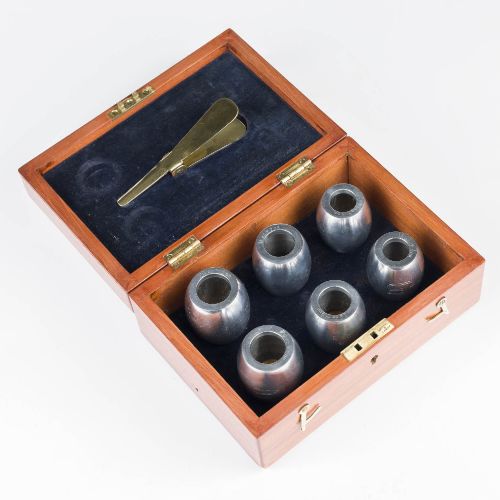
- An instrument used to test the quality or density of grain. These portable devices typically include specialised measuring weights and wooden cases.
- Verification
- The official testing and stamping of scales and weights by local government inspectors. This process ensured commercial accuracy for the public.
Antique Balance Scale Weights: Frequently Asked Questions
How do I know if my weight set is complete?
Complete sets usually retain fitted slots in their original wooden block stands or nested cavities that house every corresponding fraction. Missing units leave noticeable empty spaces where smaller pieces once sat.
Examine the sizing marks stamped into the metal to check for a continuous sequence of measurements from the largest down to the smallest.
What is the difference between postal and apothecary weights?
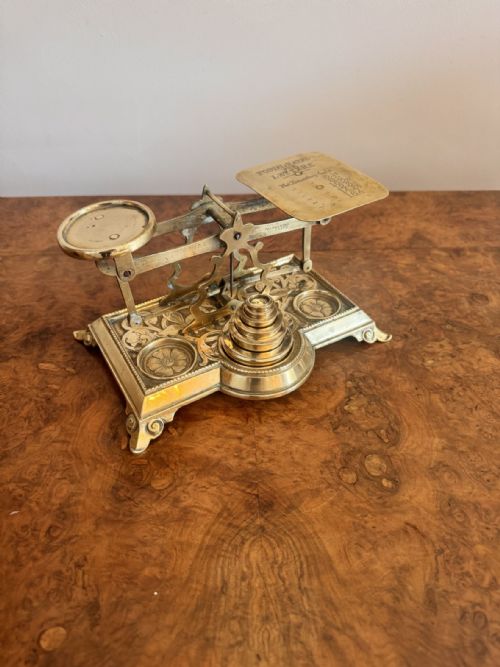
Postal weights were designed for weighing letters and parcels in offices and homes, often mounted on mahogany or walnut bases with brass pans. They measure in ounces and pounds for postal rates.
Apothecary weights are much smaller, intended for medicinal compounding, and typically fit inside specialised lidded wooden block stands with delicate brass or bronze pieces.
Why do some weights have multiple government stamps?
Weights used in commerce required regular inspection by local authorities to verify their ongoing accuracy. Each time an inspector tested and approved the piece, they applied a new verification mark.
Multiple stamps simply record the working life of the object as it passed through various city boroughs and county jurisdictions over the decades.
Can I use these antique weights on a modern scale?
While these pieces retain their physical mass, historical standards like troy ounces and imperial units differ from modern metric measurements. Using them practically requires understanding the specific historical system they were manufactured to serve.
Most buyers display them alongside balance beams or keep them as decorative desk objects rather than utilising them for modern kitchen or postal tasks.