


Vintage Counter Weights
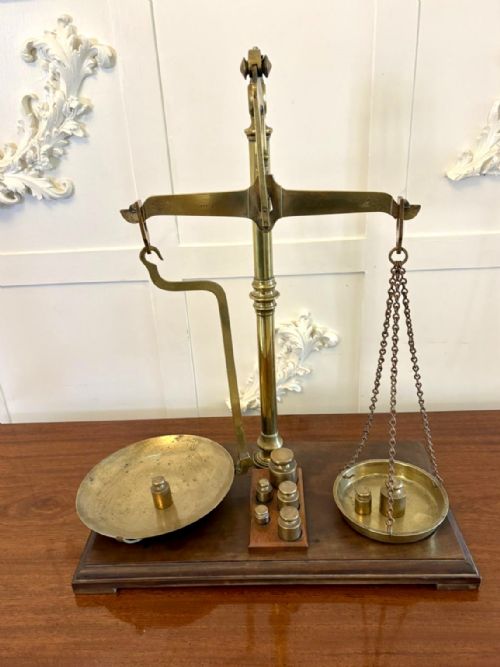
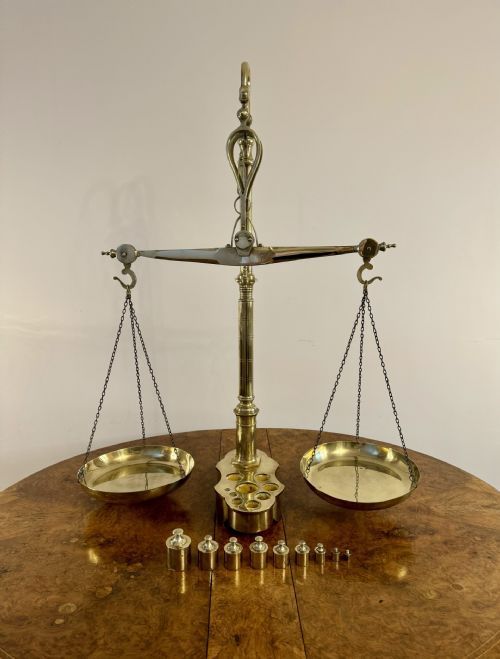
These vintage counter weights and scale sets bring heavy industrial character and everyday history straight from old shops, surgeries, and co-ops into the modern home.
Vintage Counter Weights
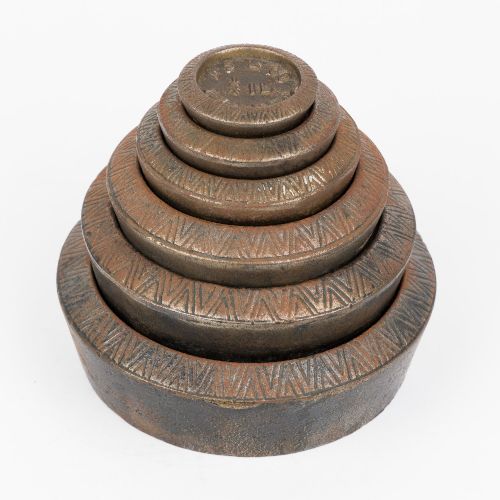
Vintage counter weights form a practical category of heavy implements and balance components designed for trade, pharmacy, and domestic use across the nineteenth and early twentieth centuries. When searching for vintage counter weights, collectors typically encounter heavy utilitarian objects that range from individual stacking pieces to complete sets housed in original blocks.
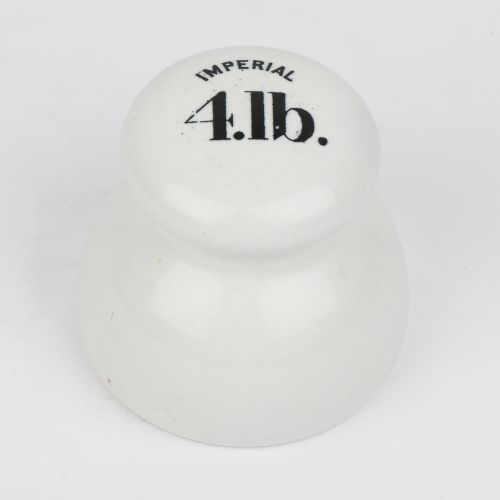
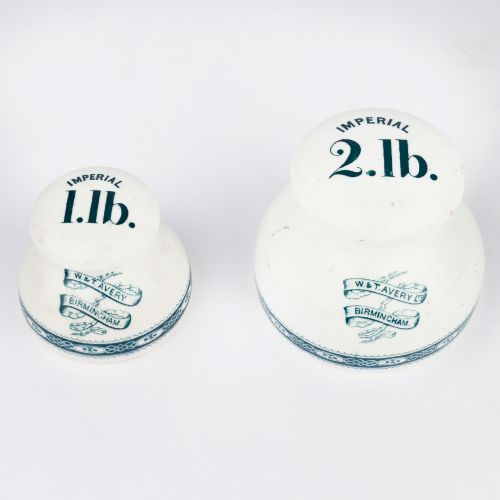
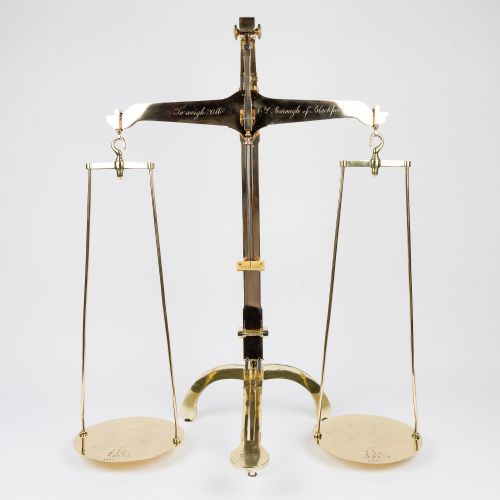
The material record on this page spans Victorian and Edwardian pieces, taking in grocers scales, apothecary balance scales, and shopkeeper iron and copper balances. Buyers are most likely to meet sturdy brass imperial stacking weights, ceramic pieces, and iron items bearing local authority stamps or maker names.
These items originate from distinct commercial contexts, including city borough authorities and butcher shops like Palethorpes. They served a precise measuring function in grocers shops, co-ops, and medical dispensaries before finding a second life as decorative display items.
How they were made
Makers utilised durable metals and ceramics to withstand the rigorous daily demands of Victorian and Edwardian trade. Brass, cast iron, copper, and glazed ceramic or earthenware dominate the physical evidence across these listings.
Individual stacking sets and heavier single weights often required precision casting and machining to meet strict imperial standards. Apothecary versions frequently relied on fitted wooden block stands made of mahogany to house delicate brass pieces securely.
Materials recorded across the inventory include brass, cast iron, mahogany, glazed ceramic, and earthenware.
What varies in quality
Quality in these utilitarian items rests upon the survival of complete sets and the legibility of period maker marks or local authority stamps. Pieces produced by established names like W & T Avery or De Grave carry a distinct pedigree that elevates them above anonymous utilitarian stock.
The integrity of original materials and fitted housings dictates the overall appeal of a set. A matching group retaining its original mahogany block stand or uniform brass patina commands greater interest than a mismatched assembly.
W & T Avery·Day & Millward·Palethorpes·De Grave
The Vintage Counter Weights Glossary
- Imperial stacking weights
- A nested group of measurement units conforming to the British Imperial system designed to fit neatly inside one another.
- Apothecary balance scales
- Precision weighing equipment used by chemists and pharmacists for measuring small quantities of medical ingredients.
- Avoir
- Short for avoirdupois, the system of weight used for goods and general merchandise rather than precious metals.
- Beam scales
- A traditional weighing instrument featuring a central pivoting horizontal lever with pans suspended from each end.
- Grocers scales
- Heavy-duty commercial weighing apparatus utilised in nineteenth and early twentieth-century retail shops and co-operatives.
Vintage Counter Weights: Frequently Asked Questions
What were vintage counter weights used for?
These heavy items operated alongside beam scales in shops, co-ops, and pharmacies to measure exact quantities of dry goods, groceries, and medical compounds.
They ensured accurate trade transactions and precise medicinal compounding before digital scales replaced mechanical weighing.
How do I date Victorian versus Edwardian counter weights?
Victorian examples generally date from the nineteenth century up to nineteen-one and often display robust brass construction or heavy ceramic bodies stamped with period inspection marks.
Edwardian pieces emerged after nineteen-one, frequently incorporating iron, copper, and specific local authority stamps from counties like Lancashire.
Are complete sets better than single weights?
Complete sets, particularly those retaining original fitted mahogany block stands or stacking arrangements, offer a cohesive historical record that single pieces lack.
Single weights still provide strong decorative and tactile qualities, but collections kept together maintain their original functional context.
How should I clean brass and iron weights?
Preserving the aged surface and natural patina is generally preferred by collectors rather than achieving a bright, polished finish.
Gentle dusting and light cleaning protect the historical stamps, inscriptions, and surface characteristics built up over decades of commercial use.