



Antique Backboard Cabinet
An antique backboard cabinet brings sturdy Victorian timber and raised back protection to dining rooms and living spaces.
Antique Backboard Cabinet
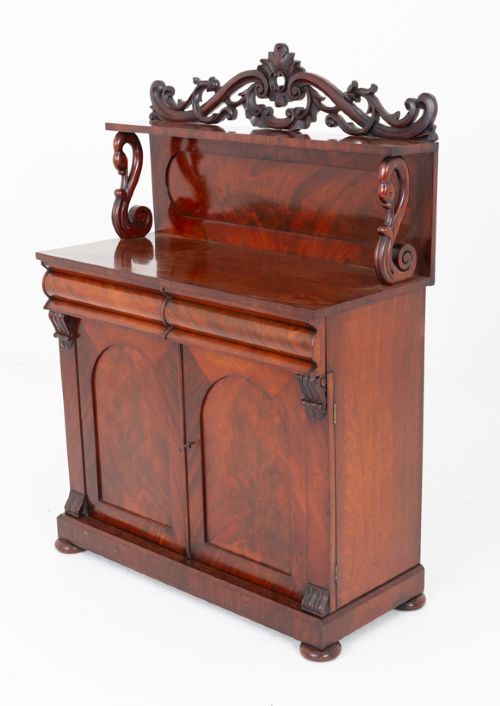
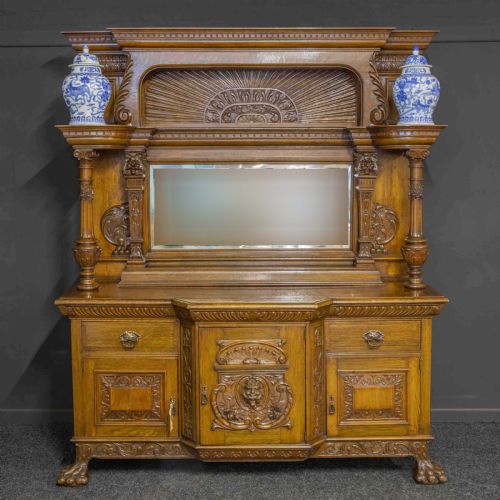
An antique backboard cabinet primarily encompasses nineteenth-century mahogany sideboards, chiffoniers, and related case furniture fitted with a raised wooden backboard. These pieces originate predominantly from the Victorian era and the broader nineteenth century, alongside occasional Regency and Art Deco variations.
Buyers browsing this selection encounter robust sideboards and chiffoniers designed for storage and display in domestic interiors. The forms combine lower cabinet storage with upper backboards that often feature shelves or carved details.
The prevailing examples on this page are constructed from mahogany, including figured and flame veneer varieties, reflecting the material dominance of the Victorian period.
How they were made
Cabinet makers utilised dense hardwoods such as mahogany and oak as the foundational structure for these cabinets. Selected surfaces frequently received fine veneers, including flame mahogany and burr walnut, to create striking grain patterns.
Brass hardware such as handles, hinges, and mounts complemented the rich timber tones. Glass panels appeared on glazed cabinet doors, while skilled carving adorned the wooden backboards and structural trim.
Antique Backboard Cabinet Retail Price Guide 2026
Typical asking prices for backboard cabinet among the pieces listed under this phrase on Sellingantiques today, from the lower quarter to the upper quarter. They describe what is for sale here now, not the wider market.
Listings demonstrate pieces spanning the Regency, Victorian, and Art Deco periods, utilising mahogany, burr walnut, pollard oak, and brass.
What varies in quality
The standard of timber selection and veneer matching dictates much of the visual distinction across these cabinets. Superior examples display carefully aligned flame mahogany or burr walnut figures across multiple doors and drawers.
Execution of carved details on the backboards and structural mouldings separates standard production from finer cabinet work. Heavier timber construction and refined brass fittings further elevate the standing of individual pieces.
The Antique Backboard Cabinet Glossary
- Backboard
- A raised wooden panel or superstructure attached to the rear of a sideboard or cabinet. It frequently includes display shelves or decorative carvings.
- Chiffonier
- A low Victorian cabinet equipped with drawers and doors, typically surmounted by a backboard with one or more small shelves.
- Flame Mahogany
- A decorative wood veneer cut from timber fork sections where branches join the trunk. This technique produces a distinctive flame-like pattern.
- Pollard Oak
- Timber taken from trees that have been pollarded, resulting in gnarled growth rings and rich figuring. It appears in specific nineteenth-century furniture.
- Sideboard
- A large dining room cabinet designed for serving food and storing tableware. These pieces often feature cupboards and drawers arranged beneath a broad top surface.
Antique Backboard Cabinet: Frequently Asked Questions
What is an antique backboard cabinet?
An antique backboard cabinet is a nineteenth-century storage piece featuring a raised wooden backing behind the main surface. These items typically include sideboards and chiffoniers.
They serve practical storage functions while providing a decorative backdrop for displayed objects in dining rooms or living spaces.
How do I identify a Victorian sideboard?
Victorian sideboards are identified by their heavy timber construction, predominantly in mahogany or oak, and characteristic period proportions. They often incorporate panelled doors and carved backboards.
Examining the internal drawer construction and timber grain helps distinguish nineteenth-century examples from later reproductions.
What woods were used in these cabinets?
Cabinet makers relied heavily on mahogany as the primary timber for these pieces. Burr walnut, pollard oak, and standard oak also appear in specific examples.
Surface decoration frequently involved applied veneers such as flame mahogany to enhance the visual grain.
How do I care for antique mahogany furniture?
Antique mahogany furniture requires stable indoor humidity levels away from direct heat sources and strong sunlight. Regular dusting with a soft, dry cloth preserves the polished finish.
Applying a traditional beeswax polish occasionally helps nourish the timber surface without building up excessive residue.