




Antique Baby Gift
These antique baby gift pieces are silver rattles, mugs, and boxed sets handed down through generations for family milestones.
Antique Baby Gift
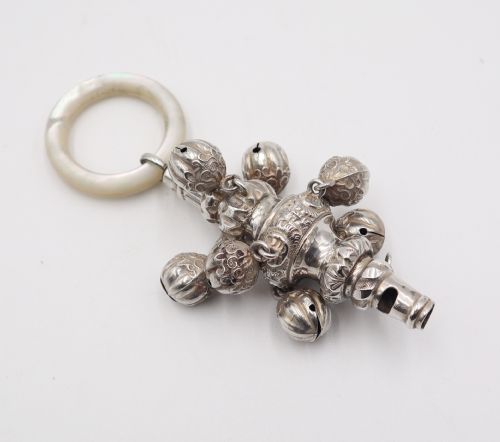
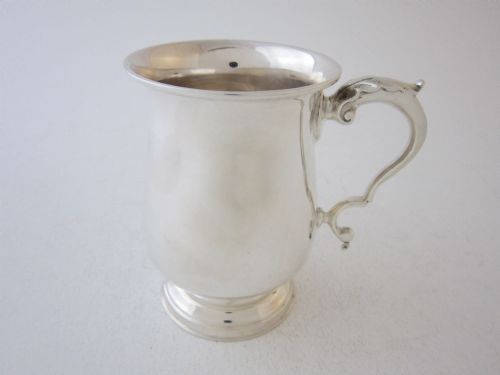
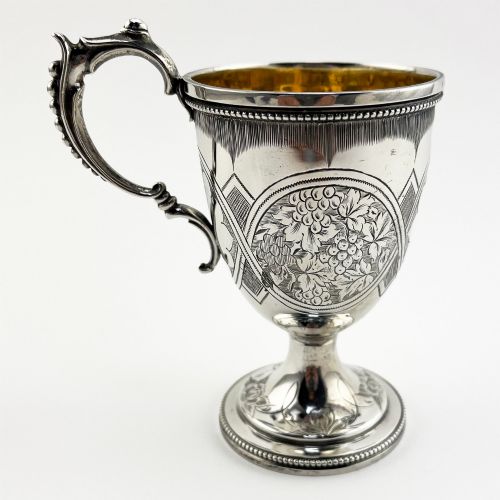
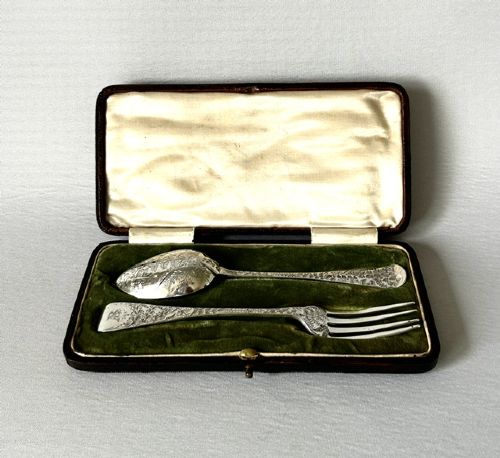
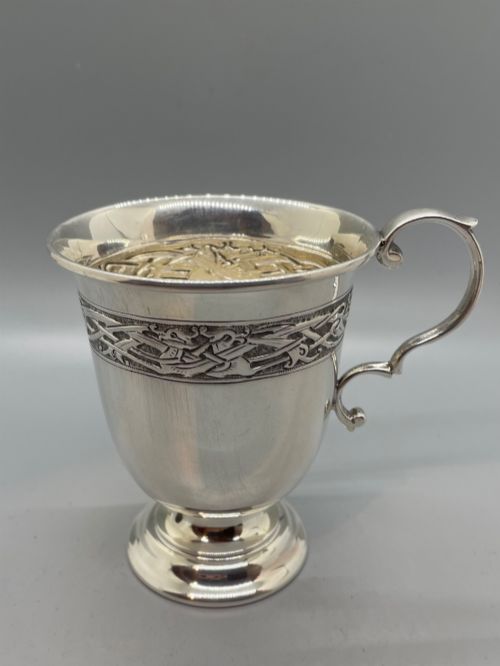
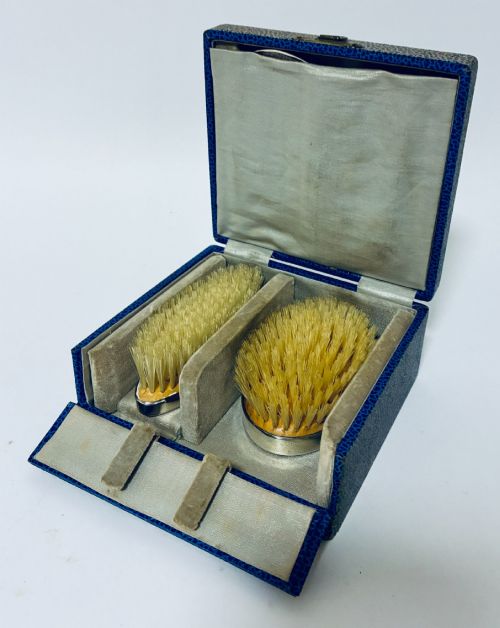
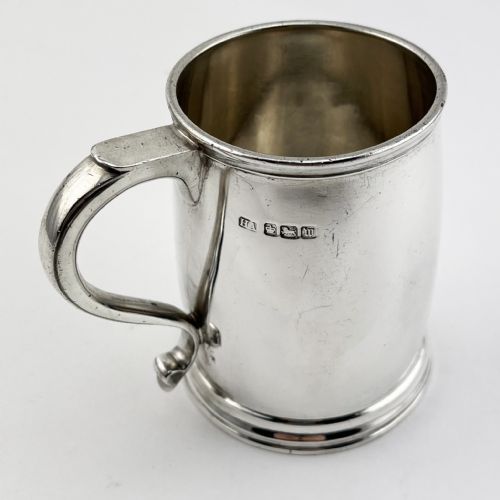
The most common survival on this page is the silver christening mug, often featuring repoussé floral engraving or a plain baluster form, alongside boxed presentation sets containing spoons and forks. Rattles combining sterling silver with mother-of-pearl teeters and coral also appear frequently.
Originating largely from British assay offices in Birmingham, Sheffield, and London, these pieces span the Georgian, Victorian, and George V eras. Their survival reflects the high esteem in which infant milestones were held during the nineteenth and early twentieth centuries.
How they were made
Silversmiths utilised sterling silver and silver gilt, shaping mugs through hammering, spinning, or casting, and applying handles in styles such as the Rococo scroll. Boxed sets often pair these silver implements with silk and velvet linings housed in fitted leather cases.
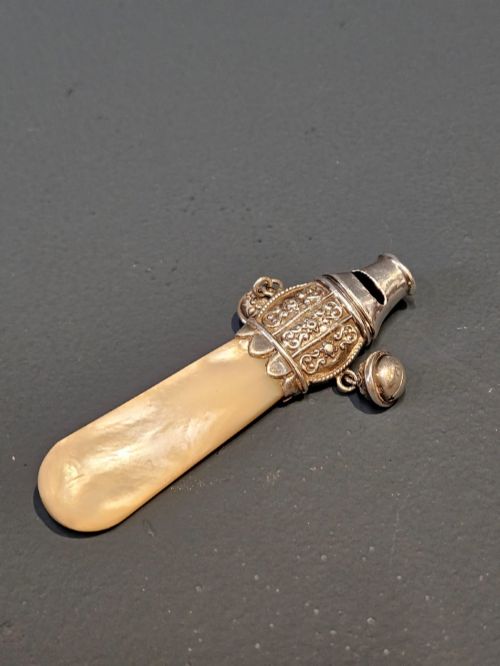
Rattles incorporate complex assemblies of hollow silver bells, whistles, and teething elements made from natural materials like mother-of-pearl and coral. Engraving, embossing, and chasing techniques decorate the surfaces of both mugs and rattles with floral motifs and scrollwork.
Antique Baby Gift Retail Price Guide 2026
Typical asking prices for baby gift among the pieces listed under this phrase on Sellingantiques today, from the lower quarter to the upper quarter. They describe what is for sale here now, not the wider market.
Materials paired with silver in these gifts include natural mother-of-pearl, coral, silk, velvet, and leather.
What varies in quality
The distinction between standard production and superior work rests on the crispness of the chased or embossed decoration and the weight of the sterling silver. Heavy gauges of silver give christening mugs a substantial feel in the hand, whereas lighter pieces lack that tactile presence.
Presentation matters significantly in boxed sets, where original fitted cases lined in silk or velvet elevate the standing of the pieces within. Maker attribution also plays a role, with documented silversmiths commanding greater interest than unmarked items.
R E Stone·Tiffany and Co·George Unite·Bateman·John Round·Thomas Harwood and Co
The Antique Baby Gift Glossary
- Sterling silver
- A silver alloy containing 92.5 percent pure silver and 7.5 percent other metals, usually copper, ensuring durability for functional items. This standard was universally applied by British assay offices.
- Baluster form
- A architectural shape featuring a rounded body swelling towards the base and tapering upwards towards the rim. It is frequently seen on nineteenth-century christening mugs.
- Repoussé
- A metalworking technique where the silversmith hammers the design from the reverse side to form a raised pattern on the front. This method creates the floral motifs found on Victorian mugs.
- Porringer
- A small, shallow bowl with one or two flat horizontal handles, used historically for porridge or broth. In later periods, it served primarily as a decorative christening bowl.
- Silver gilt
- Sterling silver that has been coated with a thin layer of gold on its surface. This technique provided a rich internal finish to christening cups and spoons.
Antique Baby Gift: Frequently Asked Questions
What is an antique christening mug?
A christening mug is a small vessel of sterling silver given to a child to mark their baptism or naming ceremony. They were made to be kept as lifelong mementos rather than for daily use.
Most examples date from the Victorian and Edwardian eras, displaying maker marks from assay offices across Britain. Their forms range from plain baluster shapes to heavily embossed floral designs.
How were silver baby rattles used?
Silver baby rattles served a dual purpose as noisemakers to amuse infants and as practical teething devices. The inclusion of coral or mother-of-pearl gave babies a hard surface to bite during teething.
Many of these rattles also doubled as whistles, combining multiple functions into a single handled object. They were suspended from clothing or held by adults to capture an infant's attention.
How do I identify a Victorian christening set?
Victorian christening sets typically comprise a fork and spoon, sometimes accompanied by a matching knife, housed inside a fitted leather box lined with silk or velvet. Hallmarks stamped directly onto the silver indicate the year of manufacture and the assay office.
The cutlery handles frequently feature decorative engraving or cast detailing characteristic of the nineteenth century, reflecting the prevailing styles of the period.
Can antique silver be used today?
Antique silver christening mugs and cutlery are robust enough for occasional ceremonial use, though many owners prefer to display them. Sterling silver requires gentle cleaning with appropriate polishes to maintain its finish over time.
Storing items in their original fitted boxes helps protect the silver and associated materials like silk and velvet from excessive handling and atmospheric tarnish.