





Antique Aubusson Tapestry
An antique aubusson tapestry brings centuries of French textile artistry into a room, offering tactile warmth and historic charm.
Antique Aubusson Tapestry
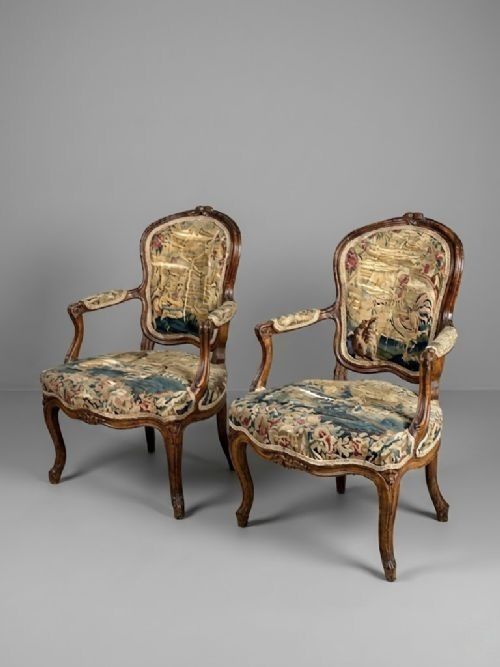
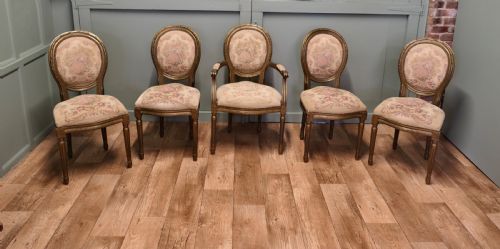
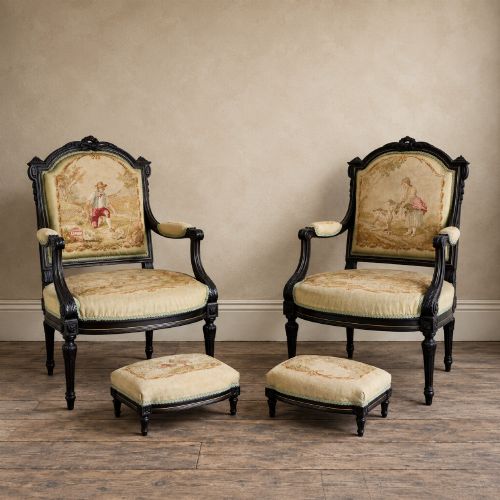
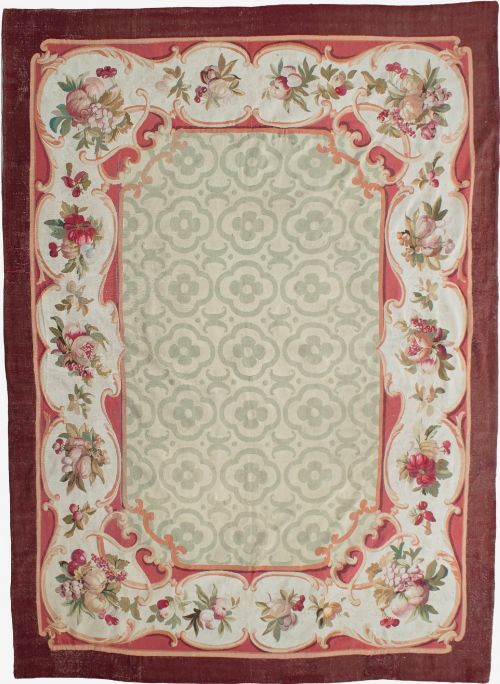
An antique aubusson tapestry encompasses large wall hangings, framed panels, rugs, and upholstered seating such as armchairs and settee frames. These works originate from the historic French weaving tradition associated with the town of Aubusson.
Buyers on this page most frequently encounter nineteenth-century productions alongside eighteenth-century panels and verdure scenes. Forms range from expansive wall textiles down to smaller cushions and carpet formats.
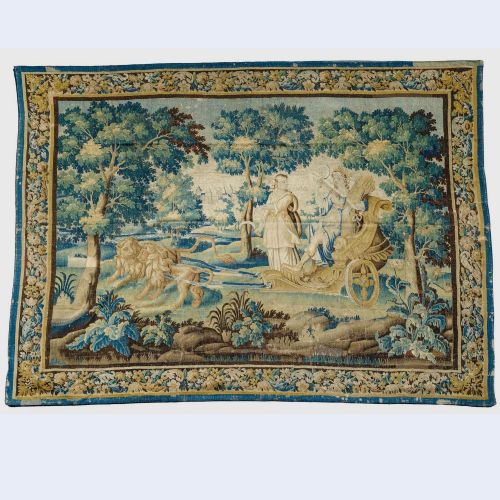
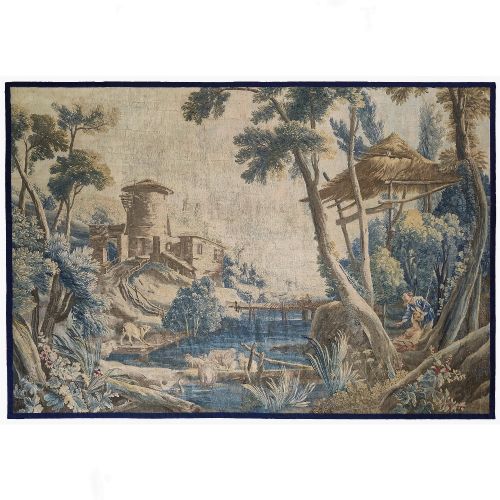
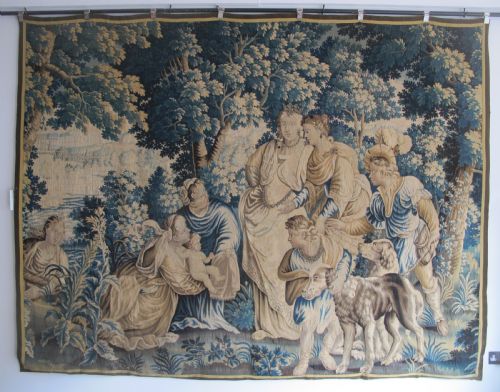
The decorative vocabulary draws heavily on pastoral landscapes, floral compositions, and classical architectural motifs typical of French chateau interiors. Pieces vary from room-scale wall decorations to functional furniture upholstery.
Materials and Construction
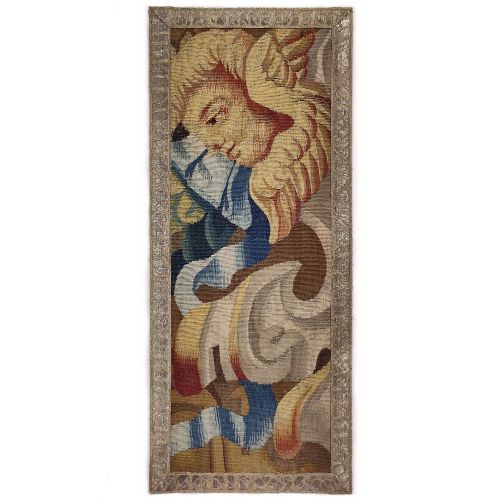
Weavers constructed these textiles primarily using wool and silk threads, occasionally incorporating cotton alongside the core fibres. Artisans interlaced these materials on traditional looms to build up dense pictorial surfaces.
Many textile panels integrate into wooden furniture frameworks made from beech, which decorators then finished with giltwood, paint, or ebonisation. Structural elements like armchairs and settees combine carved wood with matching tapestry textile upholstery.
Antique Aubusson Tapestry Retail Price Guide 2026
Typical asking prices for aubusson tapestry among the pieces listed under this phrase on Sellingantiques today, from the lower quarter to the upper quarter. They describe what is for sale here now, not the wider market.
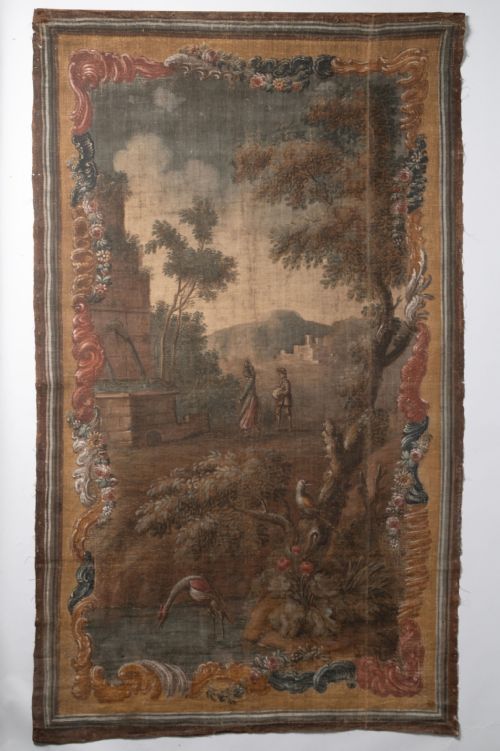
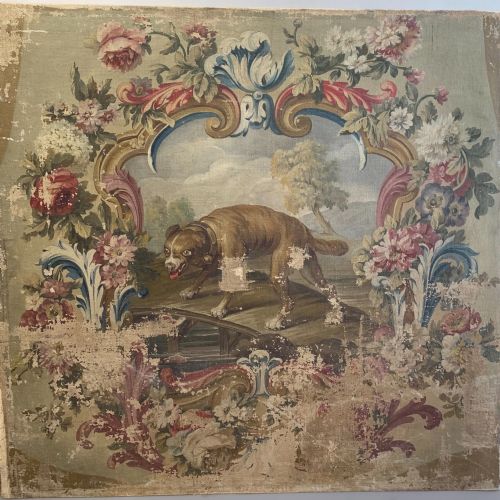
One piece recorded in the archive began life as an oil on canvas painting, possibly serving as a preparatory cartoon for a weaver.
Distinctions in Quality
Finer examples demonstrate greater nuance in the dye palette and more sophisticated pictorial depth within the woven landscape or floral design. The density of the weave and the complexity of the subject matter separate standard decorative panels from works of higher artistic ambition.
The preservation of the original wool and silk threads influences the visual impact, particularly in how verdure foliage and pastoral figures retain their crispness. Integration with period frames or seating structures, such as giltwood frames, adds another layer of contextual integrity.
The Antique Aubusson Tapestry Glossary
- Aubusson
- A woven textile originating from the French town of Aubusson, known for pictorial wall hangings and carpets without pile. These pieces often depict pastoral or architectural scenes.
- Verdure
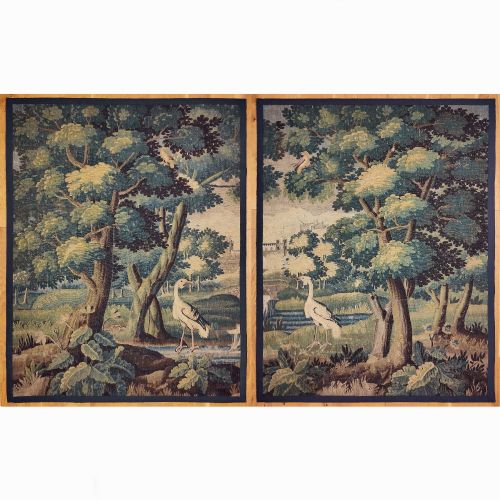
- A tapestry design dominated by foliage, trees, and landscape elements, frequently featuring birds or animals hidden among the leaves. This style was particularly popular in seventeenth and eighteenth-century French weaving.
- Giltwood
- Wood that has been coated with a thin layer of gold leaf or gold paint. This finish frequently appears on the frames of mirrors, armchairs, and settees accompanying period textiles.
- Canapé
- A decorative French settee or sofa featuring an upholstered seat and back. These pieces often incorporate tapestry upholstery matching salon armchairs.
- Entre-fenêtre
- A narrow tapestry panel designed specifically to hang on the wall space between two windows. Such pieces reflect the symmetrical interior planning of period French rooms.
Antique Aubusson Tapestry: Frequently Asked Questions
What is an aubusson tapestry?
An aubusson tapestry is a woven textile piece produced in the French region of Aubusson, traditionally featuring pictorial designs like landscapes, florals, or pastoral scenes.
Unlike pile carpets, these items are flat-woven textiles used historically as wall hangings, rugs, or upholstery for fine furniture.
How were these tapestries used historically?
Historically, large wall tapestries insulated stone castle and chateau walls while displaying wealth through intricate woven artwork.
Smaller panels and matching textiles were also utilised to upholster chairs, settees, and benches in formal salons.
How do I care for an antique textile?
Protect antique textiles from direct sunlight to prevent the natural wool and silk dyes from fading over time.
Keep them away from excessive moisture and consult a specialist conservator for any cleaning requirements.
How do I distinguish eighteenth and nineteenth century pieces?
Eighteenth-century works often display specific colour palettes and classic pastoral or mythological compositions associated with periods like the reign of Louis XV.
Nineteenth-century examples frequently revive earlier styles, incorporating broader decorative revivals and distinct manufacturing signatures.