



Antique Artist Box
An antique artist box brings portable colour and craftsmanship together, offering a glimpse into historic creative work.
Antique Artist Box
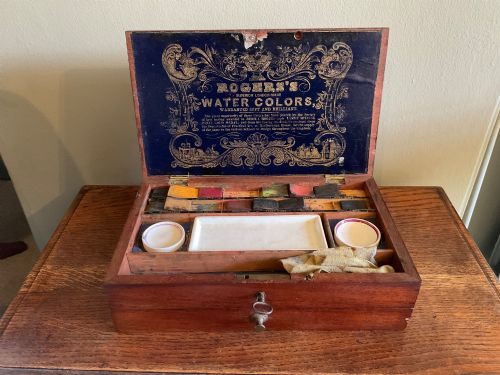
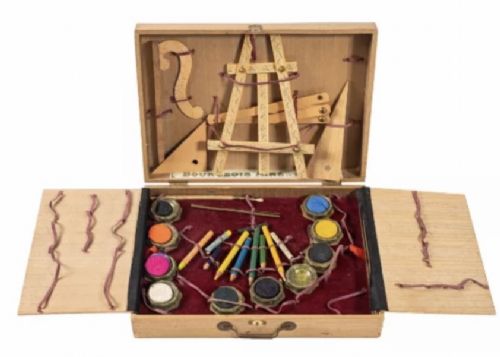
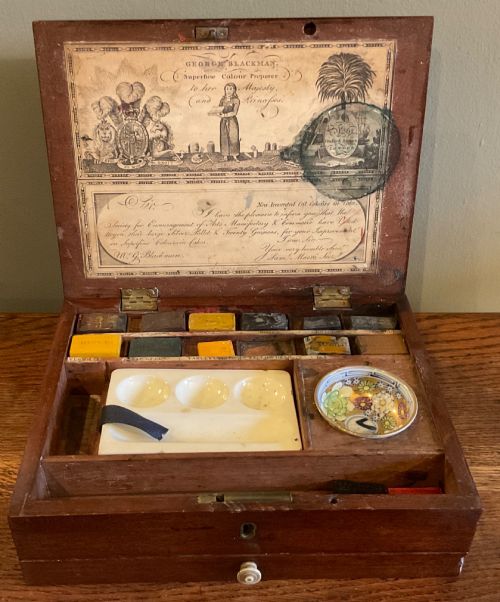
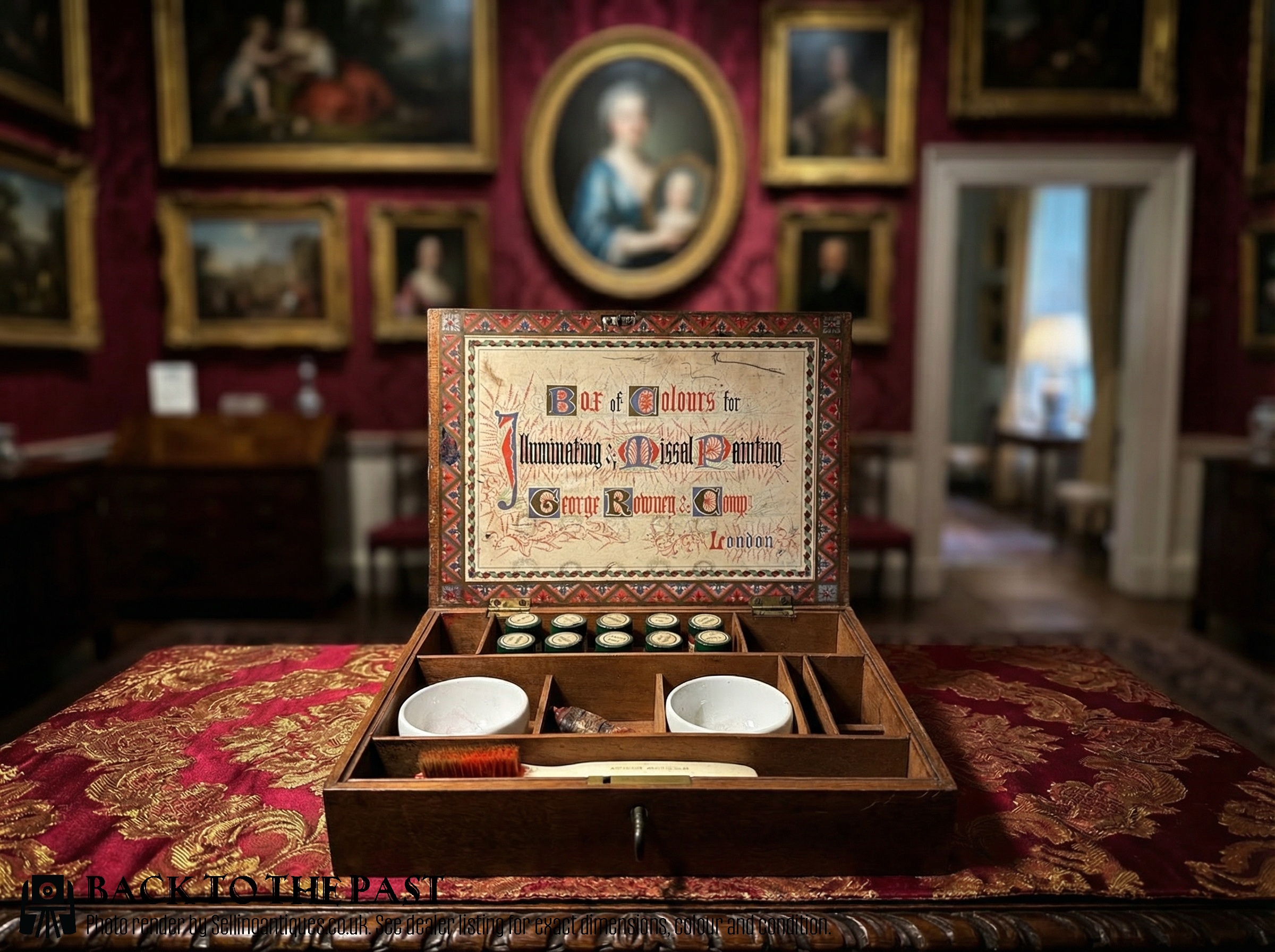
An antique artist box is a portable chest designed to hold paints, brushes, and drawing tools for field work or studio practice. These pieces range from simple wooden cases to elaborate brass-bound containers fitted with ceramic palettes and porcelain saucers.
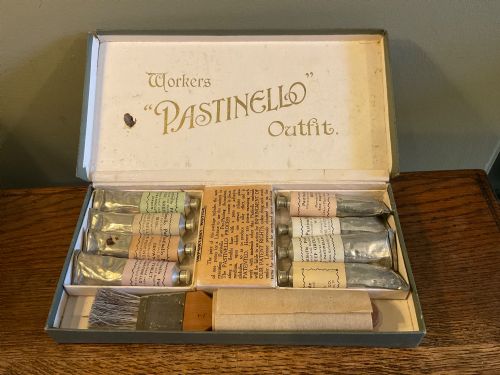
The versions most frequently met on this page include mahogany and beechwood portable kits dating from the Victorian and Edwardian eras. Many house surviving watercolours, mixing pans, and trade labels from notable makers of the period.
Materials and construction
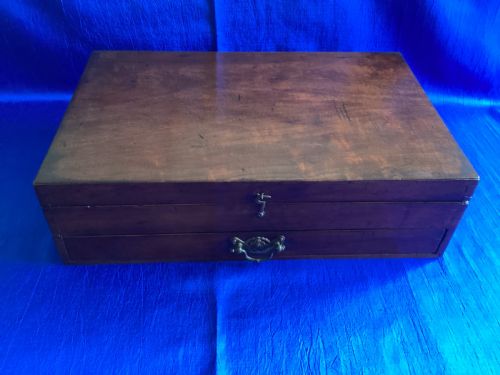
Cabinetmakers constructed these boxes primarily in mahogany, walnut, and beechwood, frequently reinforcing the corners with brass binding and flush lifting handles. Fitted interiors utilised precision joinery to create compartments for cakes of watercolour, ceramic mixing tiles, and brushes with bristle heads.
Makers often integrated pull-out drawers, hinged lids that doubled as easels, and brass lock mechanisms with working keys. Paper labels bearing supplier details were pasted directly to the interior lids for commercial identification.
Antique Artist Box Retail Price Guide 2026
Typical asking prices for artist box among the pieces listed under this phrase on Sellingantiques today, from the lower quarter to the upper quarter. They describe what is for sale here now, not the wider market.
Listings feature mahogany, walnut, and beechwood boxes fitted with ceramic palettes and paper trade labels from the Victorian and Edwardian periods.
Distinctions in quality
Quality rests upon the execution of the cabinetwork and the completeness of the original internal fittings. Superior examples display fine timber figuring, tight dovetail joints, and robust brass hardware that withstands frequent travel.
The presence of intact trade labels from established colourmen alongside original ceramic palettes and glass water bottles elevates the significance of a piece. Boxes that retain their original contents offer a more complete historical record of nineteenth-century painting practice.
Winsor & Newton·George Rowney·R Ackermann·J Newman·C Roberson & Co Ltd·S and J Fuller·George Blackman·Reeves & Sons
The Antique Artist Box Glossary
- Colourman
- A merchant who manufactured and supplied pigments, watercolours, and drawing equipment to artists. These firms often stamped their names on the interior labels of better boxes.
- Palette
- A flat surface used by painters for mixing colours, commonly made from ceramic, porcelain, or glass within these portable kits. They slot securely into dedicated compartments inside the wooden case.
- Brass bound
- Cabinetwork featuring protective brass corners, edges, and escutcheons designed to endure the rigours of outdoor sketching and travel. This reinforcement marks boxes intended for professional field use.
- Watercolour cake
- A dried block of pigment bound with gum arabic, ready to be dissolved with water for painting. These early blocks frequently bear the moulded stamp of the maker.
Antique Artist Box: Frequently Asked Questions
What is an antique artist box?
An antique artist box is a portable wooden chest designed to transport paints, brushes, and mixing equipment for outdoor or studio painting.
These pieces range from compact pocket-sized water colour kits to large mahogany cases fitted with integrated easels and ceramic palettes.
How did artists use these boxes?
Painters carried them outdoors to sketch landscapes directly from nature, relying on the fitted compartments to keep their pigments secure.
The hinged lids and internal trays held everything required for a painting session while away from the permanent studio.
How do I date an artist box?
Dating relies on timber choices, brass hardware styles, and printed trade labels pasted inside the lid.
Victorian and Edwardian examples often feature mahogany or walnut construction with maker marks from prominent nineteenth-century colourmen.
Are original paint cakes usable?
Original pigment cakes are generally collected for historical interest rather than modern painting use.
Over the decades, gum arabic binders alter and pigments degrade, making surviving paint cakes fragile artefacts best preserved intact.