





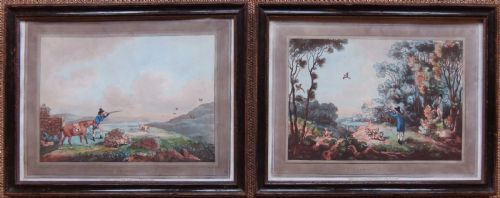


Antique Aquatint Print
An antique aquatint print brings tonal depth and rich historical narrative to your wall, capturing scenes from Georgian sporting life to early maritime exploration.
Antique Aquatint Print
An antique aquatint print uses an etched copper plate to achieve watercolour-like washes of tone, creating atmospheric images rather than simple line work. When you search for an antique aquatint print, you encounter framed works spanning the Georgian, Victorian, and early twentieth-century periods.
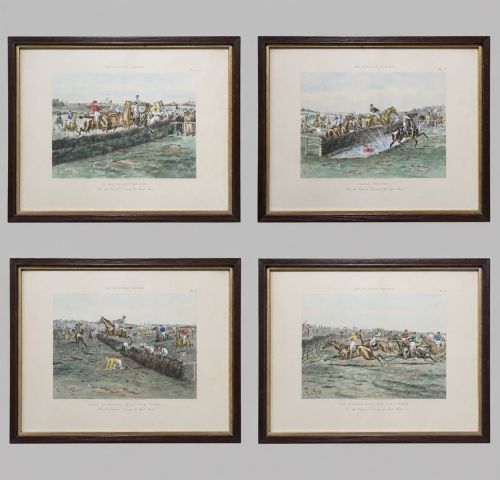
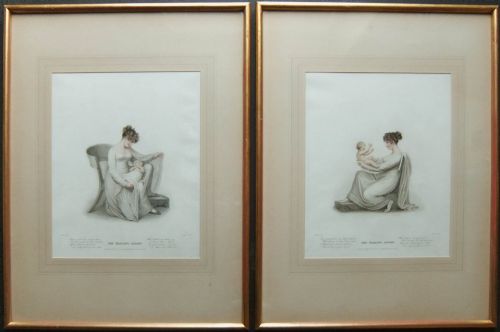
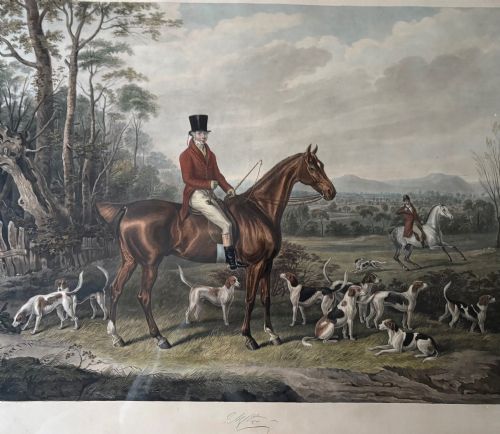
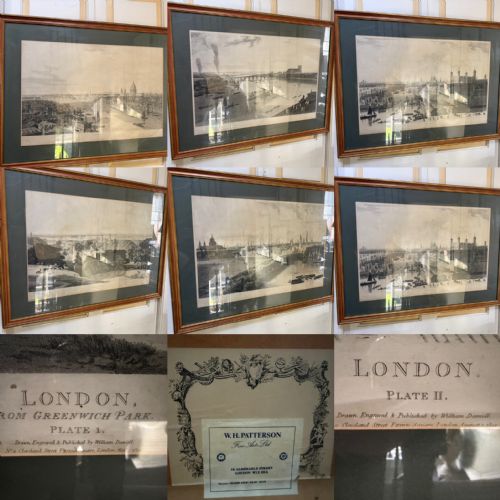
The subjects on this page lean heavily towards sporting life, maritime exploration, and coastal views, often presented in sets of four or pairs. You will find works created by printmakers who recorded horse racing, shooting scenes, and naval history on paper.
Many of these works are housed in wood frames, sometimes accented with gold leaf or gilt. They range from eighteenth-century sheets published in London to later nineteenth-century interpretations of rural pursuits.
How they were made
The maker dusted a copper plate with finely powdered resin and heated it so the particles adhered, creating microscopic spaces that acid would bite to hold ink in tonal areas. This process allowed the etcher to produce graduated washes that mimic the appearance of a delicate watercolour painting.
Printers often applied watercolour washes by hand over the inked impression, adding colour to black-and-white plates before framing the paper behind glass in wood or gilt wood surrounds.
Antique Aquatint Print Retail Price Guide 2026
Typical asking prices for aquatint print among the pieces listed under this phrase on Sellingantiques today, from the lower quarter to the upper quarter. They describe what is for sale here now, not the wider market.
Some nineteenth-century sporting sets proudly preserve the spirited chaos of fox hunting, horse racing, and historical brawls on paper.
What varies in quality
The refinement of the tonal gradation across the plate separates a master printmaker's work from a coarse commercial output. Early impressions carry a crispness in the granular texture that softens as the copper plate wears down during larger print runs.
The vibrancy of any applied hand-colouring and the preservation of the original paper stock influence the visual strength of the piece. Matching sets that retain their original frames and uniform paper tone command greater appreciation among collectors.
Adam Buck·George Finch Mason·W. Collard·Alken·W J Huggins·Joseph Farrington·Joseph Constantime Stadler·Charles Hunt·Francis Calcroft Turner·Sam. Howitt·Norman Janes·Louis Icart·Thomas Sutherland
The Antique Aquatint Print Glossary
- Aquatint
- A printmaking technique that uses acid to etch resin-dusted copper plates, producing tonal areas resembling watercolour washes. It was frequently combined with line etching or engraving.
- Drypoint
- A printmaking process where an artist scratches directly into a metal plate with a sharp needle, raising a burr that holds ink for velvety, rich lines. It often appears alongside aquatint in twentieth-century works.
- Gilt wood
- Wood that has been treated with a thin layer of gold leaf or metallic paint, commonly found on nineteenth-century picture frames. It provides a warm border around works on paper.
- Resin
- The acid-resistant substance dusted onto a printing plate to create the porous ground needed for aquatint etching. The fineness of this dust determines the texture of the resulting tonal wash.
Antique Aquatint Print: Frequently Asked Questions
How do I care for an antique print?
Keep the framed work away from direct sunlight to prevent the paper from yellowing and the hand-applied watercolours from fading over time.
Maintain a stable room temperature and avoid hanging the piece in damp spaces like kitchens or unventilated bathrooms.
Are these prints hand-coloured?
Many examples from the Georgian and Victorian eras received supplementary watercolour washes applied by hand after the ink impression dried on the paper.
This careful brushwork gives each plate an individual character, even within published series depicting sporting or maritime subjects.
Why do they come in sets?
Publishers frequently issued sporting and narrative imagery in matched sequences of four or six to document sequential action, such as a horse race or a day's shooting.
Keeping these groupings together preserves the original publishing intent and historical context of the works.
How can I tell the period?
Examine the paper quality, the style of the wooden frame, and any visible signatures or publication dates inscribed in the lower margins.
Subject matter also offers clues, as Georgian plates often portray formal sporting rules while later Victorian and twentieth-century examples introduce broader modernist or illustrative styles.