





Antique Apothecary Bowl
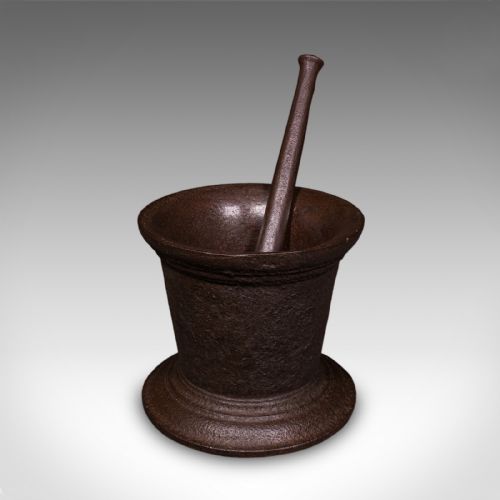
An antique apothecary bowl is a heavy vessel of metal, stone, or turned wood designed for grinding substances in kitchens, pharmacies, and dye houses.
Antique Apothecary Bowl
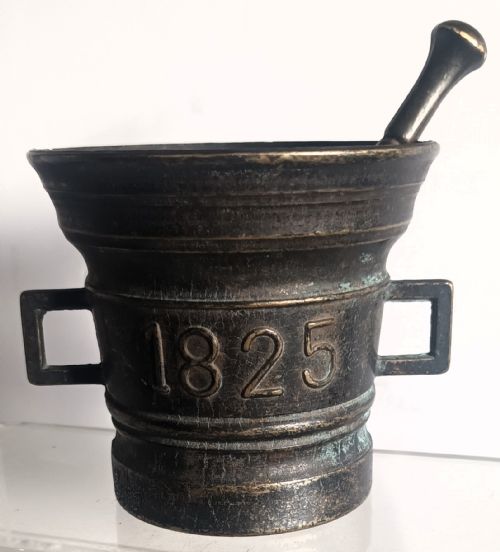
When you search for an antique apothecary bowl, you find heavy utilitarian vessels primarily catalogued as mortars and pestles across this page. These pieces date from the seventeenth century through to the Edwardian period, spanning English, French, Spanish, and Italian origins.
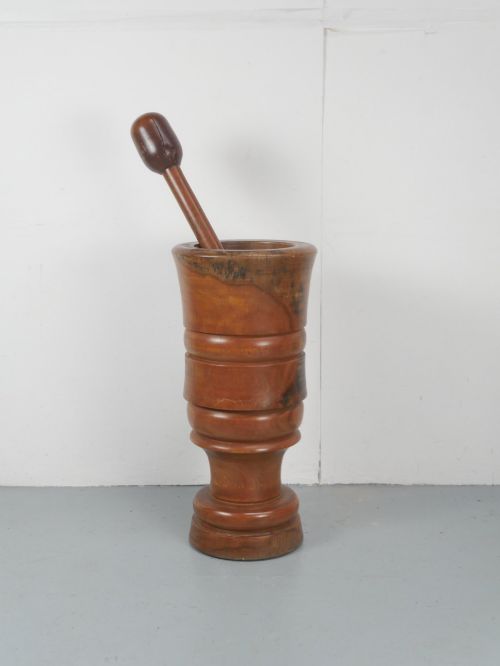
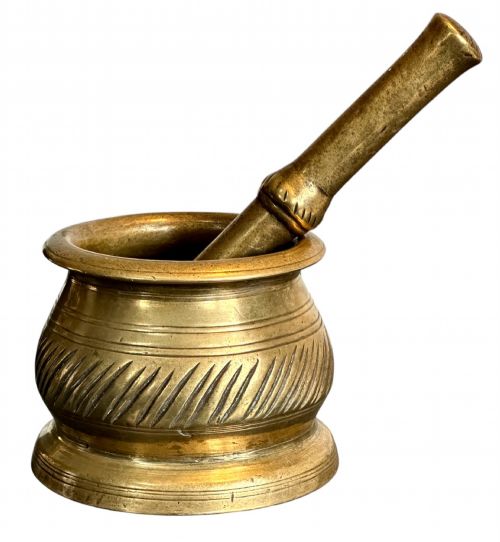
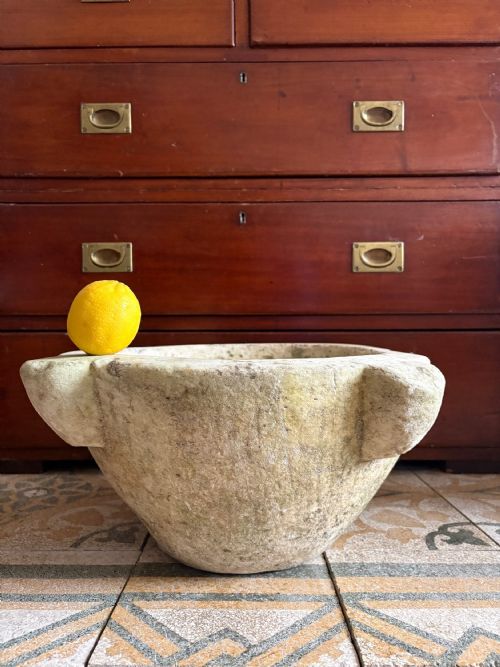
The forms range from small turned wooden vessels and decorated brass desk items to massive floor-standing cast iron and stone kitchen implements weighing substantial amounts. Many survive with their original pestles, though others appear as single bowls utilised in domestic or apothecary settings.
How they were made
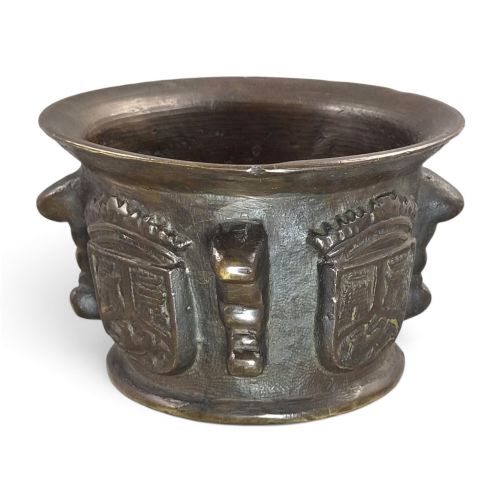
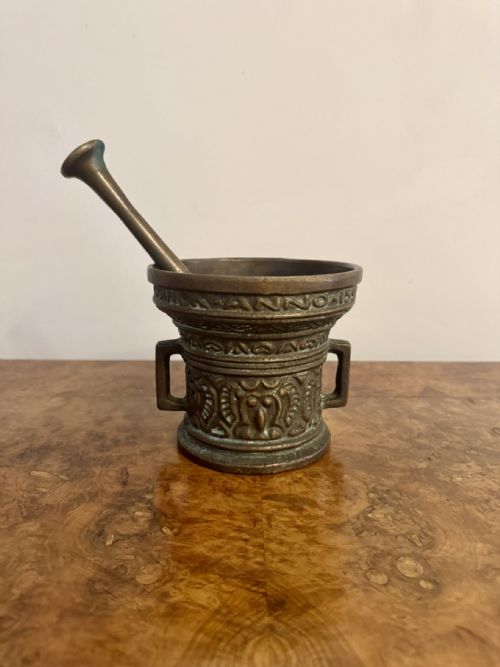
Metal vessels such as bronze, brass, and cast iron were produced using traditional casting methods, often featuring raised ribs, heraldic coats of arms like the House of Enríquez, or Tudor rose motifs on the exterior. Bronze alloy compositions varied to give the walls sufficient density and impact resistance for heavy crushing work.
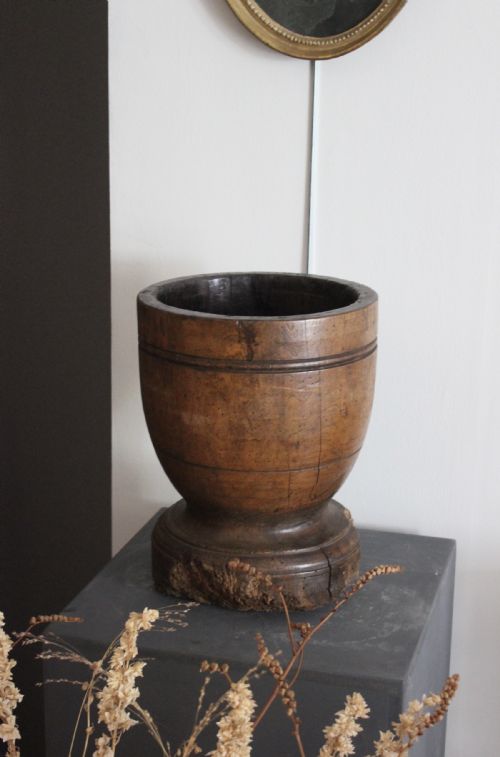
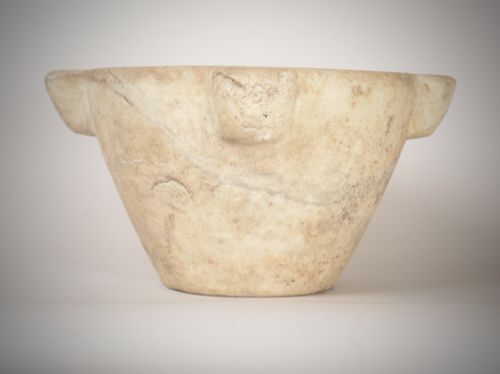
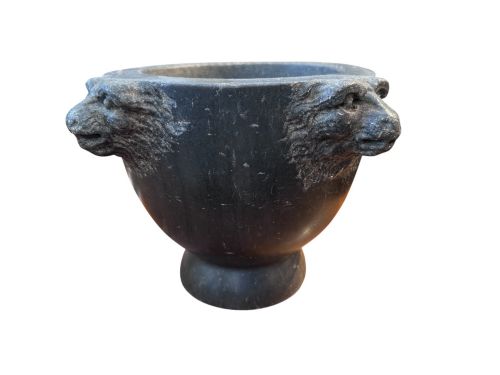
Wooden examples, including walnut, beech, and lignum-vitae, were shaped on lathes to create turned hardwood bowls with thick walls and stable bases. Stone and marble mortars were carved from solid blocks of basalt or white marble, yielding heavy circular basins designed for pharmaceutical and culinary preparation.
Antique Apothecary Bowl Retail Price Guide 2026
Typical asking prices for apothecary bowl among the pieces listed under this phrase on Sellingantiques today, from the lower quarter to the upper quarter. They describe what is for sale here now, not the wider market.
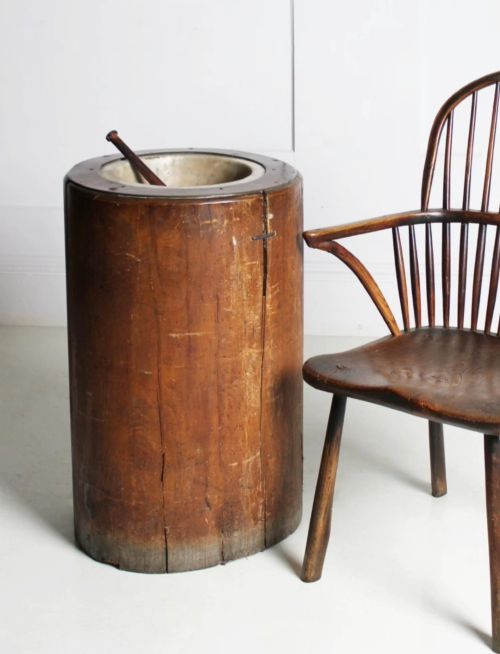
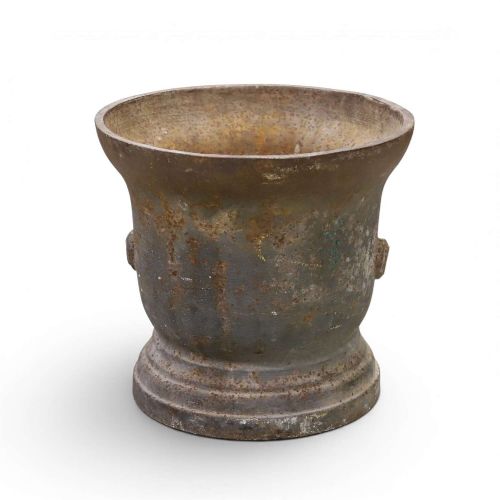
One heavy survivor weighs a massive one hundred and forty pounds, having spent its working life as a dye maker's first stage mortar.
What varies in quality
The distinction between ordinary utility items and superior examples lies in the crispness of the casting detail, the presence of specific heraldic or decorative ornamentation, and the preservation of the matching pestle. Finely cast bronze pieces with sharp relief work and rich patination stand apart from plain industrial hardware.
Material density and scale also define the hierarchy of these objects, from small domestic treen vessels up to massive dye maker implements and fifty-centimetre white marble basins. Completeness of form and the presence of documented regional origins elevate certain vessels above standard kitchenware.
The Antique Apothecary Bowl Glossary
- Mortar
- A heavy bowl used with a pestle for crushing, grinding, and mixing solid substances. These vessels appear in bronze, brass, iron, marble, stone, and turned hardwood.
- Pestle
- A heavy tool with a rounded end used for pounding and grinding materials against the inner walls of a mortar. Matching pestles significantly complete the historical utility of the bowl.
- Treen
- Small handmade wooden domestic objects turned on a lathe, such as seventeenth-century lignum-vitae or walnut mortar bowls. This material offers a distinctive dense grain.
- Basalt
- A dense, dark volcanic stone utilised to carve heavy mortars and pestles. Its hard texture made it suitable for rigorous apothecary preparation.
- Patina
- The surface sheen and coloration developed through age, handling, and oxidation on metal, wood, or stone surfaces. A natural patina indicates uncompromised historical integrity.
Antique Apothecary Bowl: Frequently Asked Questions
What were apothecary bowls actually used for?
These vessels served as essential tools for apothecaries, chemists, and kitchen staff to grind herbs, minerals, and medical ingredients into fine powders or pastes. Larger industrial versions even handled dye-making and bulk food preparation.
Over centuries, their heavy construction allowed users to apply substantial downward force without cracking the bowl or wearing down the interior basin.
How do I date a bronze mortar?
Dating relies on examining the casting style, decorative motifs such as Tudor roses or heraldic arms, and the profile of the rim and base. Seventeenth-century examples often display distinct Gothic or baroque decorative bands.
Later Victorian and Edwardian pieces tend toward simpler industrial utility forms or cleaner neoclassical lines without the older relief decorations.
Can I still use an antique mortar for cooking?
Bronze, brass, and marble bowls can handle culinary grinding if cleaned thoroughly, though many collectors prefer to display them as decorative objects. Wooden and iron examples require careful consideration regarding internal residues and moisture absorption.
Checking the stability of the base and the condition of the inner basin ensures the vessel remains suitable for physical use.
Why do some mortars weigh so much?
The substantial weight comes from solid cast metals, thick stone blocks, and dense hardwoods engineered to absorb the shock of heavy pestle impacts. Industrial and pharmaceutical vessels required massive walls to prevent shifting during vigorous daily use.
This robust mass is precisely what has allowed fragile-sounding items like marble and bronze mortars to survive across hundreds of years.