




Antique Aneroid Weather Station
An antique aneroid weather station brings together barometric pressure, temperature and time in one instrument, offering both mechanical precision and period decoration.
Antique Aneroid Weather Station
When you search for an antique aneroid weather station, you encounter a mix of domestic instruments that record atmospheric changes without using liquid mercury. These pieces emerge primarily from Victorian and Edwardian workshops, spanning the late nineteenth century into the 1930s.
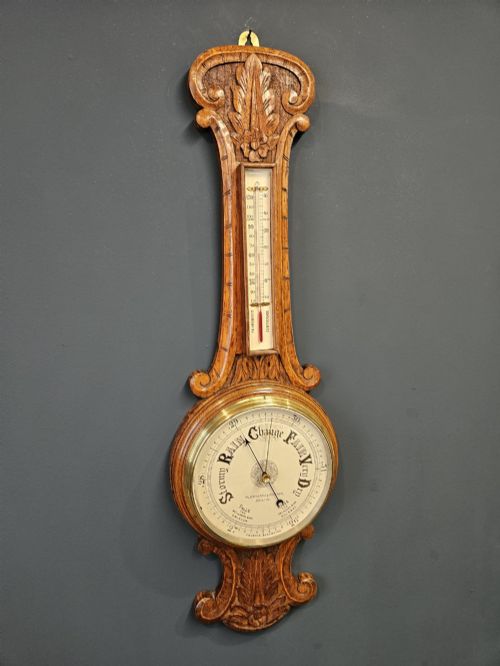
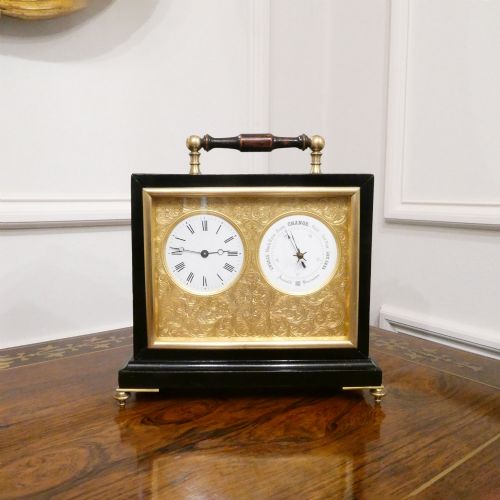
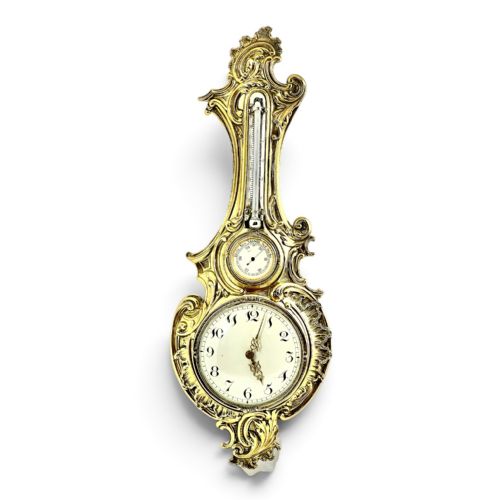
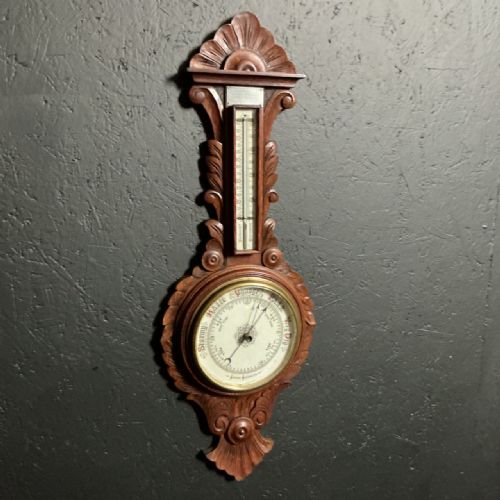
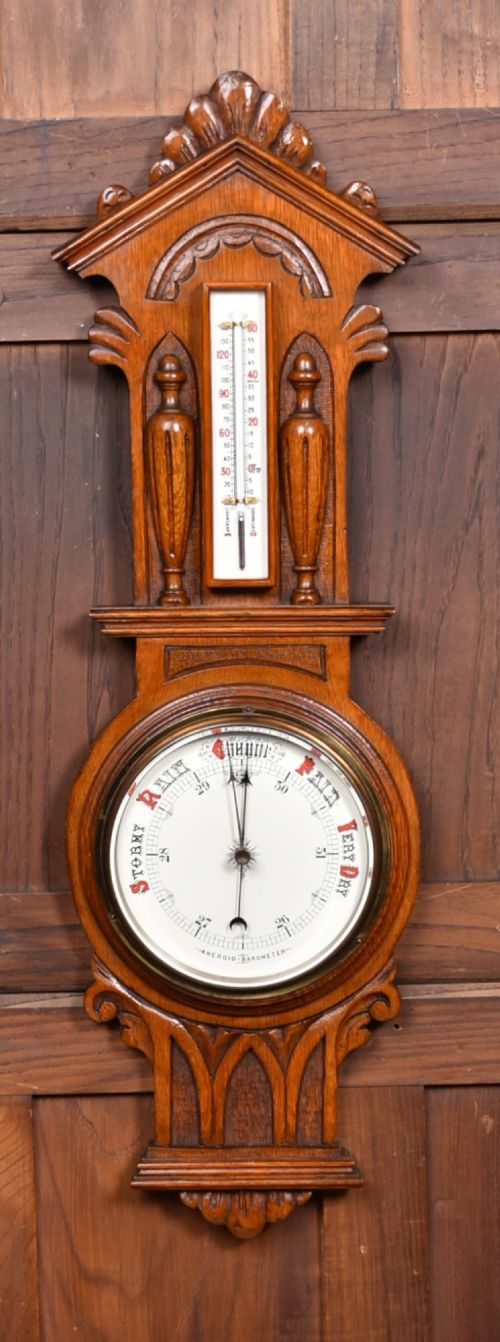
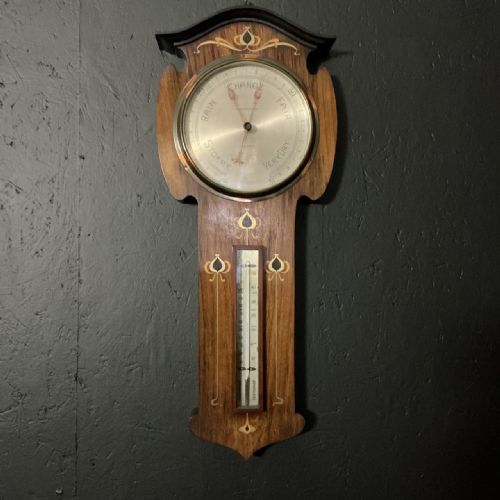
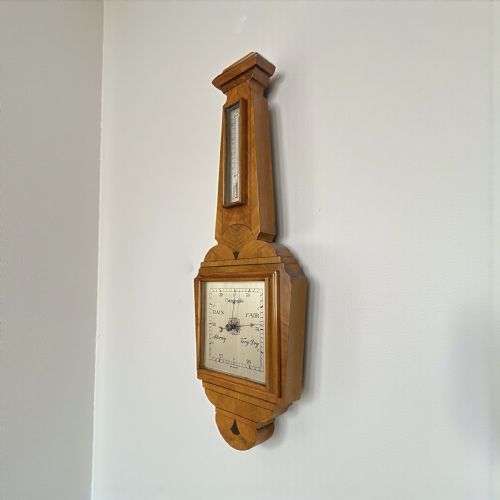
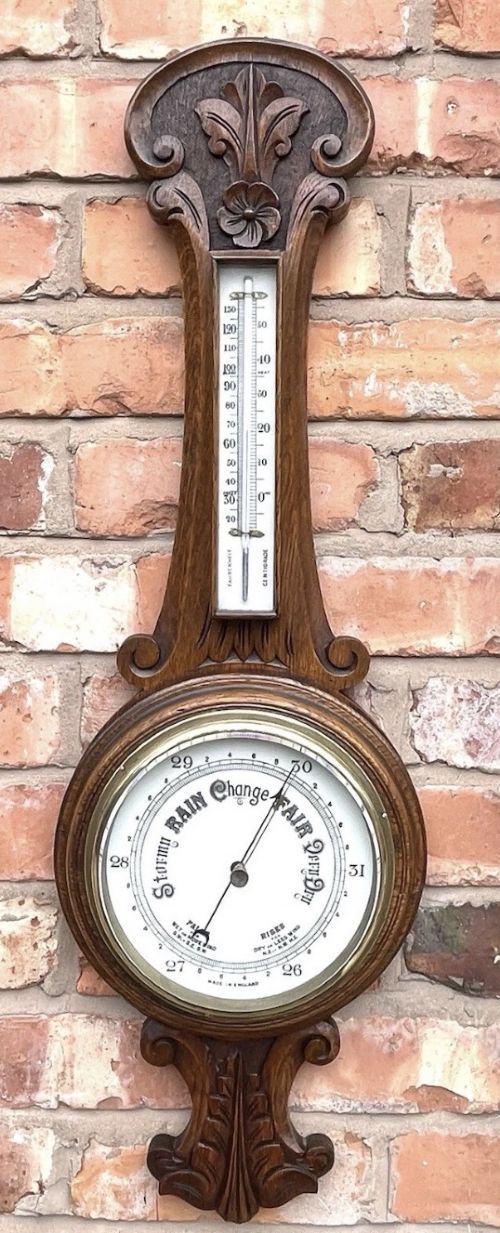
The wall-hanging banjo barometer dominates the selection, frequently paired with a thermometer and sometimes a clock dial. Desk compendiums and freestanding barographs also appear, housing precision aneroid movements in polished wooden cases.
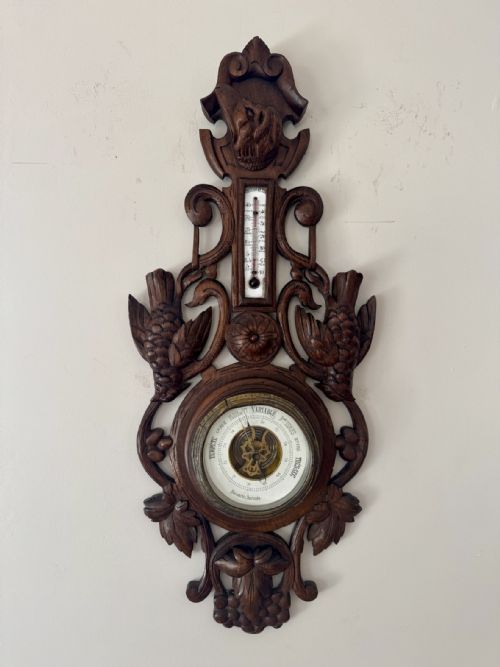
Regional styles range from carved Black Forest wood to crisp Art Deco geometry and substantial oak architectural frames. The majority date to the late Victorian period, reflecting a domestic enthusiasm for domestic meteorology.
Materials and construction
The exterior housings rely heavily on dense timber, with carved oak, mahogany and walnut forming the structural chassis for wall and desk pieces. Artisans shaped these woods into elaborate banjo outlines, architectural pediments and rustic Black Forest foliage.
Internal aneroid mechanisms utilise flexible metal bellows that expand and contract with atmospheric pressure, linked delicately to visible dial needles through brass gears. Enamel, glass and porcelain protect the printed dials, while mercury-free spirit thermometers complete the station.
Antique Aneroid Weather Station Retail Price Guide 2026
Typical asking prices for aneroid weather station among the pieces listed under this phrase on Sellingantiques today, from the lower quarter to the upper quarter. They describe what is for sale here now, not the wider market.
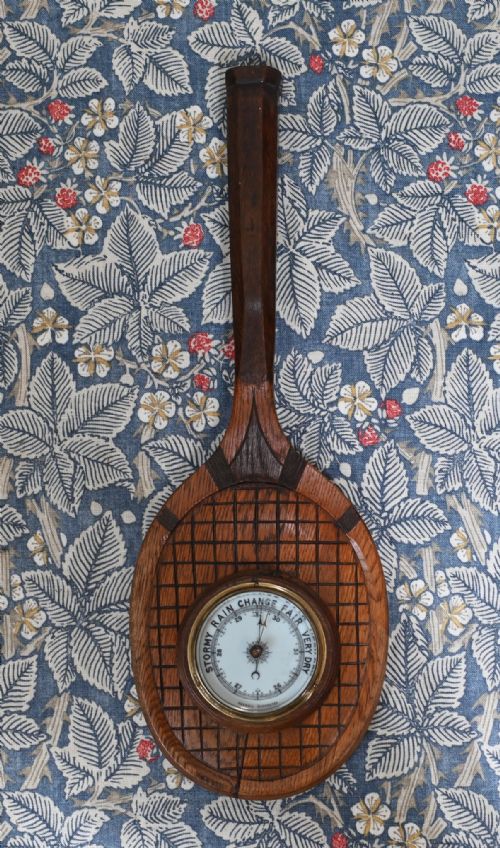
One tennis club commissioned an aneroid barometer shaped like a racquet.
Craft and execution
The division between standard production and superior work rests entirely on the crispness of the timber carving and the sophistication of the combined instruments. Pieces featuring secondary clocks, detailed barographs or makers of note show greater mechanical ambition.
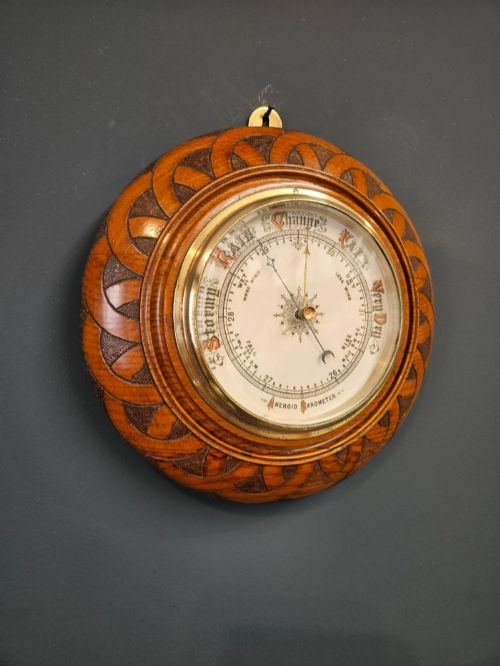
Finishing details dictate visual success, from the depth of relief work on carved oak frames to the legibility of enamel dials and brass bezels. Simpler circular wall models contrast with elaborate marquetry and figural Black Forest carvings.
GAUPP & CO HONGKONG & SINGAPORE·Elliott Brothers 449 Strand London·NEGRETTI & ZAMBRA LONDON·W Watson & Sons·Maple & Co·Antoine Redier·R Fuess
The Antique Aneroid Weather Station Glossary
- Aneroid barometer
- An instrument measuring atmospheric pressure by the expansion and contraction of a sealed metal capsule, removing the need for liquid mercury. It serves as the primary mechanism in these combined weather stations.
- Barograph
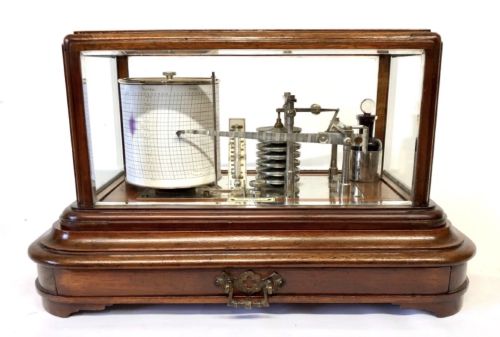
- A self-recording meteorological instrument that draws a continuous line of barometric pressure onto a rotating paper drum. These mechanical devices sit inside glazed wooden desk boxes.
- Banjo barometer
- A wall-mounted weather glass shaped with a narrow trunk and a bulbous circular base. This configuration allows space for a thermometer alongside the main dial.
- Desk compendium
- A multi-functional desk accessory uniting a clock, thermometer and barometer within a single architectural housing. They reflect nineteenth-century desires for orderly desktop instrumentation.
- Black Forest
- A style of wood carving originating from the mountainous region of Central Europe, notable for naturalistic foliage and animal motifs. These pieces utilise dark walnut and carved oak.
Antique Aneroid Weather Station: Frequently Asked Questions
How do aneroid stations work?
Aneroid movements rely on a corrugated metal vacuum capsule that flexes as air pressure shifts. This microscopic movement transfers through levers to rotate the dial pointer.
Unlike mercury columns, these sealed metal chambers make the instruments safe and stable for domestic wall mounting.
Where were these placed at home?
Victorian and Edwardian households positioned these instruments in entrance halls, libraries and studies where guests and family could check the impending forecast. Wall-hanging banjo formats suited narrow hallways.
Desk compendiums occupied writing tables and libraries alongside inkstands and stationery boxes.
How do I date an oak barometer?
Stylistic clues within the timber carving and dial typography reveal the manufacturing era. Late Victorian pieces often feature deep relief carvings and enamel chapter rings.
Edwardian and 1930s iterations lean toward cleaner circular oak frames or geometric Art Deco lines without heavy foliage.
Can these instruments still forecast weather?
Most surviving aneroid mechanisms retain functional sensitivity to barometric shifts if the internal linkage remains undamaged. Setting the needle against a known local pressure allows basic forecasting.
They function equally as decorative mechanical antiques reflecting nineteenth-century scientific interest.