

Antique 9ct Necklace
An antique 9ct necklace carries the warm tone of lower-carat gold alongside gemstones from the Edwardian, Victorian and mid-century eras.
Antique 9ct Necklace
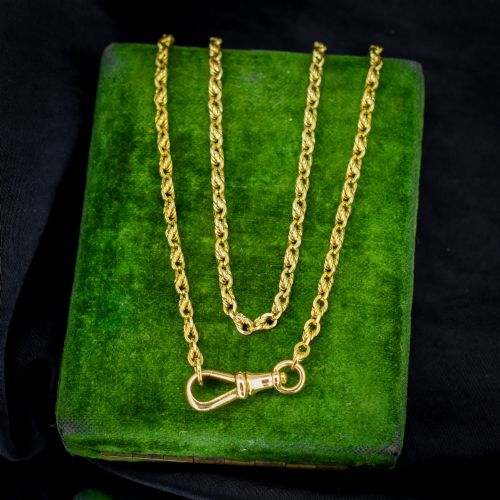
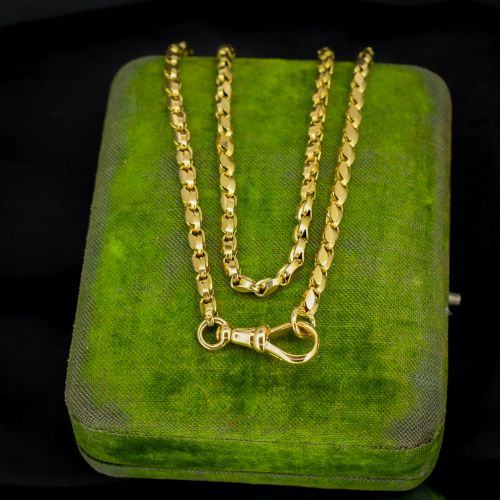
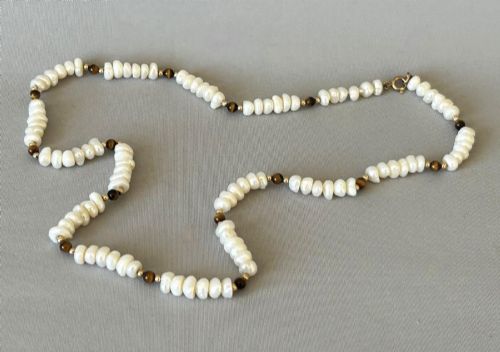
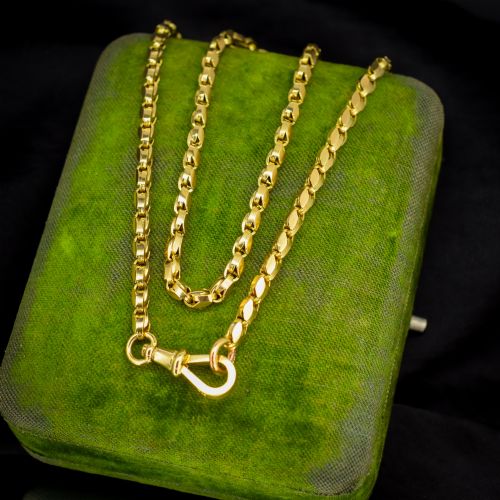
When searching for an antique 9ct necklace, buyers encounter a diverse range of forms spanning from the late Victorian period through to the mid-century decades. The selection includes substantial guard chains, watch chains adapted for neck wear, and delicate gemstone pendants set in yellow, rose or white gold.
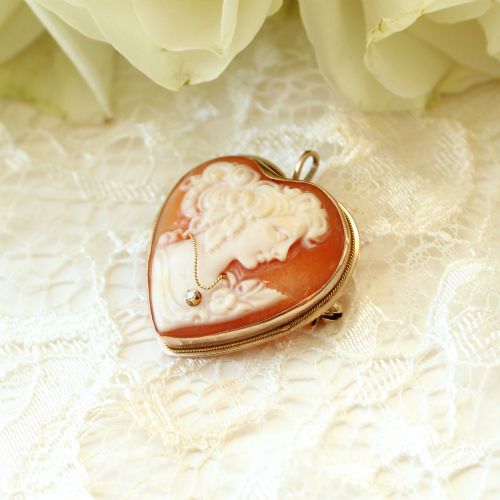
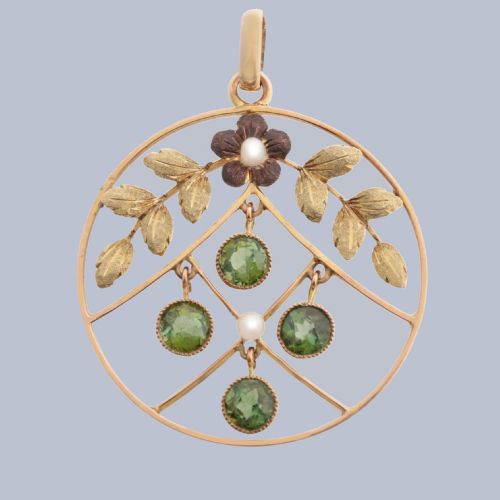
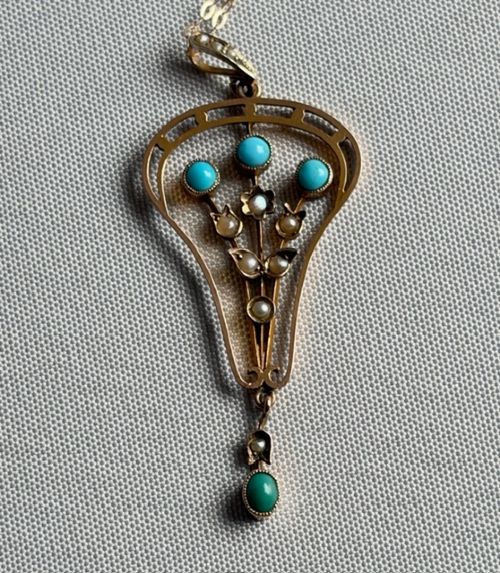
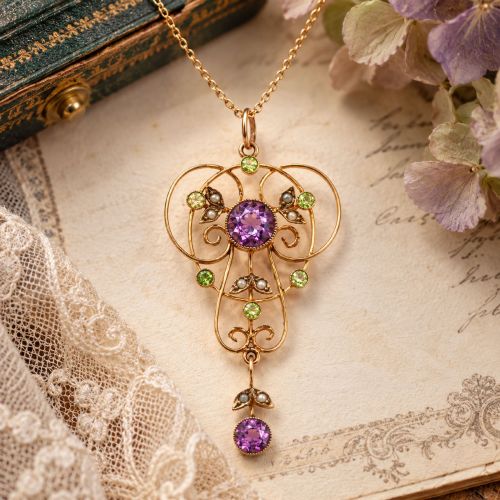
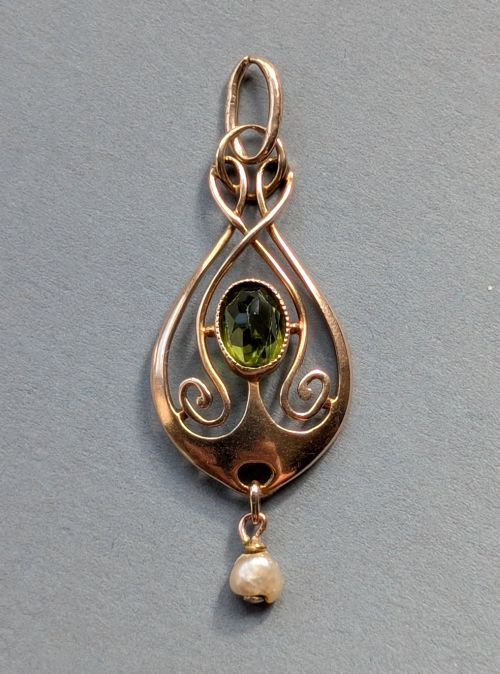
The most common versions met on this page are Edwardian pendants and long chains originating from the early twentieth century. These pieces frequently combine 9ct gold with seed pearls, amethysts, aquamarines and turquoise in distinct stylistic traditions like Arts and Crafts and Art Nouveau.
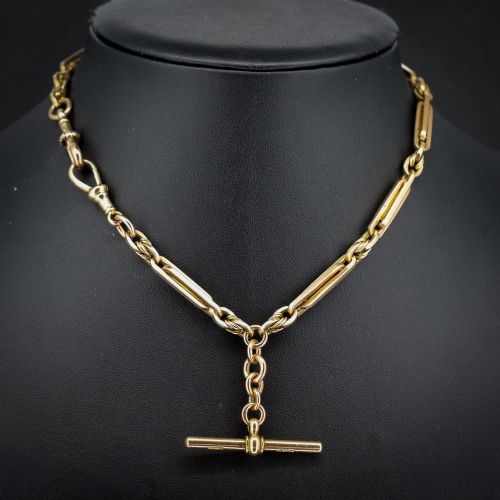
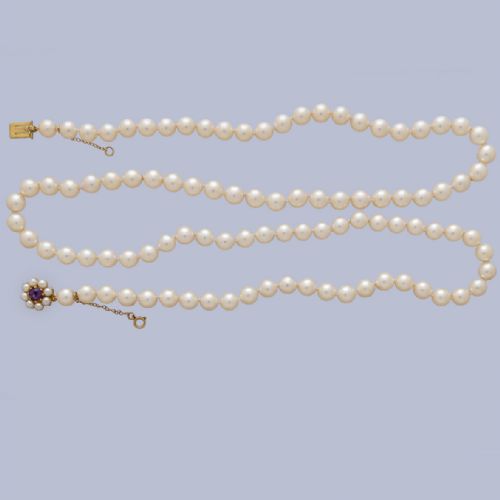
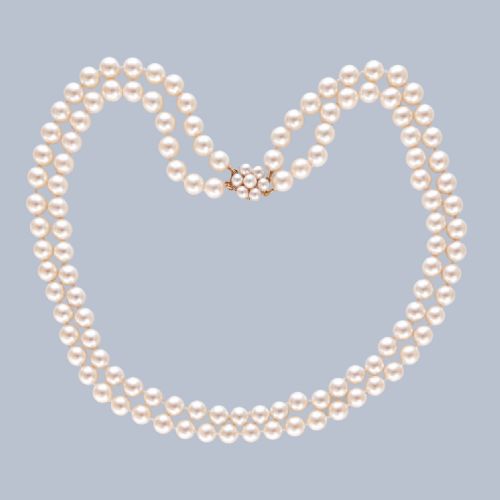
Beyond pendants and chains, the inventory encompasses specific historical forms such as Albert chains, locket charms, and graduated pearl strands fitted with precious clasps. Each type reflects the shifting domestic fashions and jewellery-making methods of the decades in which it was produced.
How they were made
The physical construction of these items relies on 9ct gold, utilised in yellow, rose and white variations to form links, bezels and settings. Goldsmiths employed techniques such as hollow stamping for long guard chains and solid casting for structural components like dog clips and love knot links.
Gemstones including seed pearls, peridots, turquoise and amethysts are secured using standard claw settings, bezels or seed pearl stringing methods. Many chain links and components carry individual hallmarks indicating the year of manufacture and assay office origin.
Antique 9ct Necklace Retail Price Guide 2026
Typical asking prices for 9ct necklace among the pieces listed under this phrase on Sellingantiques today, from the lower quarter to the upper quarter. They describe what is for sale here now, not the wider market.
The inventory contains diverse chain formats including curb, trombone, paper link and guard chains alongside specialised items like spinning fobs and Albertina watch chains.
What varies in quality
The distinction between pieces rests upon the precision of the goldsmith's work and the originality of the components. Hand-engraved patterns on lockets or links display a clarity and depth that elevates the item, whereas worn or softened engraving indicates heavier prior use.
Quality also depends on the selection and matching of the stones, such as graduated seed pearls or natural aquamarines with consistent saturation. The integrity of original links, clasps and hallmarks preserved across the entire length of a chain defines the superior examples in this category.
Murrle Bennett·Deakin & Francis
The Antique 9ct Necklace Glossary
- Albert chain
- A heavy watch chain originally designed to attach to a pocket watch, frequently adapted to be worn as a necklace. These chains often feature trombone, curb or fancy links paired with a T-bar and dog clip.
- Guard chain
- An exceptionally long chain, sometimes exceeding fifty inches, intended to be worn doubled or looped around the neck. They were historically used to secure lorgnettes, watches or purses.
- Negligee necklace
- A symmetrical or asymmetrical pendant design featuring two drops suspended at different lengths from a central connector. This style gained widespread popularity during the Edwardian and Art Nouveau periods.
- Seed pearl
- A very small, natural or cultured pearl used extensively in clusters and floral motifs during the Victorian and Edwardian eras. They are typically threaded on silk or secured with tiny gold pins.
- T-bar
- A short transverse bar attached to the centre of a watch chain, historically used to anchor the chain through a waistcoat buttonhole. On converted necklaces, it remains as a decorative element.
Antique 9ct Necklace: Frequently Asked Questions
What is an Edwardian 9ct pendant?
An Edwardian 9ct pendant is a piece of jewellery created in the early twentieth century using nine-carat gold. These items typically incorporate light, openwork designs set with gemstones like aquamarine, amethyst or seed pearls.
They reflect the graceful, feminine aesthetic of the period, often drawing inspiration from floral and ribbon motifs. Most hang from contemporary or original matching 9ct chains.
How do you wear an antique watch chain as a necklace?
Antique watch chains, such as Albert or guard chains, are worn as necklaces by utilising their existing dog clips and spring rings. The clips attach directly to the opposite end or to a connected T-bar to secure the length.
Because many of these chains measure between fourteen and sixty inches, they can be worn single, doubled or layered depending on the specific length and link style.
How are different periods identified?
Periods are identified through a combination of stylistic characteristics, gemstone usage and official hallmarks. Victorian pieces often lean towards heavier gold work and dark stones, whilst Edwardian items favour delicate openwork and pastel gems.
Assay office marks and date letters stamped onto individual links provide precise documentation for items hallmarked in specific years.
What is a trombone link?
A trombone link is a distinct form of chain link featuring alternating short rectangular sections and longer tubular bars. This construction creates a sturdy yet visually open pattern popular in watch chains from the early twentieth century.
Such links provide substantial length and weight while maintaining an airy appearance against the wearer.