


Antique 18k Gold Ring
Discover the enduring craftsmanship of an antique 18k gold ring, featuring precious gems and fine metalwork spanning the Victorian, Edwardian, and Art Deco eras.

Antique 18k Gold Ring
An antique 18k gold ring encompasses fine jewellery created during the nineteenth and twentieth centuries, predominantly featuring engagement rings, dress rings, and decorative bands. Buyers searching for an antique 18k gold ring encounter diverse styles including Victorian cluster settings, Edwardian gemstone arrangements, and geometric Art Deco designs.
The selection frequently includes diamond solitaires, multi-stone rings, and gemstone pieces incorporating rubies, sapphires, emeralds, opals, and pearls. Yellow gold and white gold predominate across the periods, often paired with platinum in later twentieth-century pieces.
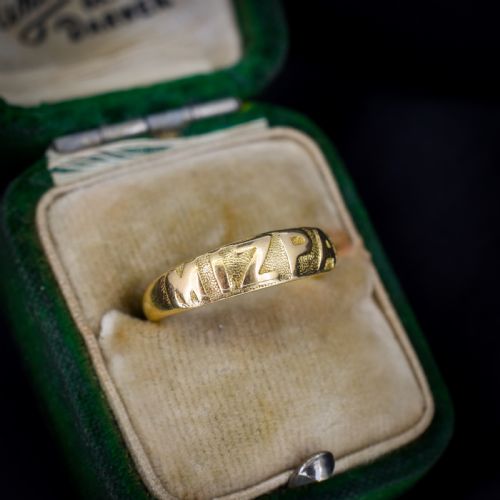
Beyond traditional finger rings, the category occasionally includes related connective elements such as charm pendants and jewellery connectors fashioned in matching gold standards. Pieces range from delicate nineteenth-century Mizpah bands to substantial twentieth-century cocktail and cluster configurations.
Materials and Techniques
These items rely on 18-carat yellow, white, and rose gold, frequently combined with platinum settings particularly during the Art Deco period to securely hold diamonds and coloured stones. Metals were shaped through casting, hand engraving, and wirework to form intricate galleries, bands, and bezels.
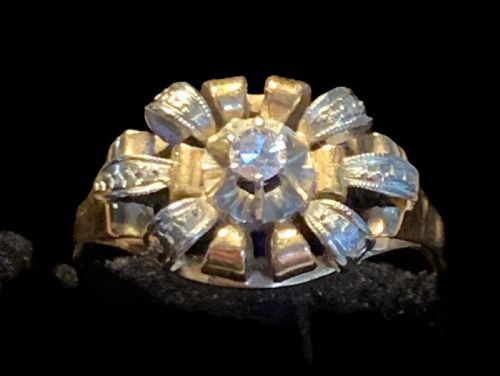
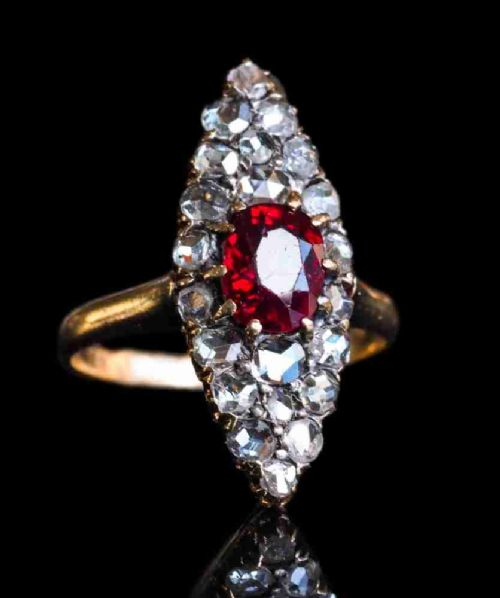
Gemstones such as old-cut diamonds, rubies, sapphires, and emeralds were secured using claw settings, flush gypsy mountings, and delicate millegrain edges. Master jewellers utilised traditional techniques including hand-cut facets for old European and rose-cut diamonds, paired with natural pearls and turquoise cabochons.
Listings span the Victorian, Edwardian, and Art Deco periods, utilising 18ct yellow gold, white gold, platinum, and diamonds.
Evaluating Quality and Execution
The standard of an antique 18k gold ring depends on the precision of the metalwork, the integrity of the gemstone settings, and the preservation of original hand-carved or engraved details. Finer examples display balanced proportions, secure claw or bezel work, and well-matched natural gemstones without modern replacement stones.
Execution varies from robust, everyday Victorian gypsy bands to intricate Art Deco openwork creations requiring exceptional skill in platinum and white gold. Superior pieces retain crisp hallmarks, sharp gallery details, and minimal wear to the underlying gold shank.
The Antique 18k Gold Ring Glossary
- Navette
- A boat-shaped gemstone setting that tapers to points at both ends. This distinctive silhouette is frequently seen in Victorian cluster rings.
- Old-Cut Diamond
- A diamond cut by hand before modern machinery standardised proportions, characterised by a smaller table and higher crown. These stones exhibit a softer, warmer scintillation under candlelight.
- Millegrain
- A decorative jewellery technique featuring a border of tiny raised metal beads along the edge of a setting. It adds a refined texture typical of Edwardian and Art Deco design.
- Gypsy Band
- A ring style where the gemstones are flush-set directly into the thick band of the metal. This secure mounting was popular for everyday Victorian and Edwardian wear.
- Trilogy Ring
- A ring featuring three main gemstones, traditionally representing the past, present, and future. They are commonly executed with diamonds or a central sapphire flanked by diamonds.
- Cabochon
- A gemstone shaped and polished with a smooth, rounded surface rather than faceted. This cut is typical for opaque or translucent stones like opals, turquoise, and garnets.
Antique 18k Gold Ring: Frequently Asked Questions
How do I care for an antique 18k gold ring?
Clean your jewellery gently using warm soapy water and a soft brush, avoiding harsh chemical dips that can damage softer gems like opals and pearls. Have the setting checked periodically by a professional jeweller to ensure the old-cut stones remain secure in their original mountings.
Store pieces individually in soft pouches to prevent scratching between harder diamonds and more delicate materials like turquoise or emeralds.
Can I wear an antique 18k gold ring every day?
Many of these pieces were built for daily wear, particularly sturdy Victorian gold bands and robust cluster designs. However, extra care is required for rings containing softer organic gems or delicate Edwardian openwork.
Consider removing your ring during heavy manual work, swimming, or exercising to protect fragile settings and ancient gold prongs from unnecessary strain.
How do I identify the period of a gold ring?
Dating relies on a combination of gemstone cuts, mounting styles, and metal choices, such as platinum pairings introduced in the early twentieth century. Victorian pieces often feature heavy yellow gold with closed-back settings or gypsy mounts, while Art Deco examples display geometric symmetry and white gold.
Assay office hallmarks and makers' marks stamped inside the band provide the most precise dating evidence when available.
What is the difference between old-cut and modern diamonds?
Old-cut diamonds, including old European and rose cuts, were shaped by hand with smaller tables and deeper pavilions. This historic cutting style produces a charming, broad flash of light rather than the precise brilliance of modern brilliant cuts.
These antique stones were tailored specifically to catch the ambient light of gas lamps and candles.