

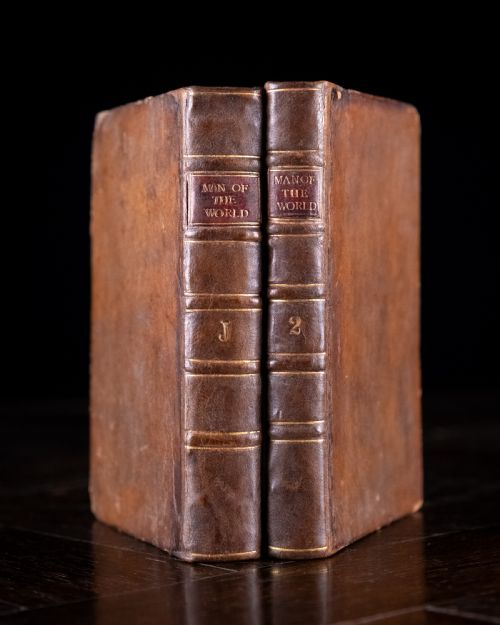


Antiquarian Literature
Antiquarian literature comprises older bound books and sets, offering tangible connections to past centuries of philosophy, drama, and narrative through traditional materials.
Antiquarian Literature
Antiquarian literature encompasses historical volumes and multi-volume sets ranging from the seventeenth century through to the early twentieth century. Buyers pursuing antiquarian literature typically encounter works spanning philosophy, drama, fiction, and travel, originating from British and French presses.
Common formats include comprehensive sets of plays, historical accounts, and novels authored by notable literary figures. These books serve both as historical artefacts and as traditional library furnishings.
How they were made
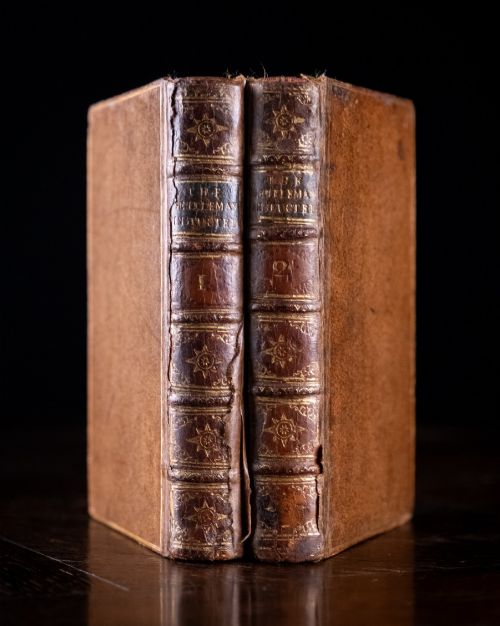
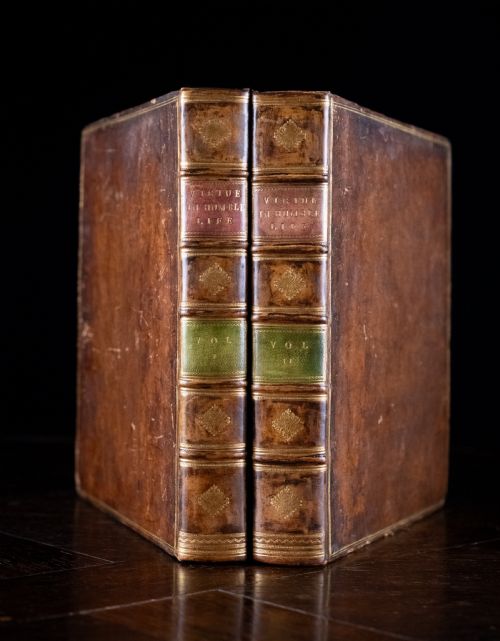
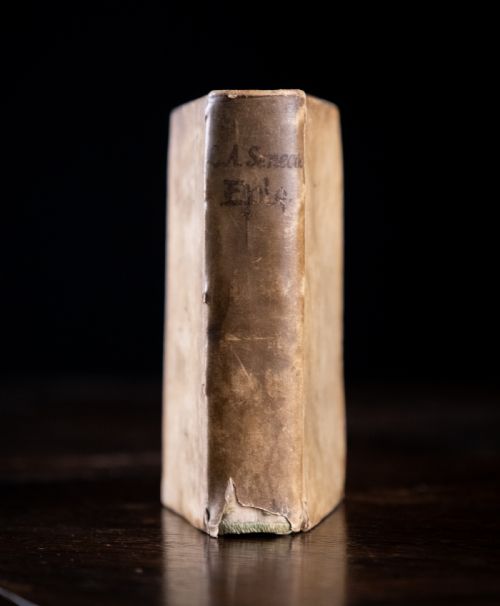
These volumes are constructed using traditional materials such as paper pages bound within leather, calfskin, or vellum covers. Bindings frequently incorporate marbled paper elements and gold leaf tooling along the spines and boards.
Book production during these periods relied on manual stitching, durable leather preparation, and hand-applied decorative elements. Text blocks were housed in sturdy hide bindings designed to protect the printed contents over centuries of handling.
These durable leather volumes have silently survived centuries of human reading habits, outliving the furniture they once sat upon.
What varies in quality
The distinction between volumes often rests on the integrity of the original binding, the presence of matching multi-volume sets, and the preservation of gold leaf details. Original calfskin or vellum covers that remain intact without extensive modern restoration command higher regard.
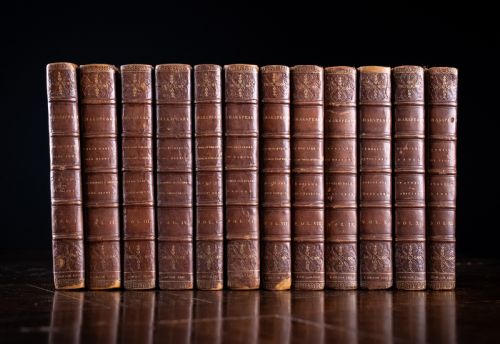
Completeness of multi-volume sets significantly shapes the standard of a collection, as intact series retain their original uniform appearance. The clarity of the paper and the precision of historical tooling further distinguish finer examples.
The Antiquarian Literature Glossary
- Vellum
- A fine parchment typically made from calf skin, used historically for durable book bindings. It offers a smooth, pale surface that withstands centuries of handling.
- Calfskin
- A supple leather prepared from the hide of a calf, frequently employed for superior book bindings during the eighteenth and nineteenth centuries. It takes gold leaf tooling exceptionally well.
- Marbled paper
- Paper decorated with a patterned, multi-coloured design resembling marble, commonly used for endpapers or covers in traditional bookbinding. The technique involves floating pigments on a liquid bath before transferring them.
- Gold leaf
- Gold beaten into an extremely thin sheet, utilised for lettering and decorative tooling on leather book bindings. It provides a lasting metallic lustre that resists tarnishing.
Antiquarian Literature: Frequently Asked Questions
How should I clean antique leather bindings?
Antique leather requires gentle dusting with a dry, soft cloth rather than liquid cleaners or modern chemical solutions. Maintaining stable humidity levels in your room helps preserve the natural hide.
Avoid applying heavy waxes or commercial oils unless specifically formulated for historic book conservation. Proper air circulation around your bookshelves prevents moisture accumulation and material degradation.
How do I identify the printing date of an old book?
Look for a publication date on the title page, which is standard for volumes produced after the sixteenth century. Roman numerals were frequently used for dates in older European texts.
If the title page lacks a date, examine the preliminary pages for publisher notes or historical inscriptions. Comparing the typography and paper stock with documented editions helps confirm the period.
Are multi-volume sets complete?
Checking the total volume count against the publisher's stated contents page reveals whether a set is complete. Individual volumes often became separated over centuries of private ownership.
Listings specify the exact number of volumes included in each set for verification. Comparing the volume numbers stamped on the spines ensures uniformity across the collection.
Can I read antiquarian books regularly?
These historical volumes can be read provided they are handled with care to protect fragile spines and historical paper. Supporting the covers fully when opening a heavy book prevents stress on the binding.
Restricting reading sessions to stable surfaces avoids accidental drops or strain on antique stitches. Storing the volumes upright without excessive crowding maintains the shape of the leather.