


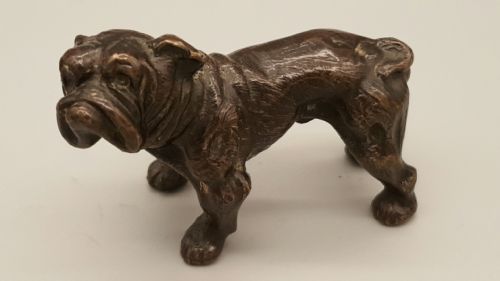


Animalier Bronze Dog Statue
An animalier bronze dog statue captures the precise muscle and character of hounds, gundogs, and terriers through nineteenth and early twentieth-century metalwork.
Animalier Bronze Dog Statue
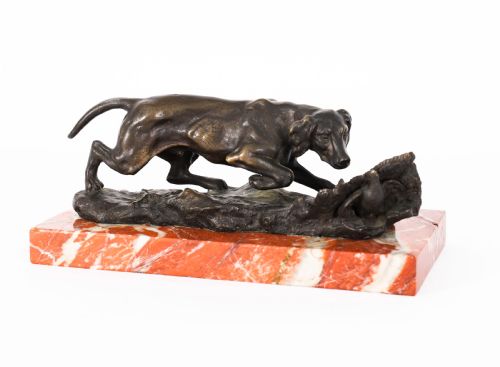
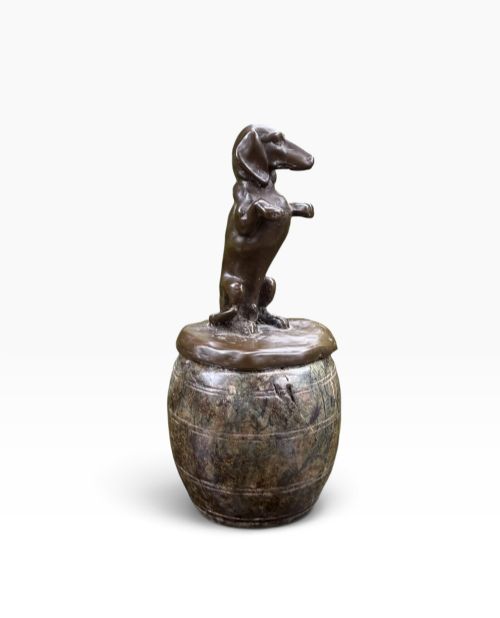
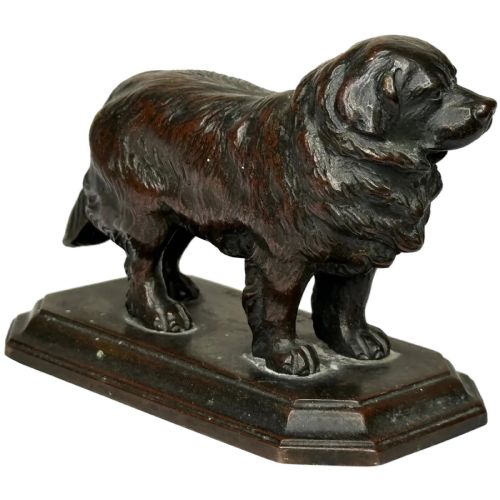
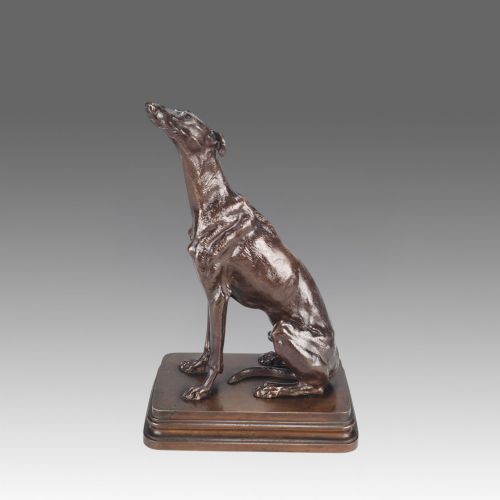
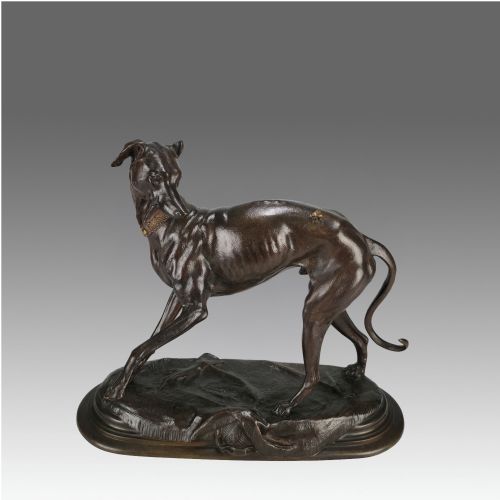
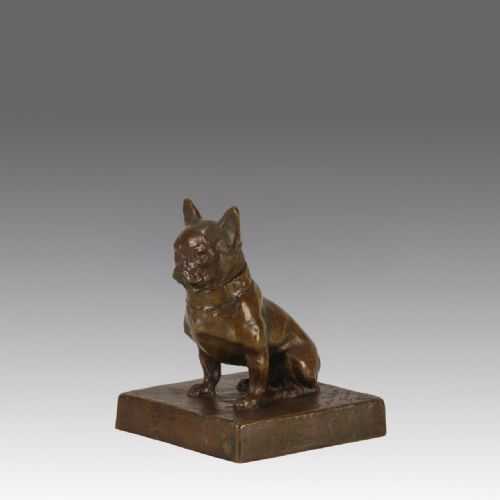
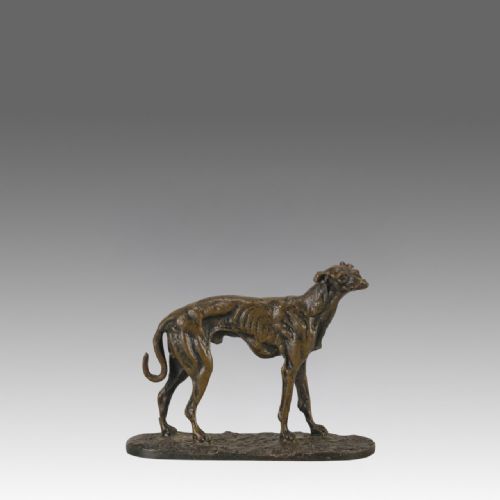
An animalier bronze dog statue depicts breeds such as greyhounds, setters, terriers, and dachshunds rendered in realistic or stylised poses. The selection spans the nineteenth century, Victorian era, and the Art Deco period, capturing canine forms with distinct anatomical precision.
Makers produced these works as standalone sculptures, desk accessories, inkwells, or paperweights. Many rest upon integral bases of marble, onyx, or brass, functioning as decorative ornaments or fireside figures.
How they were made
Foundries utilised traditional lost-wax casting methods to capture fine details in bronze, which artisans then finished with patination, cold-painting, or gilding. Some figures incorporate contrasting ormolu elements or mount directly onto heavy stone plinths.
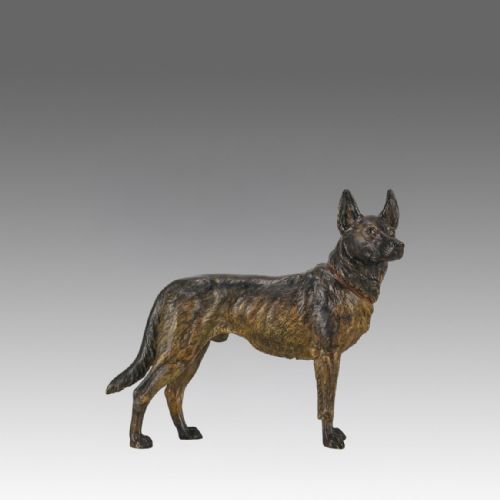
The surfaces display rich patinas ranging from deep browns to bright cold-painted polychrome finishes. Artisans chased the cooled metal to sharpen fur textures, collars, and facial expressions before mounting the sculptures.
Hounds and sporting dogs dominate the nineteenth-century animalier sculptures.
What varies in quality
The finish of the base and the complexity of the subject matter also distinguish the pieces. Statues depicting multiple dogs or complex interactions with game demand greater technical skill than simple standing figures.
Carl Kauba·Alfred Dubucand·Alfred Barye·Franz Bergman·Dora Heber·P J Mêne·Prosper Lecourtier·Jules Moigniez·Delabrierre·Antoine Louis Barye·Louis Riche·Edith Parsons·Auguste Nicholas Cain·Karl Hagenaur·C Masson·Arthur Waagen·P.de Soete·Joseph Francois Victor Chemin·Christophe Fratin
The Animalier Bronze Dog Statue Glossary
- Animalier
- A nineteenth-century artistic movement dedicated to the realistic representation of animals. Sculptors in this tradition focused on capturing the accurate anatomy and natural behaviour of wildlife and domestic beasts.
- Cold-Painted Bronze
- A technique where paint is applied to a cold bronze object, typically using oil-based paints rather than heat-fired enamels. This method allowed for vibrant, detailed polychrome decoration on small figures.
- Patina
- The surface coloration or sheen developed on bronze through age or chemical treatment. Artisans often manipulated this chemical layer to achieve specific brown, green, or dark tones on the metal.
- Ormolu
- Gilt bronze mounted on decorative objects or furniture. The technique involves applying a finely ground gold-mercury amalgam to bronze before heating.
Animalier Bronze Dog Statue: Frequently Asked Questions
What is an animalier bronze?
An animalier bronze is a sculpture depicting an animal, produced predominantly during the nineteenth and early twentieth centuries by artists who specialised in realistic wildlife and domestic subjects. These pieces focus on accurate musculature, posture, and behaviour.
Such sculptures range from small desk ornaments to large mantel figures, capturing dogs, horses, and wild animals in bronze, patinated metal, or cold-painted finishes.
How do I identify the maker?
Makers often signed their work directly into the bronze base or along the edge of the sculpture near the animal's feet. Signatures may appear as cast lettering or hand-chiselled inscriptions.
Checking the signature against known nineteenth-century and Art Deco foundry records helps confirm the artist and the approximate period of production.
What are cold-painted bronzes?
Cold-painted bronzes are metal figures decorated with paint applied directly to the cold surface without high-temperature firing. This technique was widely utilised by Viennese workshops to create brightly coloured animal figurines.
Collectors look for the preservation of this original paint layer, which depicts the natural markings and colours of specific dog breeds.
Where should I display these statues?
These statues suit placement on wooden mantelpieces, desks, bookcases, or dedicated display tables where their patinated surfaces catch ambient light. Many include marble or onyx bases that provide stability and contrast on polished furniture.
Keeping them away from direct heat sources and moisture preserves the bronze patina and any delicate cold-painted or gilded finishes.