




Anglo Moorish Furniture
Anglo moorish furniture brings together Victorian British design and intricate Middle Eastern inlay techniques, offering striking geometric tables and seating.
Anglo Moorish Furniture
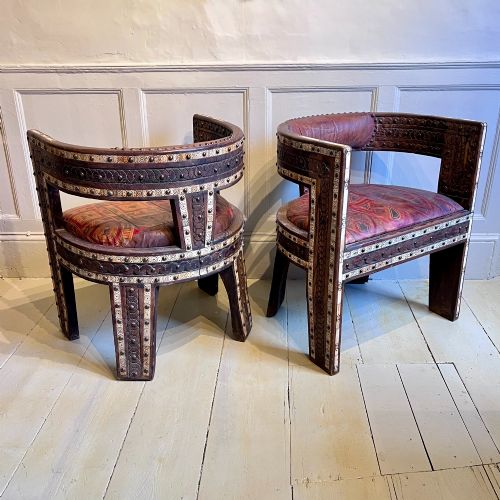
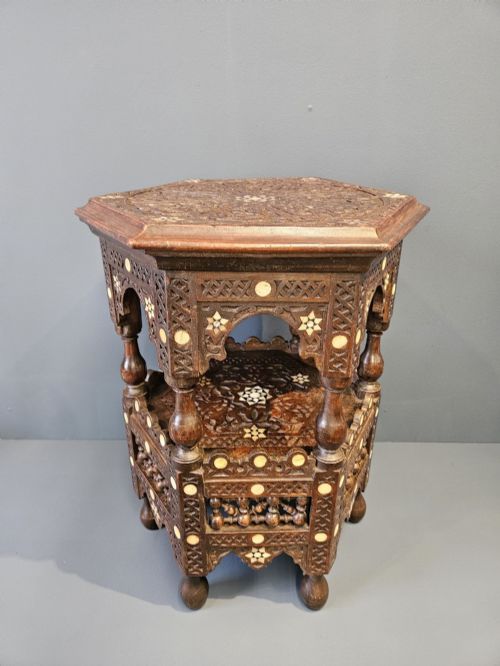
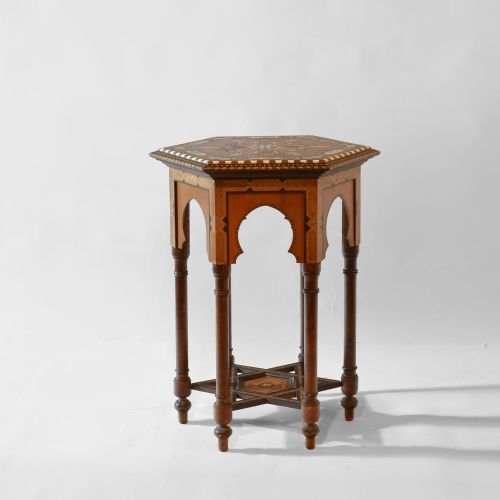
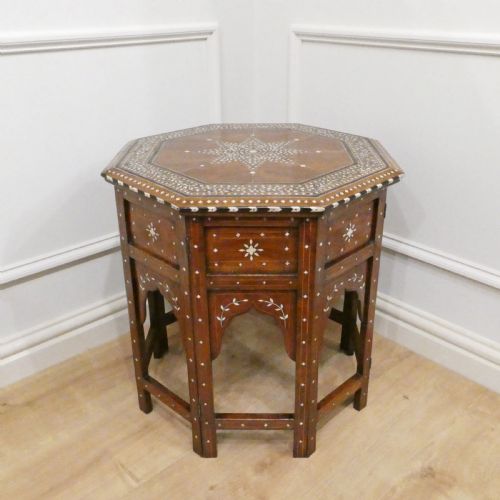
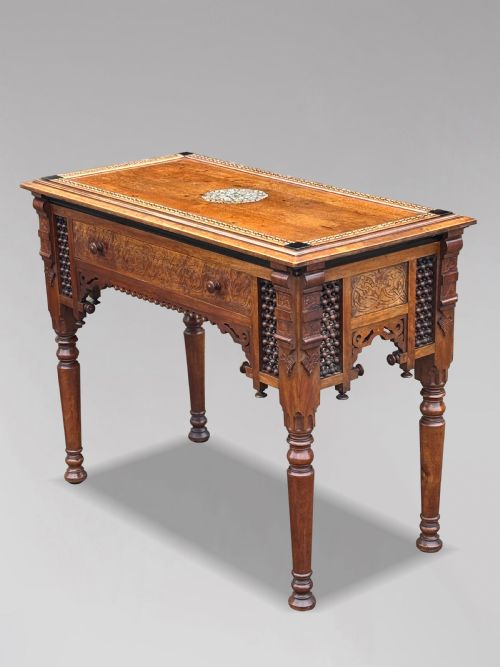
Makers of the period adapted traditional Islamic geometric carving and intricate marquetry for Western domestic interiors. Side tables and occasional pieces dominate the current selection, alongside occasional chairs, window seats, and cabinets.
The objects frequently combine British furniture forms with Near Eastern surface decoration. These pieces bridge Victorian taste and eastern craftsmanship, resulting in highly decorative items suited for drawing rooms and studies.
Materials and Construction
Constructed primarily from hardwoods such as walnut, teak, and mahogany, the framework relies on dense timbers capable of holding intricate carvings. Artisans carved deep geometric patterns directly into the wood before applying surface decoration.
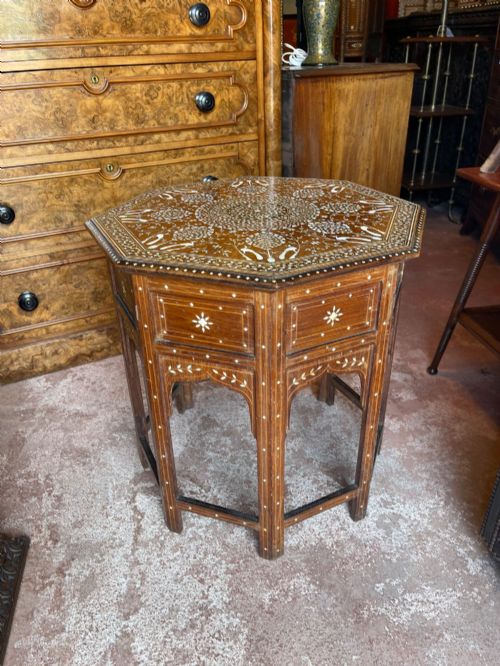
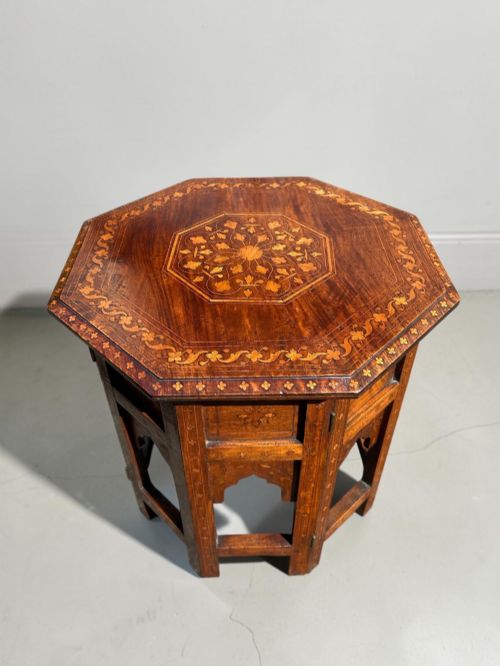
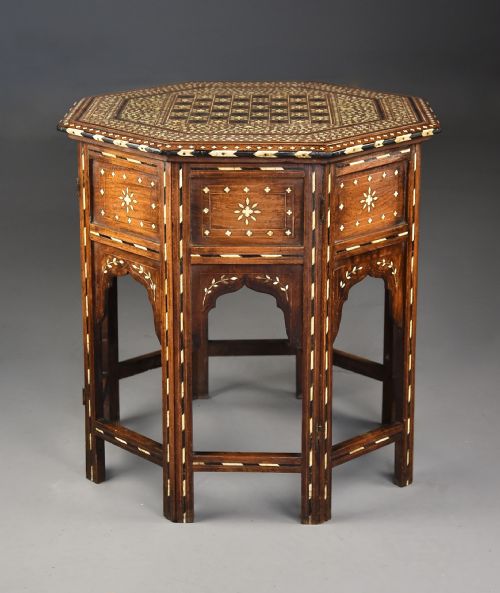
Surface detailing relies on extensive inlay work utilising bone, mother-of-pearl, brass, and abalone. These contrasting materials are pieced into intricate mosaic patterns across table tops, cabinet doors, and seating frames.
Anglo Moorish Furniture Retail Price Guide 2026
Typical asking prices for anglo moorish furniture among the pieces listed under this phrase on Sellingantiques today, from the lower quarter to the upper quarter. They describe what is for sale here now, not the wider market.
Current listings span from the Victorian era through the early twentieth century, featuring diverse materials including teak, brass, and bone.
Judging Quality
Quality rests primarily in the density and precision of the surface inlay. Superior examples display tightly fitted bone and mother-of-pearl fragments forming crisp geometric lines without excessive filler in the gaps.
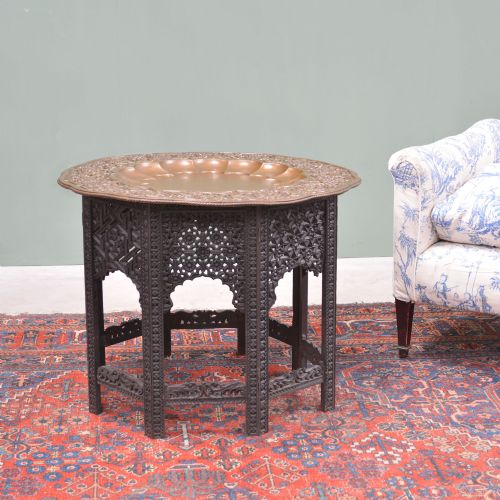
Carving depth and sharpness also separate standard production from finer work. Pieces with deep, crisply undercut foliage and lattice patterns demonstrate superior hand-carved execution compared to shallow, machine-tooled alternatives.
Liberty & Co
The Anglo Moorish Furniture Glossary
- Hoshiarpur
- A region in India renowned for producing intricate inlaid woodwork using shesham wood, brass, bone, and wire.
- Marquetry
- The art of applying pieces of veneer to a structure to form decorative patterns, widely seen on table tops.
- Octagonal
- Having eight sides and eight angles, a prevalent geometric form for occasional tables in this aesthetic.
- Overmantel
- A decorative structure placed above a fireplace mantel, often incorporating shelves and mirror glass.
- Ebonised
- Wood finished to resemble ebony through a dark staining or painting process popular during the aesthetic movement.
Anglo Moorish Furniture: Frequently Asked Questions
Where did these pieces originate?
These items emerged from a Victorian appetite for exotic interior decoration, blending British retail concepts with traditional craftsmanship from India, Egypt, and Syria.
Many objects were imported directly by London retailers or manufactured locally using imported techniques and motifs.
How do I clean inlaid surfaces?
Inlaid surfaces require minimal moisture to prevent bone and mother-of-pearl from lifting out of the wooden substrate. Dust gently with a soft dry cloth and avoid modern chemical polishes.
Apply a microcrystalline wax sparingly to protect the timber and maintain the natural lustre of the shell and bone.
Are folding tables stable?
Many eastern occasional tables feature clever folding bases designed for easy transport and storage. The interlocking wooden legs provide surprising sturdiness when fully extended.
Ensure the hinges or interlocking slots align properly to prevent wobbling when placing objects on the top.
How do I identify Liberty pieces?
Pieces retailed through London establishments often reflect specific aesthetic movement sensibilities through ebonised finishes and distinct joinery. Some items bear paper labels or stamps associated with the firm.
Design characteristics typically align with late Victorian catalogue illustrations featuring Moorish and Anglo-Indian motifs.