


Anglo Indian Tea Tray
These anglo indian tea tray pieces combine utility with intricate regional carving, offering versatile surfaces that anchor a room.
Anglo Indian Tea Tray
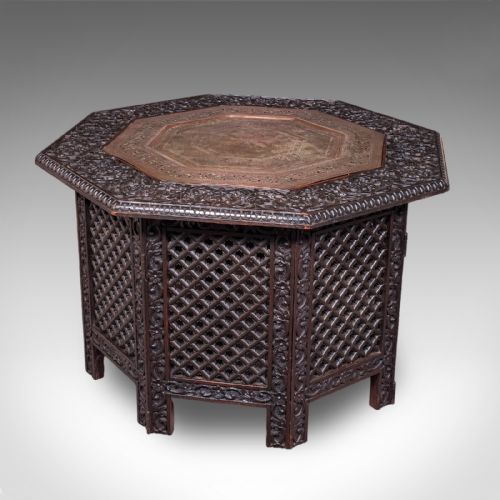
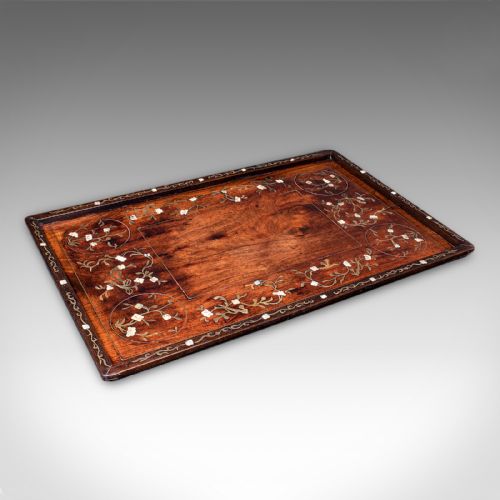
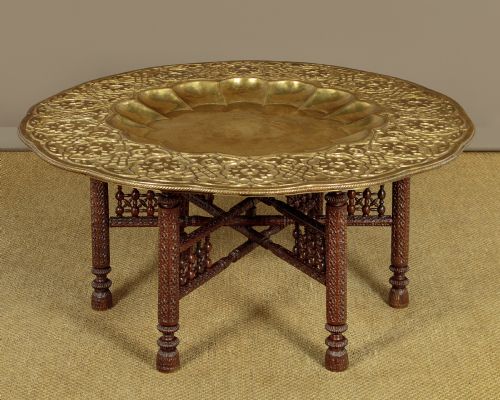
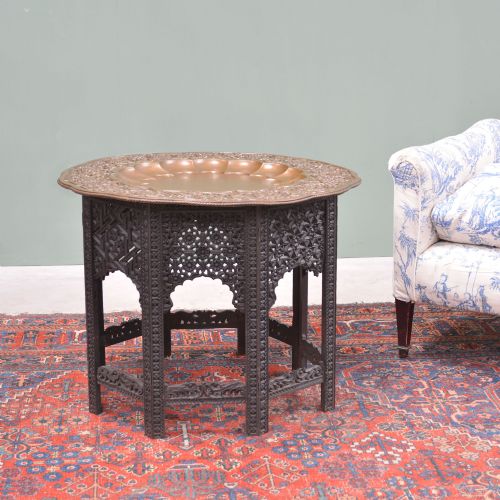
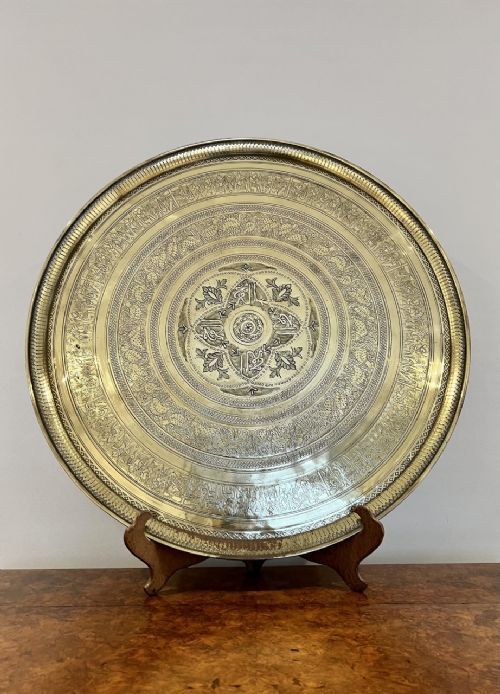
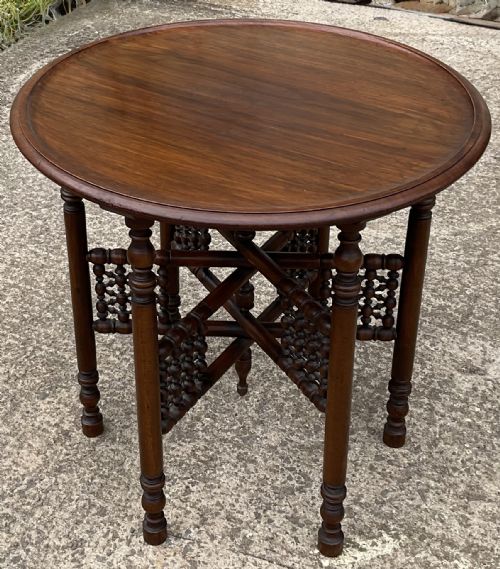
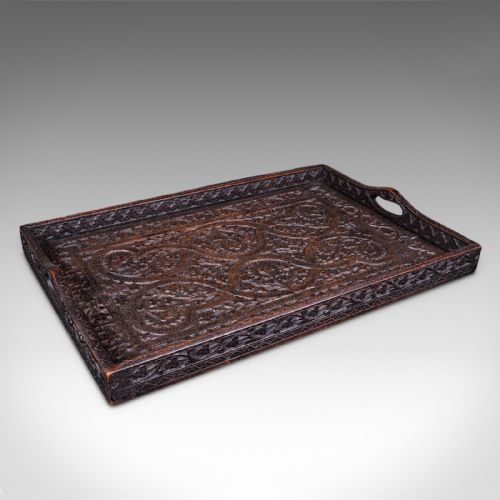
An anglo indian tea tray brings together traditional eastern carving techniques and British colonial form, often functioning as a removable top for a folding stand or as a standalone serving platter. You will encounter serving trays, decorative chargers, and versatile tray tables across this selection.
The objects span periods from the Victorian era into the early twentieth century, incorporating styles described as Anglo-Indian, Kashmiri, and Persian. Forms range from large circular platters to occasional tables with inlaid or engraved metal surfaces.
Many items utilise native timbers configured to hold heavy metal trays, or feature integrated carving directly into the wooden structure. The resulting pieces serve equally well as coffee tables, side tables, or decorative wall elements.
How they were made
Construction relies heavily on hardwoods such as teak, mahogany, walnut, and general hardwood, chosen for stability and fine grain. Artisans carved intricate floral and geometric patterns directly into these timber surfaces or onto applied panels.
Metal elements involve brass, copper, and mixed metal components, frequently hammered, engraved, or etched with detailed foliage and figural scenes. In some instances, bone inlays provide sharp contrast against the dark wood of the tray base.
Listings feature periods spanning from the Victorian era through the early 1930s, constructed in teak, walnut, mahogany, brass, copper, and bone.
What varies in quality
The depth and clarity of the chisel work separate standard production from superior craftsmanship. Finer examples display crisp, undercut carving in the timber and precise hand-engraving on the metal tops.
The choice of primary wood and the integrity of the joinery dictate the durability of each piece. Heavier timbers and tightly fitted folding mechanisms represent a higher grade of manufacture than lighter, purely decorative variants.
The Anglo Indian Tea Tray Glossary
- Anglo-Indian
- Describing decorative arts produced during the British rule in India, blending British furniture forms with traditional Indian craftsmanship. These items frequently combine indigenous timbers with European utility.
- Fretted
- Woodwork pierced or cut through with a fretsaw to create openwork patterns. This technique lightened the visual weight of large tables and trays.
- Mixed metal
- An object combining two or more metals, such as brass and copper, to create contrasting tones within the engraved design. This method was common in late nineteenth-century decorative work.
- Charger
- A large decorative platter or tray used primarily for display or serving rather than daily dining. They often feature the most detailed engraving in a collection.
Anglo Indian Tea Tray: Frequently Asked Questions
Are the tray tops removable?
Many examples feature a loose tray resting atop a folding wooden stand designed for easy storage. Other configurations permanently integrate the tray into the table frame.
Examine the underside to see if the tray lifts clear of the scissor base. Both loose and fixed variants appear frequently across these listings.
How do I date a Victorian piece?
Examine the timber species, construction joints, and style of the carving to establish a baseline period. Victorian examples often utilise dense teak or walnut combined with heavy hand-engraved brass.
Cross-reference these material traits with archival records or known design shifts between the mid nineteenth century and nineteen hundred. Subtle variations in tool marks help narrow the manufacturing window.
Can these tables hold heavy items?
Solid hardwood bases and thick metal trays provide a sturdy surface for daily use as coffee or occasional tables. The weight capacity depends largely on the stability of the folding leg mechanism.
Ensure the cross-braces lock securely into position before placing heavy objects on the tray. Lighter fretted versions serve better for display and light entertaining.