





Anglo Indian Raj Furniture
These pieces of anglo indian raj furniture bring rich colonial character and intricate carving into modern spaces.
Anglo Indian Raj Furniture
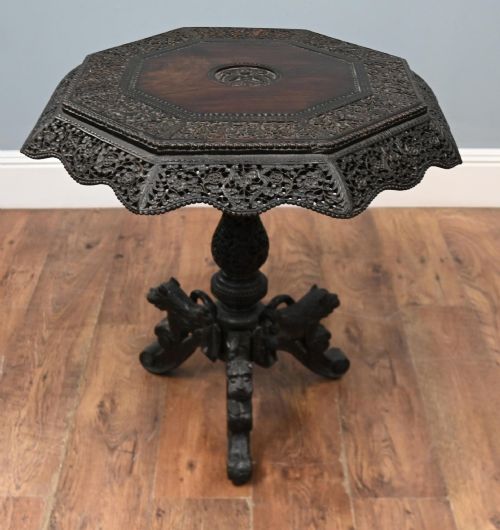
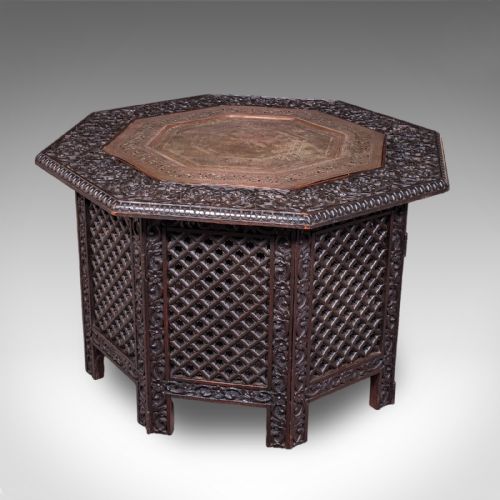
When you search for anglo indian raj furniture, you are looking at items created during the British colonial period that combine British forms with Indian craftsmanship. The selection centres heavily on tables, ranging from small occasional tables and coffee tables to substantial centre tables and sideboards.
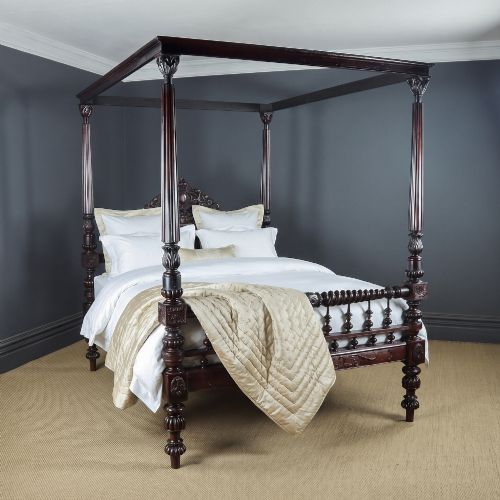
You will also encounter grand four poster beds built for colonial residences. The pieces span the nineteenth century and the early twentieth century, showing distinct Victorian influences alongside traditional regional carving traditions.
How they were made
The makers relied on dense tropical timbers such as padauk, teak, rosewood, and mahogany as the structural foundation for these heavy forms. These durable woods were selected to withstand demanding climates while providing a stable base for deep carving.
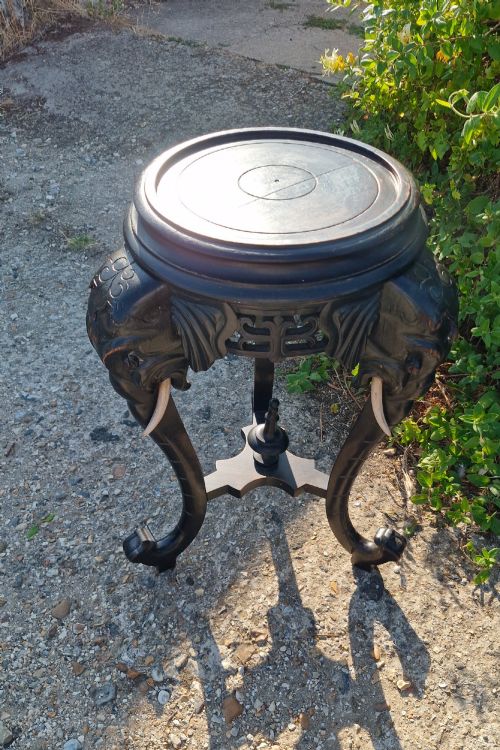
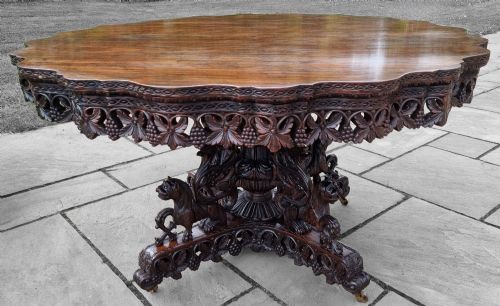
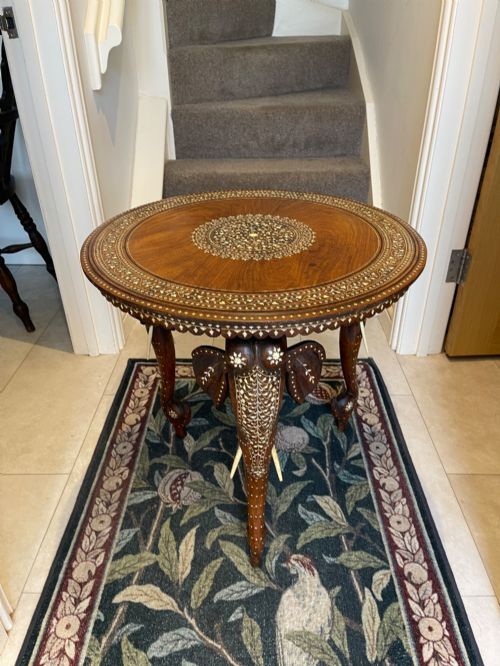
Artisans applied surface decoration using contrasting materials including brass, bone, and bone inlay. Intricate hand carving defines much of the surface work, seen on items like elephant tables and sideboards.
Anglo Indian Raj Furniture Retail Price Guide 2026
Typical asking prices for anglo indian raj furniture among the pieces listed under this phrase on Sellingantiques today, from the lower quarter to the upper quarter. They describe what is for sale here now, not the wider market.
Listings feature nineteenth and early twentieth century periods, utilising padauk, teak, rosewood, and bone inlay.
What varies in quality
The distinction between standard examples and the finest pieces lies in the crispness and depth of the carved detail. Superior specimens exhibit exceptional control over intricate floral and figurative motifs.
The choice of primary timber and the precision of inlaid brass or bone components further separate ordinary items from masterwork pieces. Original structural integrity and surface patination elevate the standing of any item.
Hoshiarpur
The Anglo Indian Raj Furniture Glossary
- Padauk
- A heavy, durable reddish-brown tropical hardwood prized for its rich colour and stability. It was frequently utilised for substantial furniture during the nineteenth century.
- Bone Inlay
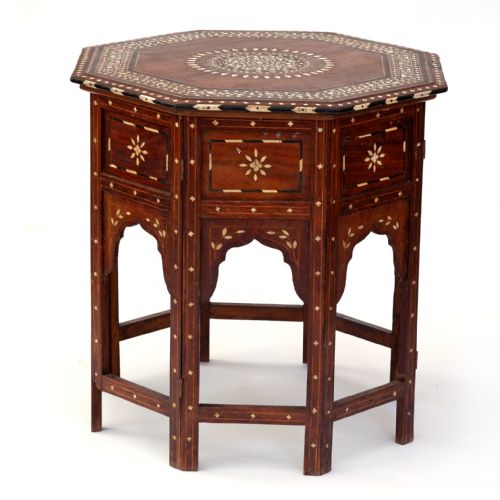
- A decorative technique where small pieces of bone are set into the wooden surface to create geometric or floral patterns. This method appears on tables and smaller occasional pieces.
- Four Poster Bed
- A large bed featuring four vertical columns that support a tester or canopy frame. Victorian examples often incorporate colonial proportions and dense carvings.
- Elephant Table
- A small occasional table supported by carved wooden figures or tusks. These regional pieces reflect specific local workshop traditions.
- Centre Table
- A freestanding table designed to be viewed from all sides rather than pushed against a wall. They often feature prominent padauk construction and elaborate carved bases.
Anglo Indian Raj Furniture: Frequently Asked Questions
What is anglo indian raj furniture?
These are nineteenth and early twentieth century items made by Indian artisans for British residents in India. They fuse British furniture forms with traditional Indian materials and carving.
You will find everything from large four poster beds to intricate brass and bone inlaid occasional tables within this tradition.
How do I date these pieces?
Dating relies on timber choice, construction methods, and stylistic cues linked to the nineteenth and early twentieth centuries. Victorian influences often appear alongside regional craftsmanship.
Examining the underside and joint construction helps determine the exact period of manufacture.
Are these pieces suitable for daily use?
Solid hardwoods like teak and padauk make these items sturdy enough for everyday living. Regular dusting and careful placement away from direct heat sources protect the carved surfaces.
Tables and sideboards function well in modern interiors while retaining their historical presence.
What materials were used?
The primary structure relies on dense tropical hardwoods such as teak, padauk, rosewood, and mahogany. Surfaces are frequently enhanced with brass and bone inlay.
Some regional variants incorporate painted wooden elements alongside deep relief carving.