


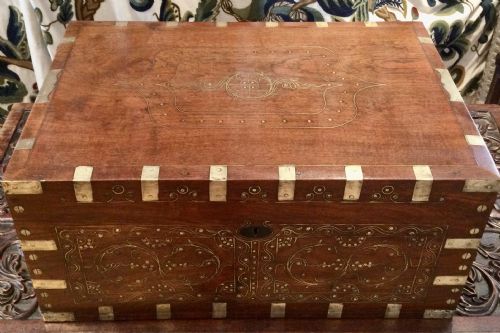

Anglo Indian Decorative Box
An anglo indian decorative box brings together intricate craftsmanship and exotic materials, offering a distinctive storage piece for trinkets and small valuables.
Anglo Indian Decorative Box
When you search for an anglo indian decorative box, you encounter pieces designed for storage and display, ranging from small trinket boxes to larger chests and tea caddies. The selection spans the nineteenth century through the early twentieth century, incorporating styles such as Regency, Edwardian, and Kashmiri craftsmanship.
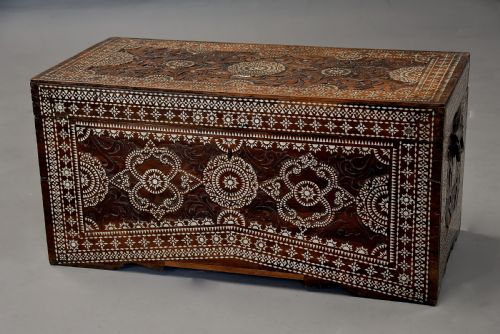
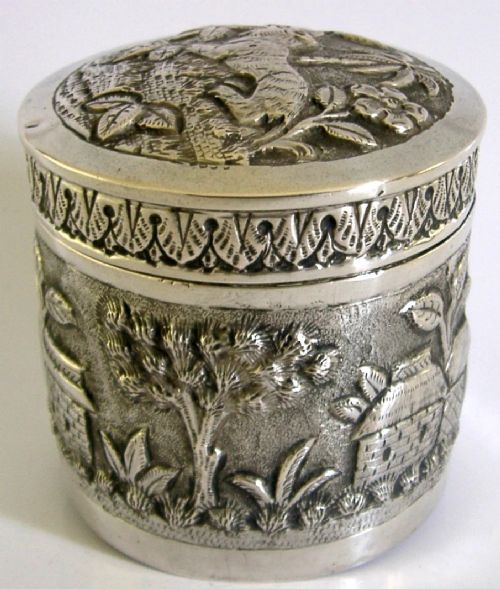
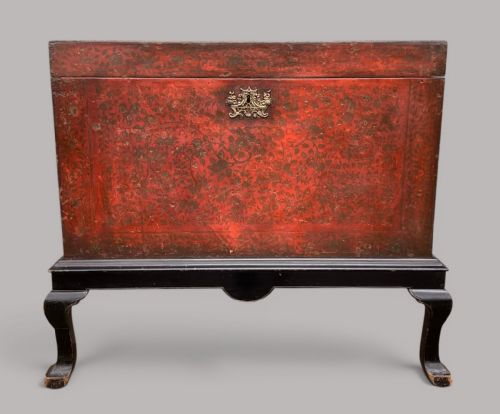
The most common forms on this page include decorative boxes, trunks, coffers, and lidded pots. These objects originate from various periods including the nineteenth century and the 1920s, reflecting diverse regional influences from Middle Eastern to Anglo-Indian aesthetics.
Materials and construction
These items are constructed primarily from hardwoods, incorporating detailed inlays of mother of pearl, bone, horn, and porcupine quill. Craftsmen also utilise lacquered finishes, brass bindings, and solid silver elements to enhance the exterior surfaces.
Techniques range from intricate carving on coconut shell and ebony to specialised mosaic work such as Sadeli. Artisans combine these natural materials with metalwork and textiles to create structured storage vessels.
Assessing quality
Quality in these boxes depends on the precision of the inlay work and the complexity of the carved details. Pieces featuring dense geometric mosaics or elaborate silver mounts stand apart from simpler constructions.
The choice of materials also dictates the standard of the piece, with solid hardwoods, ebony, and sandalwood representing finer workmanship compared to basic wood bases.
The Anglo Indian Decorative Box Glossary
- Sadeli mosaic
- A micro-mosaic technique utilising tiny pieces of bone, horn, ivory, and metal to create intricate geometric patterns on wooden boxes.
- Porcupine quill
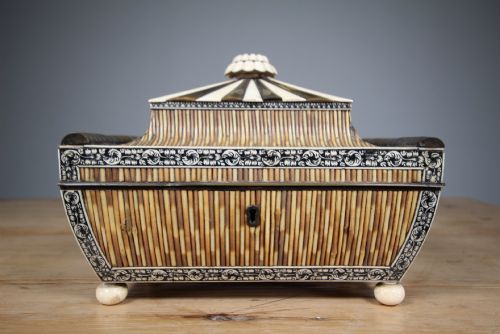
- A decorative material sourced from quills, arranged in precise linear patterns across the exterior of nineteenth-century boxes.
- Tea caddy
- A small container originally designed to store loose tea leaves, often featuring internal compartments and secure lids.
- Sarcophagus shaped
- A box style featuring a sloping lid and a stepped, flared rectangular body reminiscent of classical monumental tombs.
Anglo Indian Decorative Box: Frequently Asked Questions
What were these boxes used for?
These containers served various domestic purposes, from holding precious jewellery and sewing accessories to storing tea leaves and small personal valuables.
Larger trunk forms and caskets were also utilised for safeguarding important documents, textiles, or exotic specimens brought back during the nineteenth century.
How do I date an Anglo Indian box?
Dating relies on identifying the prevailing stylistic influences, material combinations, and construction techniques associated with specific periods like the Regency era or the late nineteenth century.
Examining the type of hinges, interior linings, and regional decorative motifs helps narrow down the decade of production.
What is Sadeli mosaic?
Sadeli mosaic is a complex micro-mosaic craft involving delicate sticks of bone, horn, and metal assembled into geometric patterns.
This painstaking work is characteristic of high-status nineteenth-century boxes produced in western India.
How should I care for a quill or ivory box?
These delicate organic materials require stable environmental conditions away from direct sunlight and excessive humidity to prevent warping or splitting.
Gentle dusting with a dry, soft brush is generally sufficient for routine maintenance without applying harsh polishes.