



Anglo Indian Colonial Chairs
Anglo indian colonial chairs unite British seating forms with intricate tropical hardwoods and elaborate regional carving traditions.
Anglo Indian Colonial Chairs
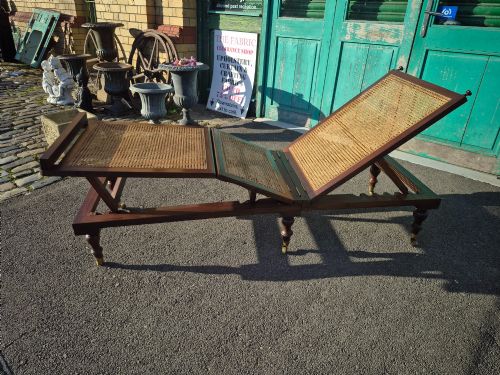
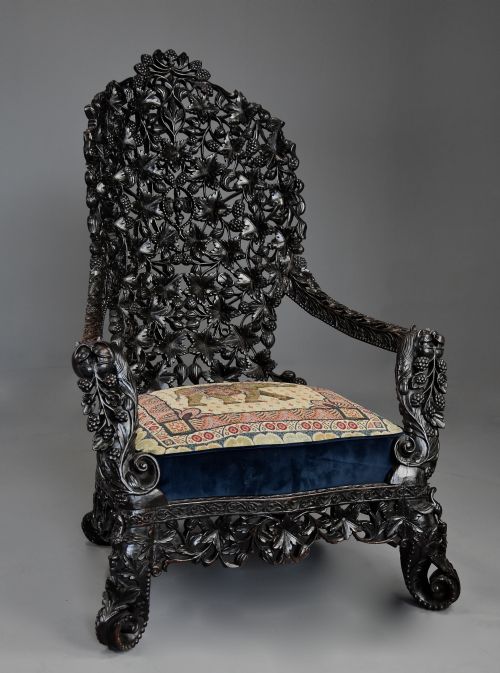
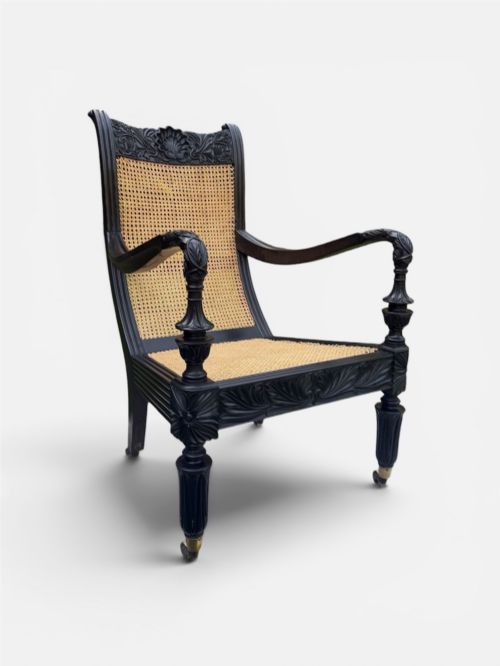
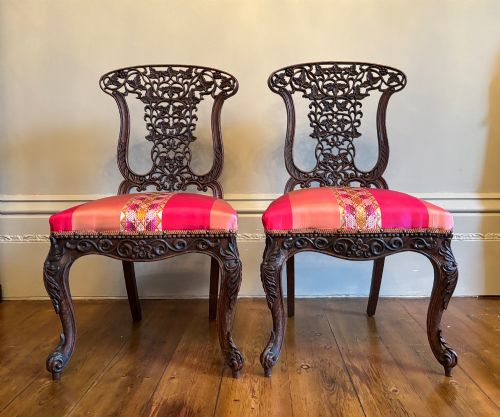
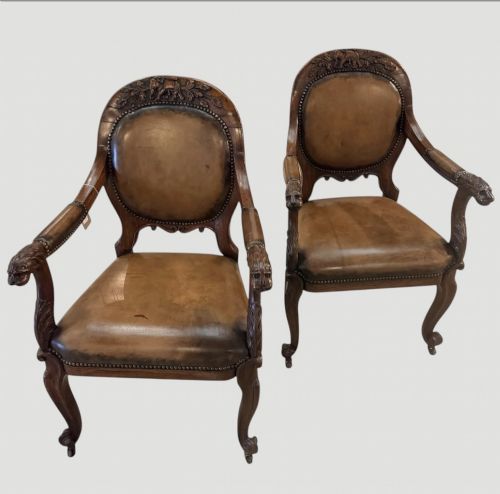
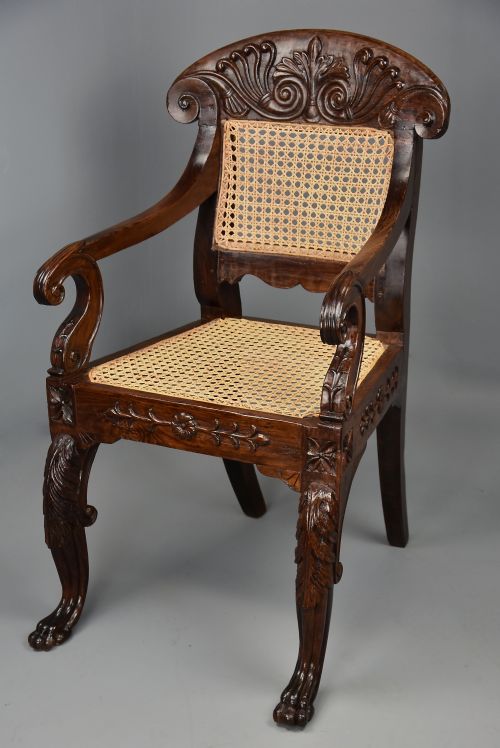
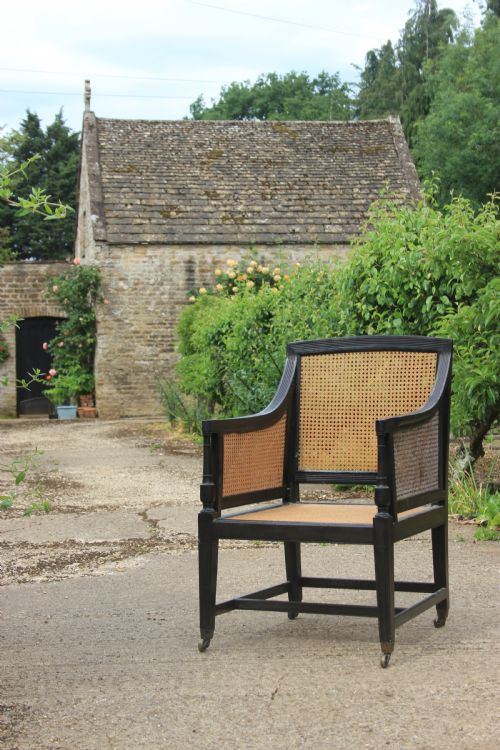
When you search for anglo indian colonial chairs, you encounter seating produced during the British colonial period across regions such as Ceylon, Burma, and the Indian subcontinent. The selection ranges from formal library and dining chairs to reclining planter's chairs and folding campaign furniture.
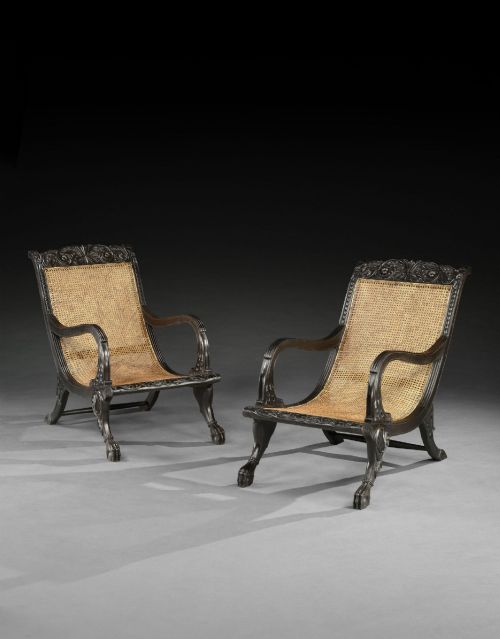
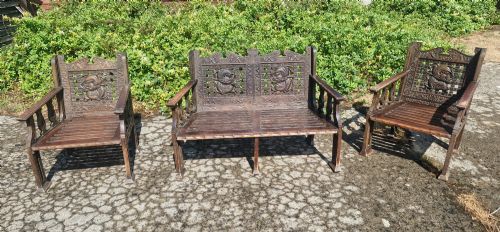
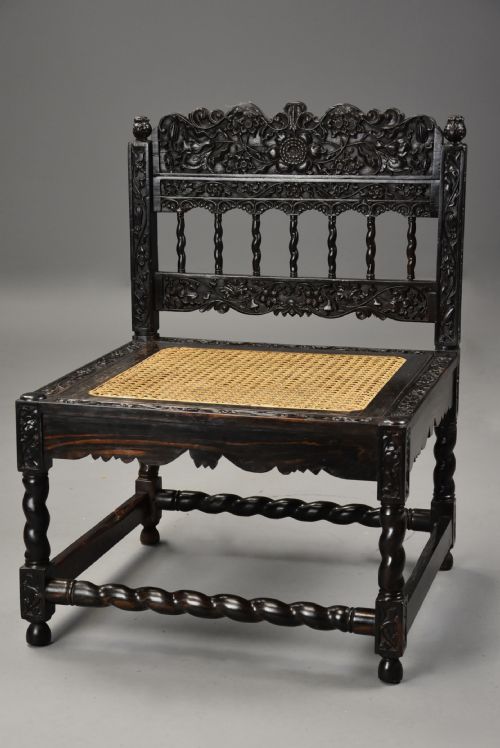
You are most likely to meet solid ebony, teak, padauk, and rosewood examples dating from the nineteenth century, alongside later pieces from the early decades of the twentieth century. Forms include armchairs, side chairs, daybeds, and matching suites designed for domestic use in tropical climates.
These pieces merge European styles such as Regency, William IV, and Art Deco with indigenous craftsmanship, creating distinct seating options that served colonial households. Many feature local caning or rush seats intended to provide ventilation in warm weather.
Materials and construction
Cabinetmakers utilised dense tropical hardwoods including ebony, teak, padauk, rosewood, and satinwood to construct sturdy frames capable of withstanding humid environments. Artisans carved these heavy woods by hand, producing deep relief patterns and pierced ornamentation across backs and legs.
Many items integrate natural cane or rush for seats, whilst others utilise original leather, velvet, or brass fittings. Folding mechanisms and extending arms appear on specific campaign and planter's chairs designed for portability and adjustable comfort.
The current selection spans multiple periods, including Regency, Victorian, and the early twentieth century, utilising teak, ebony, rosewood, and cane.
Judging the standard
The standard of a piece depends heavily on the crispness and depth of the hand carving, as well as the density and selection of the timber. Solid ebony and heavily figured rosewood or padauk examples demonstrate greater material investment than simpler teak frames.
Structural integrity and the preservation of original elements, such as canework, brass mounts, and leather upholstery, separate standard regional output from exceptional workshop production. Matched sets and larger suites also command distinct consideration compared to single items.
The Anglo Indian Colonial Chairs Glossary
- Bergere
- An upholstered French style armchair with enclosed sides, adapted in colonial workshops using wooden frames and cane panels. It offers a light, breathable seating surface.
- Planter's chair
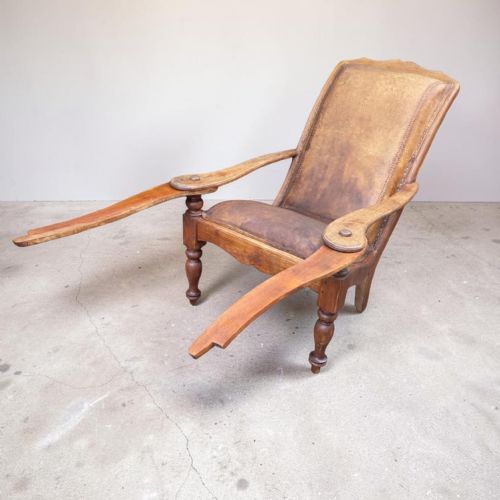
- A specialised armchair featuring long extending arms designed for resting feet, built to accommodate tropical lounging. These often incorporate folding actions or adjustable backs.
- Padauk
- A heavy tropical hardwood valued for its rich reddish-brown colour and durability, frequently utilised in nineteenth-century furniture. It takes fine detail during carving.
- Cane
- Woven rattan peel utilised for seats and backs to promote airflow in hot climates. It requires skilled tensioning during application.
- Campaign style
- Portable furniture designed for easy dismantling or folding, intended for travel and military use. It utilises robust joints and brass hardware.
Anglo Indian Colonial Chairs: Frequently Asked Questions
How do I identify a planter's chair?
Planter's chairs feature distinctive extended arms designed for resting the legs, alongside deep seats and raked backs. They were built for relaxation in tropical environments.
Many examples include folding frames or adjustable components to maximise comfort during warmer months.
What woods were commonly used?
Craftsmen relied on dense tropical timbers such as ebony, teak, padauk, rosewood, and satinwood. These materials resisted humidity and supported intricate hand carving.
Lighter woods like teak and satinwood appear alongside heavy dark ebonised timbers across various nineteenth-century forms.
Are these chairs suitable for daily use?
Most pieces remain sturdy enough for regular sitting, provided the wooden frames and cane panels are structurally sound. Solid hardwood construction ensures long-term durability.
Care should be taken with delicate hand-carved elements and original leather or rush surfaces during everyday placement.
How do I distinguish regional styles?
Regional differences appear in the carving motifs, timber choices, and specific structural adaptations linked to locations like Ceylon, Burma, and mainland India. Ceylonese pieces frequently showcase dense ebony.
European influences ranging from Regency curves to Art Deco lines blend with local craftsmanship to define each piece's origin.