
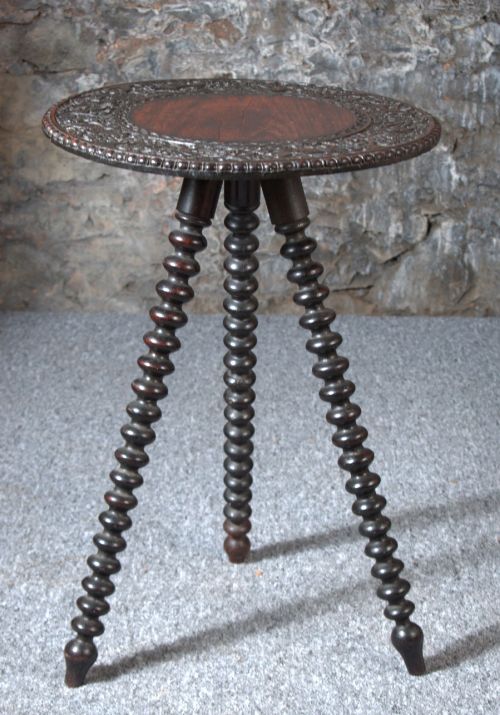


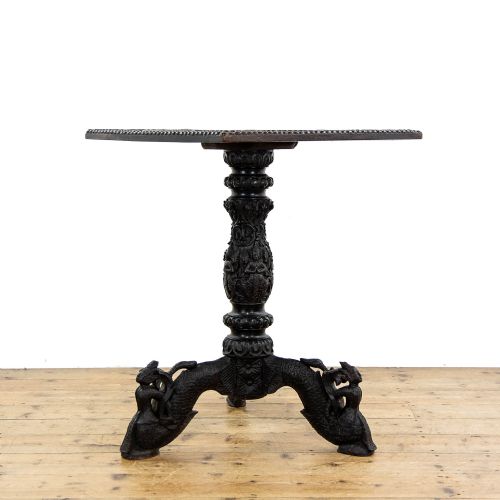
Anglo Indian Carved Lamp
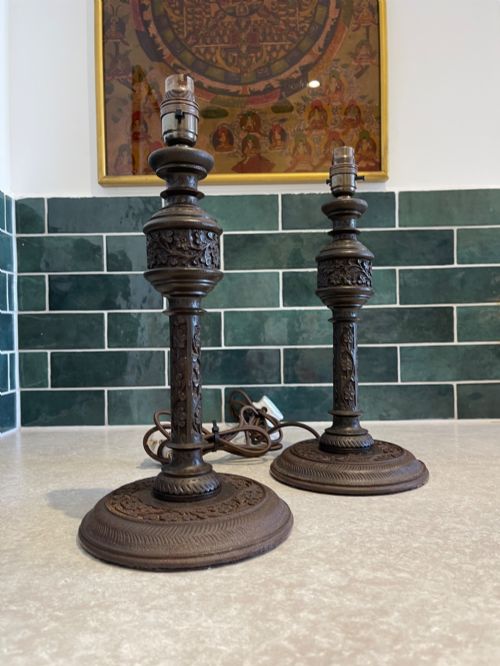
These pieces of an anglo indian carved lamp bring intricate colonial craftsmanship into a room.
Anglo Indian Carved Lamp
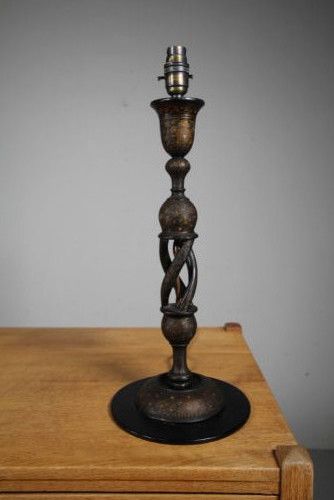
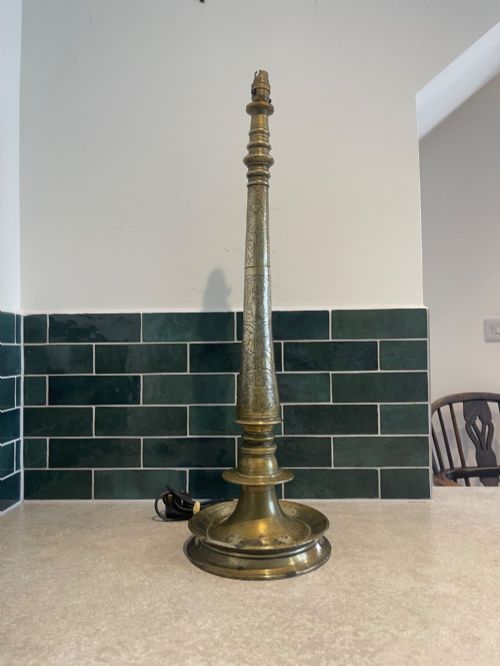
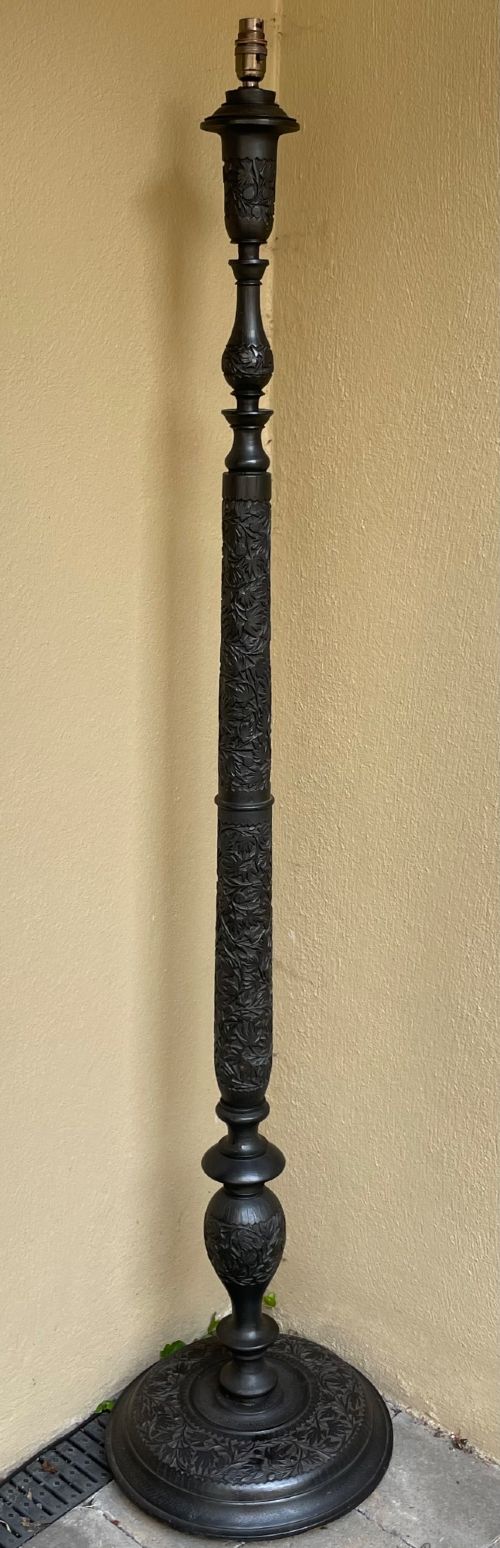
An anglo indian carved lamp brings together traditional eastern carving techniques and British colonial interior forms. You will find standard lamps, floor standing lighting, and table-top models originating from periods such as the Victorian era, the nineteenth century, and the early twentieth century up to nineteen thirty.
The objects on this page span several regional traditions, including Kashmiri twist designs, Hoshiarpur inlaid works, and Burmese or Padouk carvings. These items often function as standard lamps, table lamps, or low lamp tables designed to hold a light source.
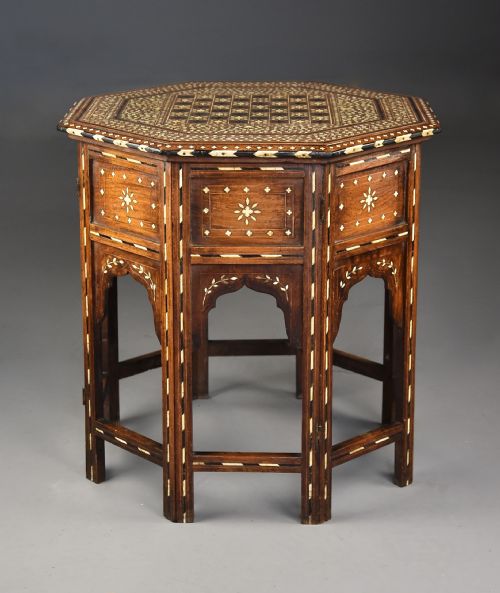
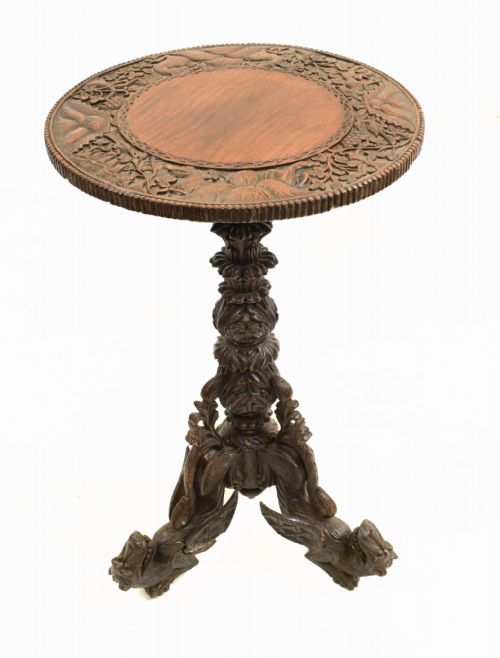
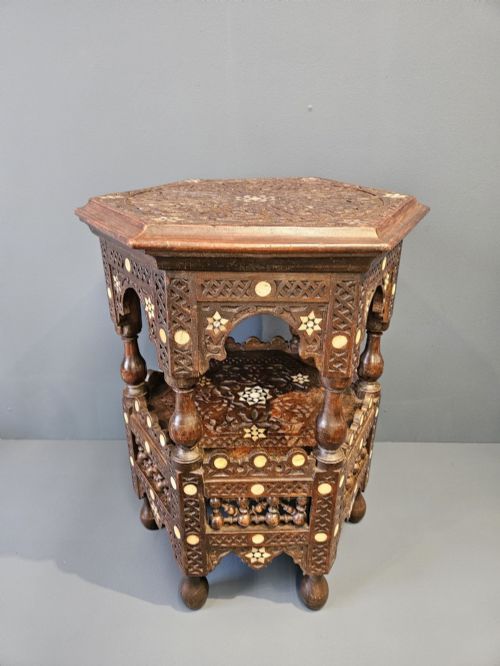
The forms range from tall standard lamps and pedestal bases to octagonal and circular occasional tables adapted for lighting. Their origins cross North India, Burma, Kashmir, and regional centres like Bombay.
What varies in quality
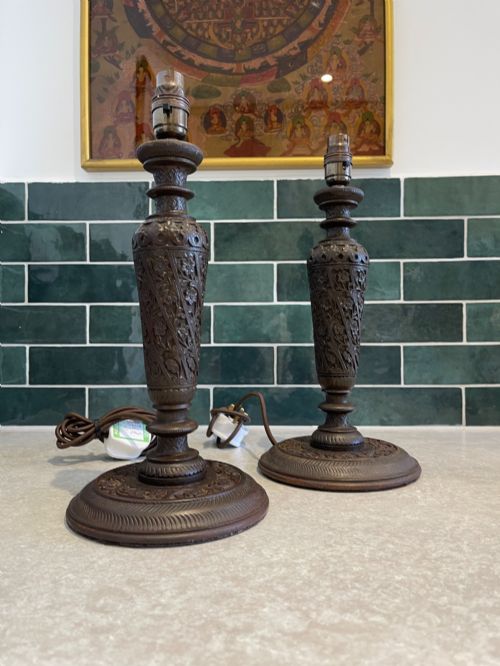
The depth and crispness of the hand-carving separate standard execution from superior work. Relief carving that retains sharp contours and intricate detail shows greater skill than shallow or softened surface patterns.
The choice of timber and secondary materials also dictates the standard of the piece. Dense woods like padouk and ebony, combined with precise bone inlay or heavy brass components, denote higher craftsmanship.
Listings include teak, padouk, rosewood, walnut, brass, bone inlay, and lacquer across Victorian, nineteenth-century, and early twentieth-century periods.
The Anglo Indian Carved Lamp Glossary
- Padouk
- A heavy, durable tropical hardwood with a reddish brown colour used extensively in nineteenth-century furniture and lamp bases. It takes a fine carved finish.
- Hoshiarpur
- A region in North India renowned for intricate inlaid woodwork using materials like bone or brass set into dark timber. Pieces from here often feature geometric patterns.
- Standard Lamp
- A tall freestanding floor lamp designed to illuminate a room from a corner or beside seating. These were often adapted from tall pedestals or carved columns.
- Tilt Top
- A table mechanism where the circular or octagonal top can be pivoted vertically for storage. This feature appears on several occasional and lamp tables in the evidence.
- Moorish Revival
- An architectural and decorative style popular during the Victorian period incorporating Islamic design motifs. It heavily influences the arched and geometric carving on these lamp tables.
Anglo Indian Carved Lamp: Frequently Asked Questions
How do I wire an antique lamp?
Many of these wooden standards and table bases have been rewired for contemporary electrical standards.
Consult a qualified electrician to ensure any historical or newly added internal wiring complies with current safety regulations.
What wood are these lamps made from?
The evidence shows construction in teak, padouk, rosewood, walnut, hardwood, and ebony.
These dense timbers provided a stable base for deep relief carving and sustained the weight of standard lamp columns.
Where were these pieces made?
Originating across the Indian subcontinent and Burma, these items reflect colonial trade and production.
Specific regional styles include Kashmiri twist work, Hoshiarpur inlay, and padouk carving from the Bombay region.
How do I date an anglo indian lamp?
Dating relies on recorded periods such as Victorian, nineteenth century, and early twentieth-century decades like nineteen ten or nineteen twenty.
Stylistic markers and material choices help place each piece within these historical windows.