




Aneroid Weather Glass
An aneroid weather glass is a mechanical instrument used to track atmospheric pressure, offering a reliable domestic forecast framed in period woodwork.
Aneroid Weather Glass
An aneroid weather glass measures atmospheric pressure through a sealed metal capsule rather than liquid mercury, housed in various decorative wall-hanging formats. When buyers search for an aneroid weather glass, they encounter instruments primarily dating from the Victorian and Edwardian eras through to the 1930s.
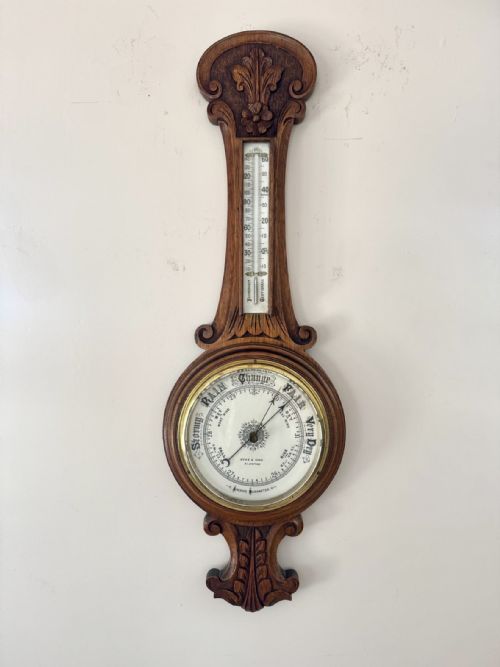
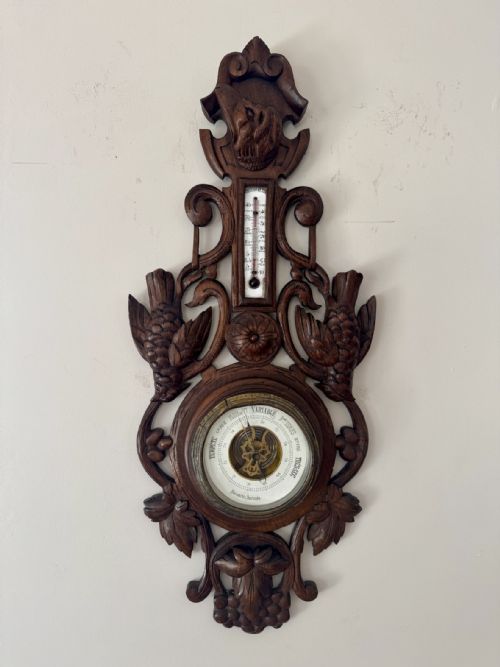
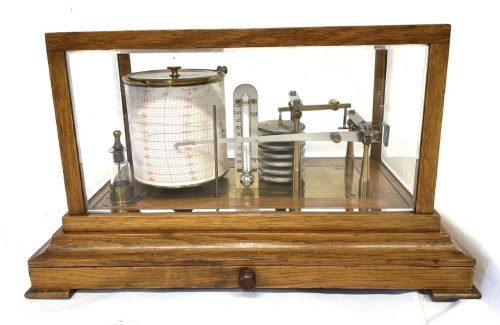
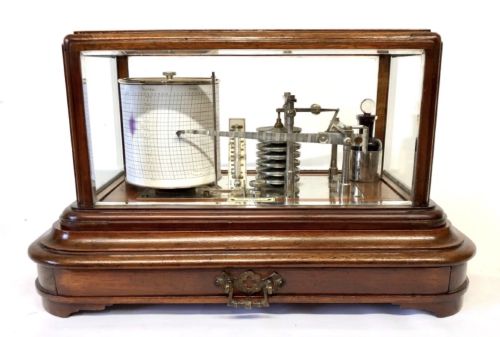
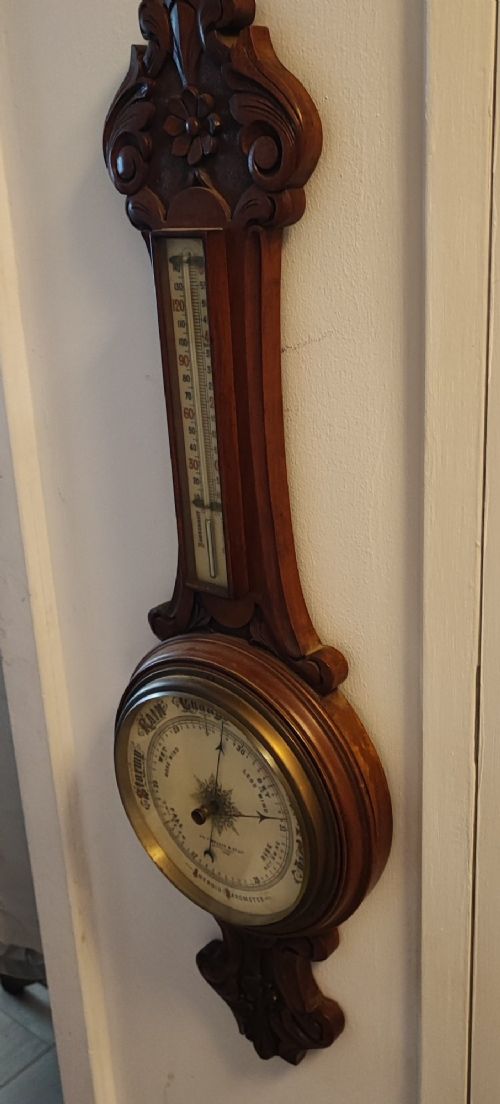
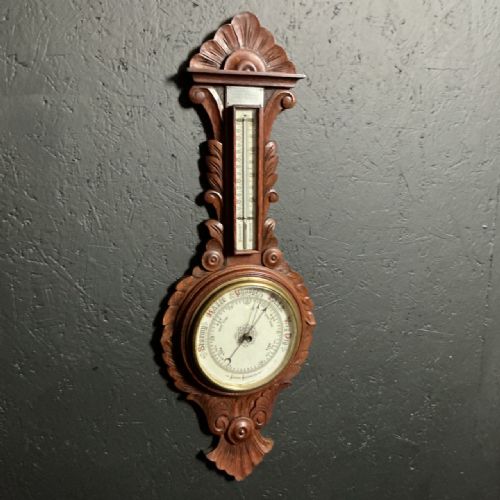
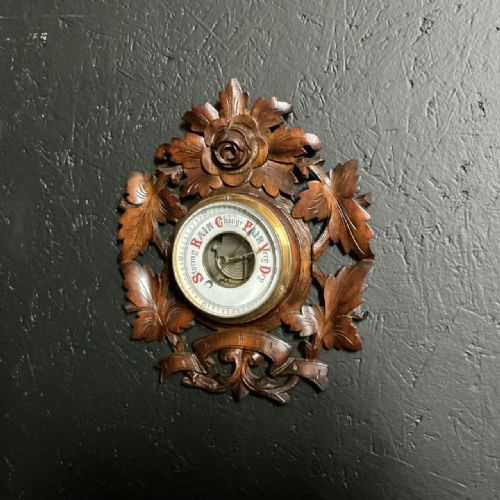
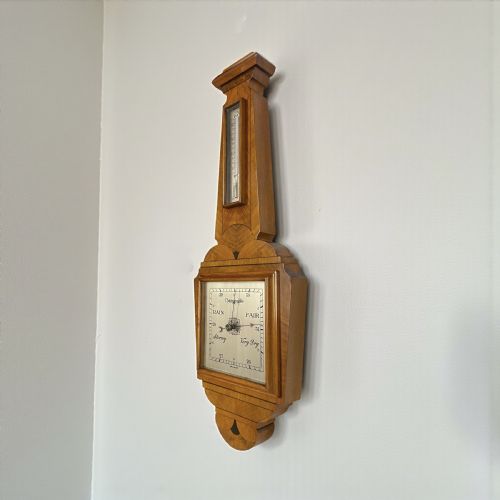
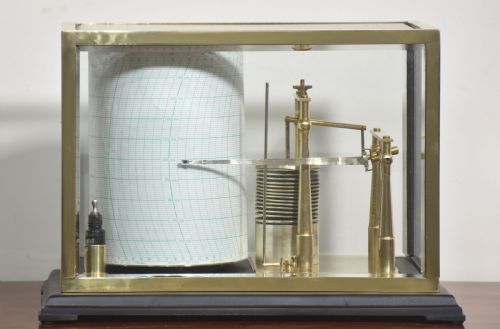
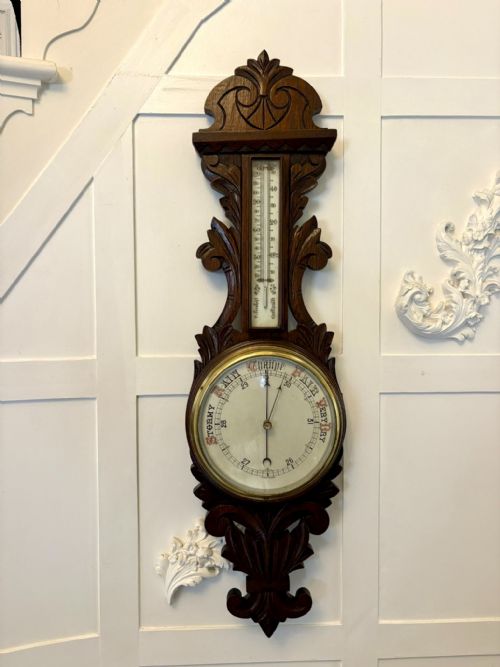
The most common versions on this page are carved oak and mahogany banjo barometers, often incorporating thermometers and ceramic or glass dials. Examples range from simple domestic wall barometers to elaborate Black Forest carvings and mechanical barographs housed in glazed wooden cases.
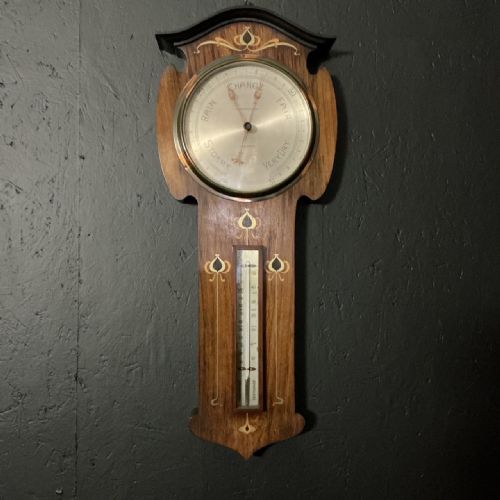
Originating largely from British workshops and European makers, these instruments bridge scientific utility and domestic decoration. Pieces span styles from late Victorian geometric oak designs to Art Deco and Edwardian Chinoiserie variants.
How they were made
The cases rely heavily on solid and veneered timbers such as oak, mahogany, walnut, and rosewood, shaped through traditional cabinet-making methods and embellished with relief carving. Black Forest examples utilise intricate hand-carved wood elements depicting natural motifs, whilst Chinoiserie pieces feature painted lacquer finishes.
The mechanical interiors combine brass gears, levers, and a flexible evacuated capsule linked to a visible dial behind bevelled glass. Many incorporate secondary instruments like thermometers and chart drawers for recording barometric trends over time.
Some Victorian oak barometers feature hand-carved birds peering directly out at the weather alongside your daily air pressure.
What varies in quality
Quality rests in the depth and crispness of the timber carving, the choice of dense cabinet woods like mahogany or figured oak, and the precision of the brass mechanism. Superior examples feature detailed naturalist carvings, bevelled glass panels, and signed dials from notable scientific makers.
The sophistication of the housing separates standard domestic barometers from high-end instruments like fully enclosed barographs with chart drawers or complex skeletonised dials. Retaining original ceramic dials, thermometer tubes, and fitted cases elevates the standing of an individual piece.
Hyde & Sons Sleaford·Gaupp & Co Hongkong & Singapore·Short & Mason·Elliott Brothers 449 Strand London·Negretti & Zambra London·Baines Harrogate
The Aneroid Weather Glass Glossary
- Aneroid barometer
- A device that measures air pressure using a flexible metal bellows without liquid, driving a pointer across a marked dial face.
- Barograph
- A recording barometer that draws barometric pressure fluctuations onto a rotating paper chart over a set period.
- Banjo barometer
- A wall barometer featuring a rounded top dial and a long vertical body that typically houses a thermometer.
- Bevelled glass
- Glass with an angled edge cut around the perimeter, fitted into the instrument bezel to catch the light.
- Skeletonised
- A configuration where the brass movement plates and gears remain exposed behind glass to display the internal mechanics.
Aneroid Weather Glass: Frequently Asked Questions
How do I set an aneroid weather glass?
Adjustment requires turning a small screw on the rear of the movement to match the local barometric reading obtained from a reliable official forecast. Tapping the glass gently beforehand ensures the mechanical linkage settles accurately.
Changes in weather will subsequently move the indicator needle relative to fixed markers on the dial face.
Where should I hang a wall barometer?
Placement needs an interior wall away from direct sunlight, radiators, and heavy vibrations to prevent false pressure readings and timber warping. Hallways and studies provide stable environments where the instrument remains easily readable.
Secure wall fixings are essential given the weight of solid oak and mahogany cased pieces.
Did all barometers include thermometers?
Many models incorporate a mercury or spirit thermometer alongside the main pressure dial to display ambient room temperature. This addition provided nineteenth-century households with a complete meteorological station.
Simpler banjo barometers occasionally omitted the thermometer channel in favour of decorative wood veneers.
How do I tell a Victorian barometer from an Edwardian one?
Victorian models frequently display heavier carved oak or rosewood cases with deep mouldings, geometric patterns, or elaborate Black Forest motifs. Edwardian variants often exhibit lighter mahogany inlay, Chinoiserie decoration, or simplified Arts and Crafts framing.
Maker signatures and dial typography also offer clues to the specific manufacturing decade.