


Aneroid Chart Barograph
An aneroid chart barograph records atmospheric pressure continuously on paper, offering a mechanical record that appeals to both scientists and collectors.
Aneroid Chart Barograph
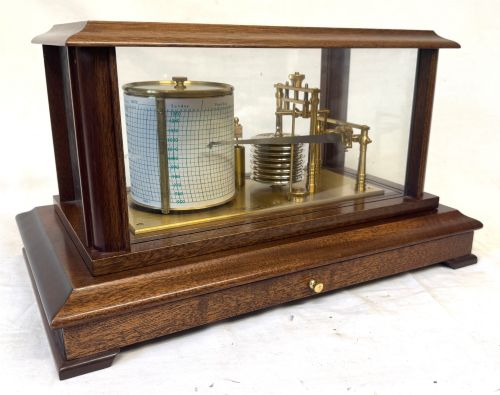
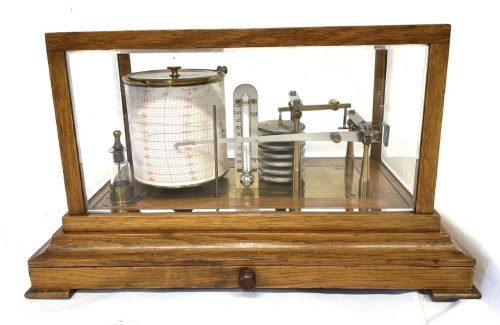
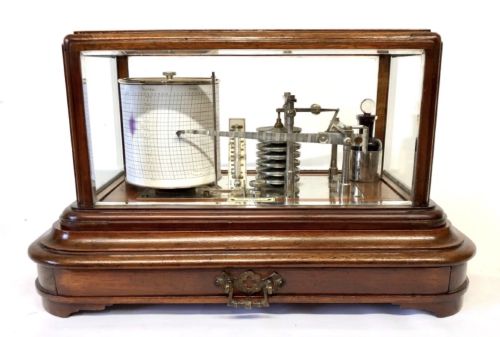
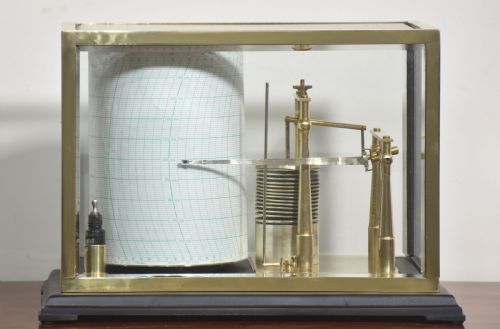
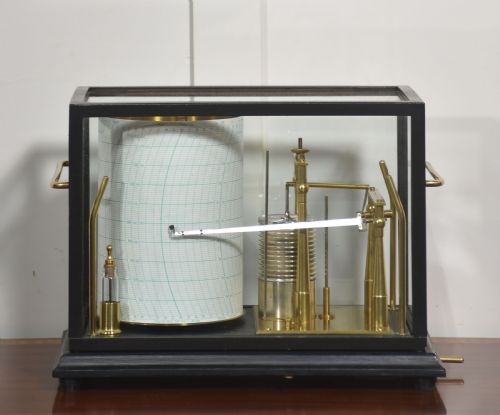
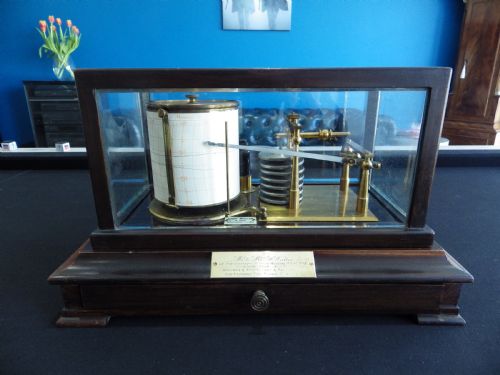
An aneroid chart barograph provides a continuous graphical record of atmospheric pressure over a week, housed in a protective glazed case with a dedicated chart drawer beneath. These scientific instruments appear frequently from the Victorian and Edwardian periods, as well as the interwar years, reflecting domestic and maritime meteorological interests of those eras.
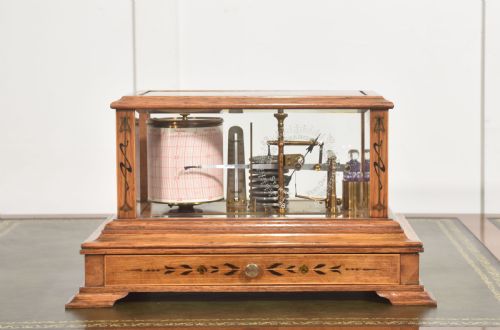
The commonest forms on this page feature mahogany or oak cases with bevelled glass panels, sometimes incorporating a thermometer or combined barometer dials. Makers such as Short & Mason and Negretti & Zambra dominate the listings, alongside examples bearing retailer names like Harrods.
Specimens range from standard desktop units to miniature versions by Richard Frères and examples carrying railway provenance. The physical format remains consistent, relying on a clockwork drum rotated by an internal movement behind stacked aneroid diaphragms.
How they were made
Maker workshops built these instruments using seasoned mahogany or oak for the timber cases, jointed and polished to display the grain. Bevelled glass panes fitted into brass frames protected the delicate brass mechanisms while allowing an unobstructed view of the recording arm.
The mechanical heart relies on stacked metal vacuum chambers, or aneroid diaphragms, connected via levers to an ink-tipped arm. This arm traces pressure variations onto paper charts clipped to a clockwork brass drum driven by an internal spring.
One exceptional piece carries specific railway and Southend interest from the interwar period.
What varies in quality
Quality shows in the weight and finish of the timber case, the precision of the brass work, and the inclusion of fine details such as Art Nouveau inlay or integrated thermometers. Maker reputation also elevates an example, with signed pieces by established scientific instrument houses commanding greater interest.
The integrity of the five-glass case and the presence of original paperwork or dedicated chart drawers further distinguish superior examples. Superior movement assembly ensures smoother operation of the clockwork drum and more responsive linkage to the recording arm.
Short & Mason·Negretti & Zambra·R Fuess·Jules Richard·Richard Freres·Gaupp & Co·Russell Norwich·Robson of Newcastle·Dobbie Son And Hutton
The Aneroid Chart Barograph Glossary
- Aneroid barograph
- A mechanical instrument that records atmospheric pressure graphically without using liquid mercury. It uses expanding metal chambers to drive a pen across a rotating paper chart.
- Chart drawer
- A small compartment built into the base of the wooden case to store spare weekly recording papers. This feature adds convenience and signals a more complete desk instrument.
- Five-glass case
- A protective wooden enclosure with glass panels on the top and all four sides, allowing light to reach the movement from every angle. This style became standard for better quality meteorological instruments.
- Clockwork drum
- The rotating brass cylinder that holds the weekly paper chart and is driven by an internal spring-loaded movement. It turns once every seven days to provide a continuous pressure trace.
Aneroid Chart Barograph: Frequently Asked Questions
How do I change the paper chart?
Lift the hinged glass cover and gently release the inked pen arm away from the cylinder. Lift the brass drum off its spindle to slide the old paper off and secure a fresh weekly chart.
Ensure the paper aligns correctly with the timing lines before replacing the drum on its pivot. Lower the pen arm back onto the paper with minimal pressure to avoid tearing the sheet.
Were these used in homes or offices?
Victorians and Edwardians kept these instruments in studies, libraries, and hallways to monitor local weather trends. They served both a practical purpose for planning and as a fashionable conversation piece.
Shipping lines and railway companies also utilised them to log atmospheric shifts pertinent to operations. Examples often survive with specific regional inscriptions reflecting commercial use.
How do I date an oak or mahogany barograph?
Examine the timber casework, brass fittings, and any retailer signatures or paper labels inside the case. Victorian and Edwardian examples often display distinct stylistic cues like bevelled glass and regional maker stamps.
Later interwar or mid-century pieces show subtle shifts in dial typography and cabinet construction. Surviving original paperwork can also provide a precise year of manufacture.
Can I keep the clockwork movement running?
Wind the clockwork drum gently using its attached key, taking care not to overwind the internal spring mechanism. Regular winding keeps the cylinder turning at the correct speed for accurate weekly logging.
If the movement has not run in years, professional servicing may be required to clean old oils. Allowing it to operate dry can cause unnecessary wear on the brass gear train.