



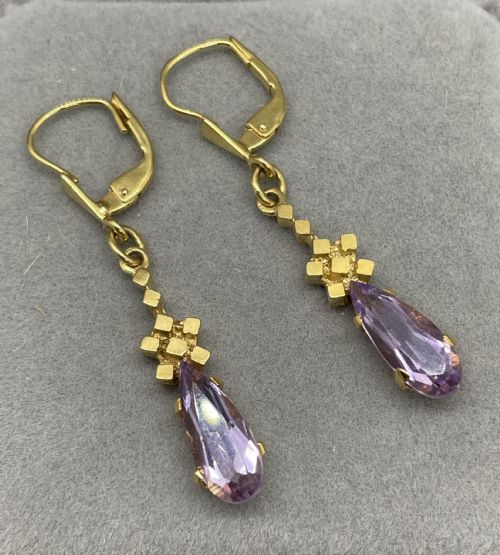

Amethyst Stone Pendant
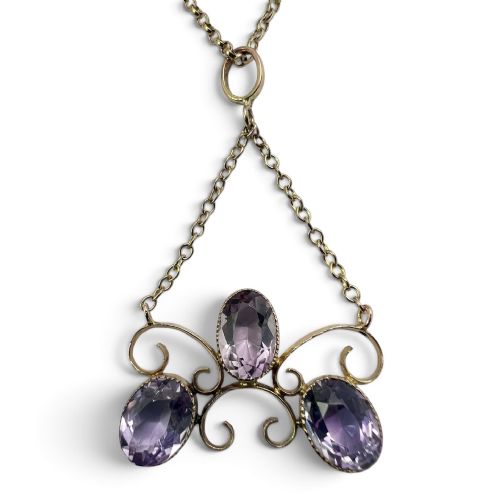
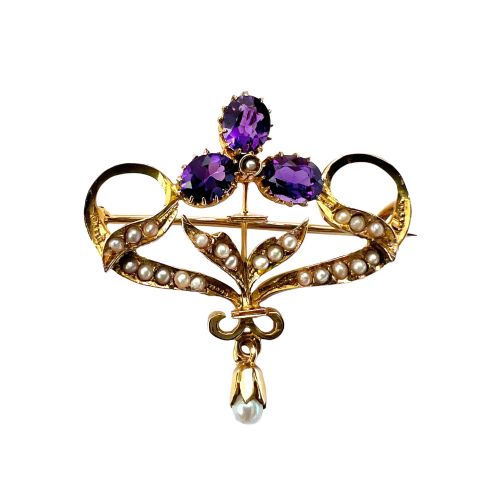
An amethyst stone pendant brings deep purple hues to the neckline, suspended in gold or silver settings shaped across the Victorian, Edwardian and later eras.
Amethyst Stone Pendant
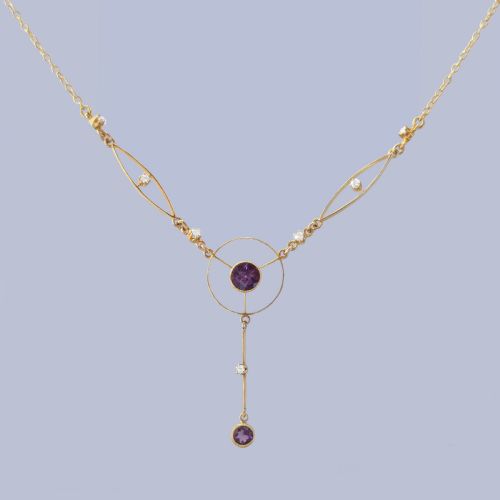
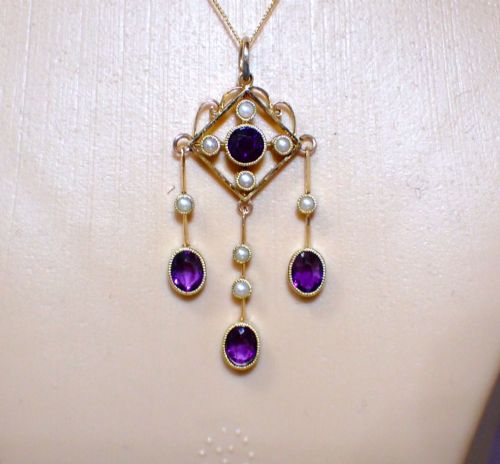
An amethyst stone pendant is a neck ornament featuring purple quartz held in precious metal, often accompanied by pearls, diamonds or paste stones. When searching for an amethyst stone pendant, buyers encounter forms ranging from simple drop clusters to intricate Art Nouveau and Edwardian lavaliers.
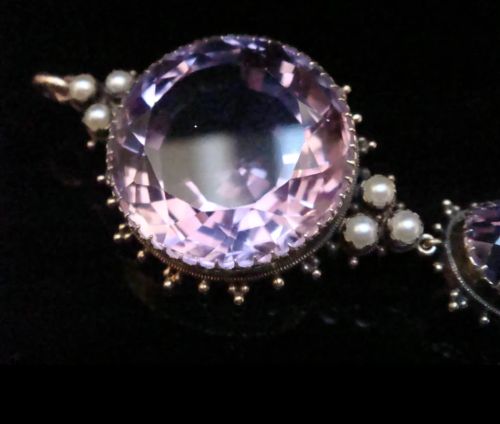
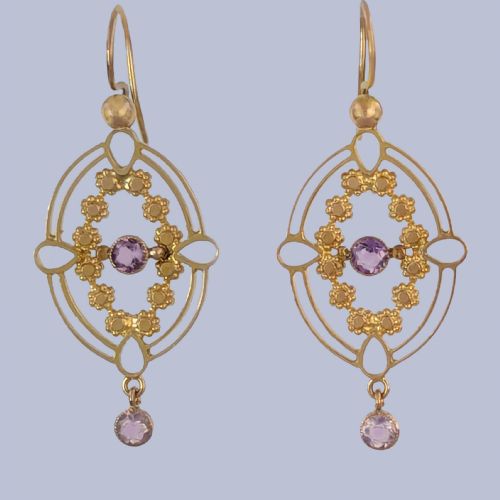
The pieces appearing on this page span the 19th century through the mid-20th century, encompassing Victorian foliate designs, Edwardian openwork, and Arts and Crafts silver work. Pendant necklaces and charms dominate the selection, alongside matching drop earrings that share similar amethyst and gold construction.
Makers and designers from the Edwardian period utilised yellow gold, silver and seed pearls to frame faceted purple stones in teardrop or oval cuts. These items reflect the shifting aesthetic preferences from heavy Victorian clusters to flowing, botanical Edwardian lines.
Materials and construction methods
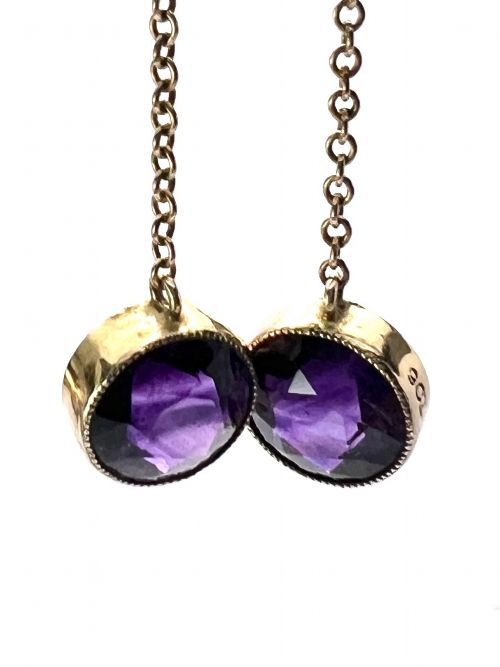
Goldsmiths set amethysts into 9ct, 12ct, 14ct, 15ct and 18ct gold, as well as silver, creating durable frameworks for the purple quartz. Seed pearls and diamonds frequently accent the main stone, secured via delicate claw settings or bezel mounts.
Edwardian and Victorian artisans employed openwork wire, filigree and foliate stampings to mount large central amethysts alongside dangling pearl drops. Silver settings emerged in Arts and Crafts pieces, highlighting hand-worked metal alongside faceted or paste amethysts.
Amethyst Stone Pendant Retail Price Guide 2026
Typical asking prices for amethyst stone pendant among the pieces listed under this phrase on Sellingantiques today, from the lower quarter to the upper quarter. They describe what is for sale here now, not the wider market.
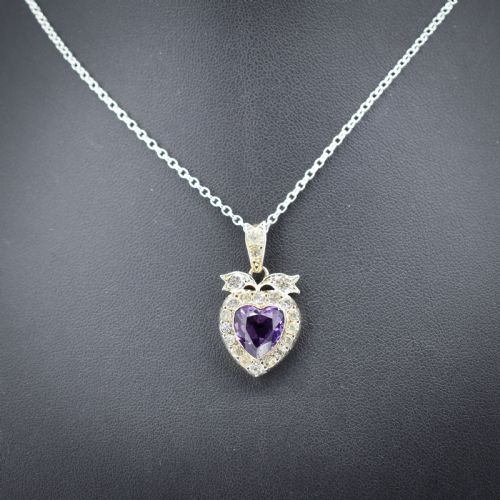
Heart-shaped paste amethysts secretly mimic royal gems, proving past owners loved a brilliant purple illusion just as much as real quartz.
Judging the quality of these pendants
Quality rests upon the saturation and clarity of the amethyst crystal, alongside the complexity of the gold or silver metalwork. Pieces featuring well-matched seed pearls, old-cut diamonds and substantial gold weight stand apart from simpler paste alternatives.
The precision of the openwork framing and the integrity of the original chain or bale indicate superior craftsmanship. Maker signatures and higher gold karats elevate examples from standard production work of the nineteenth and early twentieth centuries.
S. Blanckensee & Son
The Amethyst Stone Pendant Glossary
- Lavalier
- A pendant featuring a main stone with one or more dangling drops suspended below, popular during the Edwardian period.
- Paste
- Hand-cut glass used historically as a gemstone substitute to imitate amethyst or diamond in antique jewellery.
- Seed pearl
- Very small natural or cultured pearls, often half-drilled and glued or pegged onto gold settings in cluster designs.
- Openwork
- Metalwork pierced or cut through to create a lace-like pattern surrounding the central amethyst stone.
- Foliate
- Ornamentation shaped like leaves or foliage, frequently seen in Victorian and Edwardian gold mounting styles.
Amethyst Stone Pendant: Frequently Asked Questions
What is an amethyst pendant?
An amethyst pendant is a hanging neck ornament featuring purple quartz mounted in gold or silver. These pieces often incorporate pearls or diamonds.
Designs range from Victorian heart charms to Edwardian lavaliers and Arts and Crafts silver drops.
How do I date a pendant?
Dating relies on stylistic clues like Edwardian openwork, Victorian foliate motifs or Arts and Crafts hand-hammered silver. Metal karats and stone cuts also provide chronological markers.
Examining the back of the setting and the type of jump rings or chains helps confirm the period of manufacture.
Were amethysts popular in the Victorian era?
Victorian jewellers utilised amethyst extensively in brooches, earrings and pendant necklaces, often pairing the purple stones with yellow gold and seed pearls. Larger stones appeared in substantial cluster settings.
These pieces reflect the sentimental and romantic design trends of the nineteenth century.
How should I care for antique gold jewellery?
Antique pendants require gentle cleaning with a soft cloth and warm soapy water, avoiding harsh ultrasonic cleaners that might dislodge seed pearls. Store each piece separately to prevent scratching the gold and stones.
Regularly check the security of claw settings holding the amethyst.