



Amethyst Lavalier Necklace
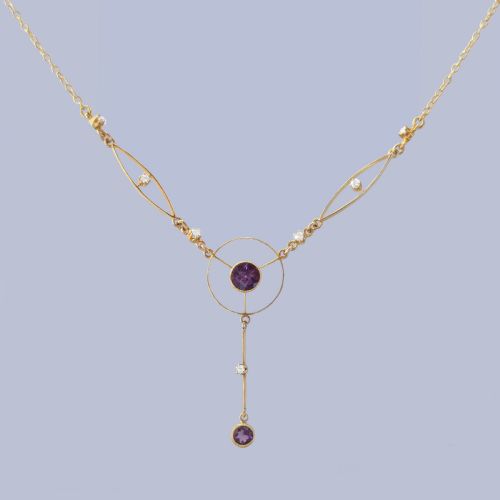
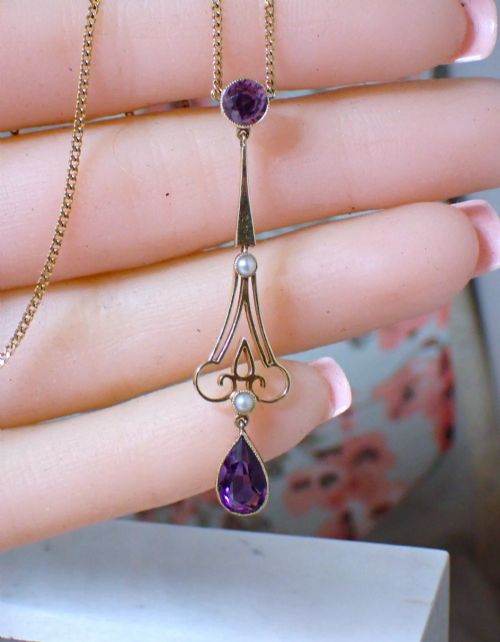
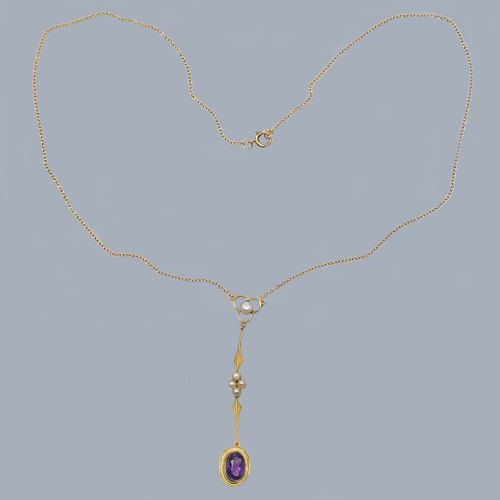
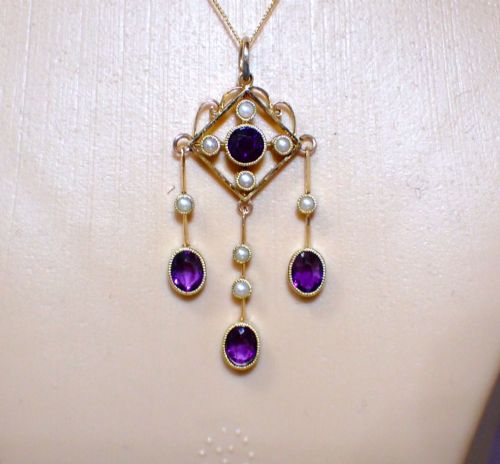
An amethyst lavalier necklace brings together purple stones and dangling drops, capturing the distinct grace of the early twentieth century.
Amethyst Lavalier Necklace
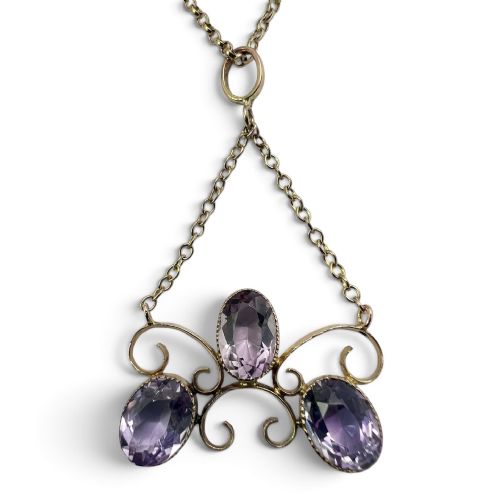
An amethyst lavalier necklace is a pendant necklace featuring central purple stones suspended on delicate drops, typically taking the form of a delicate pendant hanging from a fine chain. Most pieces you meet on this page date from the Edwardian period and the early twentieth century, alongside Victorian and 1920s examples.
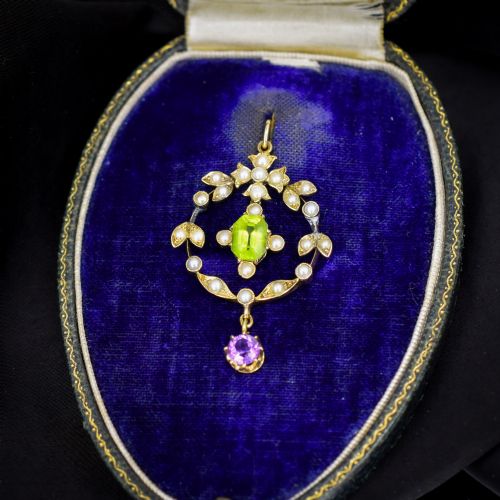
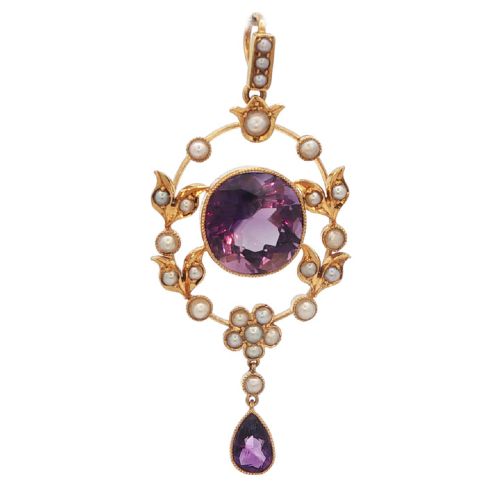
The designs draw heavily on Art Nouveau, Arts and Crafts, and Edwardian aesthetics, combining naturalistic curves with geometric restraint. You will find pendants paired with seed pearls, diamonds, and peridots, mounted on gold or silver.
The form spans straightforward amethyst drops to elaborate lavalieres where stones cascade in tiered sections. These necklaces reflect the refined jewellery tastes of the decades around 1900, when lighter mountings allowed stones to catch the light from every angle.
Materials and construction
Makers shaped these necklaces using 9ct gold, 15ct gold, and silver, setting faceted amethysts alongside seed pearls and occasional diamonds or peridots. The metalwork often involves hollow stampings, wirework, and delicate collet settings that secure the stones without heavy bezels.
Seed pearls are individually drilled and pegged or threaded onto tiny wire findings, a painstaking method typical of Edwardian and Victorian workshops. Amethysts are typically step-cut or oval-faceted to maximise depth of colour, suspended to sway freely beneath the main body of the pendant.
Amethyst Lavalier Necklace Retail Price Guide 2026
Typical asking prices for amethyst lavalier necklace among the pieces listed under this phrase on Sellingantiques today, from the lower quarter to the upper quarter. They describe what is for sale here now, not the wider market.
Assessing quality
Quality reveals itself in the crispness of the goldwork and the symmetry of the wire scrollwork, where hand-assembly requires steady precision. Superior pieces display matched, deeply saturated amethysts and evenly graded seed pearls that remain secure in their original settings.
The choice of metal alloy also sets pieces apart, with higher karat gold and detailed maker involvement distinguishing finer workshop output from simpler commercial production.
S. Blanckensee & Son·Hamilton & Co
The Amethyst Lavalier Necklace Glossary
- Lavalier
- A pendant necklace featuring a central drop that hangs below the main body, popularised in the late nineteenth and early twentieth centuries.
- Seed pearl
- A very small, naturally formed or cultured pearl, often used in clusters or borders around larger central gemstones in antique jewellery.
- Collet setting
- A metal collar that wraps around the edge of a gemstone to hold it securely in place.
- Art Nouveau
- A design style spanning the late nineteenth and early twentieth centuries, known for flowing, organic lines inspired by natural forms.
Amethyst Lavalier Necklace: Frequently Asked Questions
What is an amethyst lavalier necklace?
An amethyst lavalier necklace is a pendant piece featuring purple quartz stones suspended in a drop configuration, designed to hang centrally on the wearer's chest.
These pieces typically date from the late Victorian, Edwardian, and Art Nouveau periods, showcasing delicate metalwork and seed pearl accents.
How do I care for my necklace?
Care for your antique necklace by storing it flat in a lined box to prevent the chain from tangling and the delicate drops from bending.
Clean the metal and stones gently with a soft cloth, avoiding harsh chemical dips that can damage pearls and softer setting alloys.
Can I wear this necklace daily?
You can wear these pieces with care, though the fine chains and seed pearls require gentle treatment during everyday activities.
Removing the necklace before sleeping or strenuous tasks helps preserve the fragile wirework and original settings.
How do I tell Edwardian from Victorian pieces?
Edwardian pieces generally feature lighter, more airy mountings in yellow gold or silver, often incorporating flowing garland motifs and white stones like diamonds.
Victorian examples tend to use heavier gold weights and denser arrangements of amethysts paired with seed pearls in foliate designs.