




Amethyst Cluster Ring
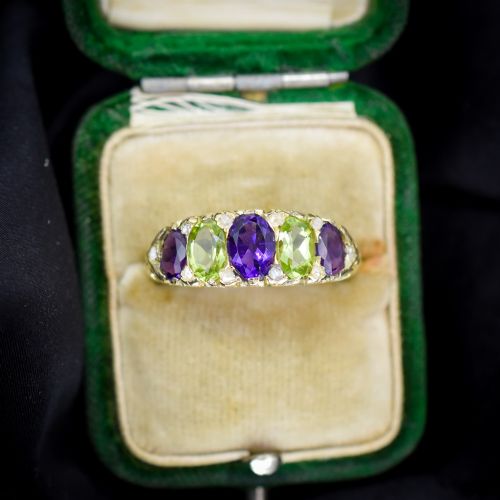
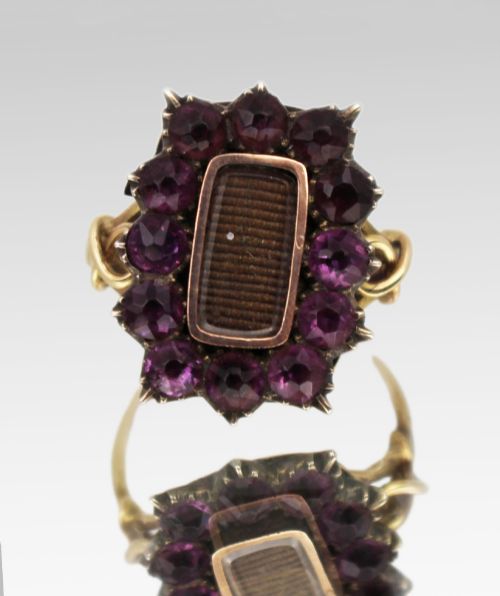
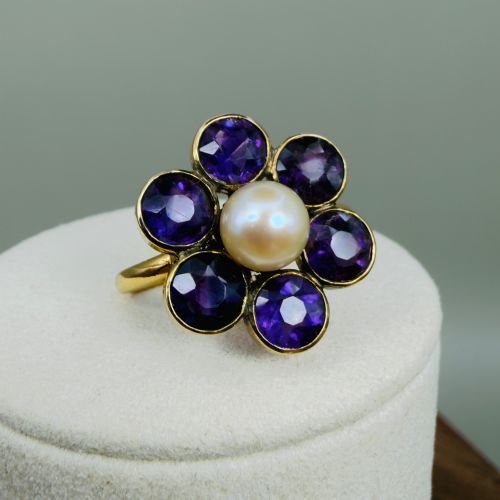
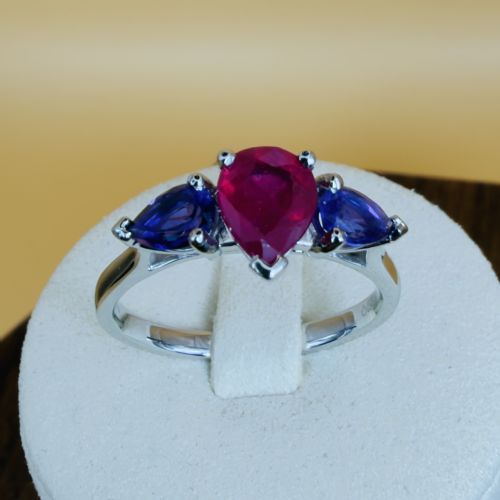
An amethyst cluster ring brings together deep purple stones and precious metal settings to create a focal point for the hand.
Amethyst Cluster Ring
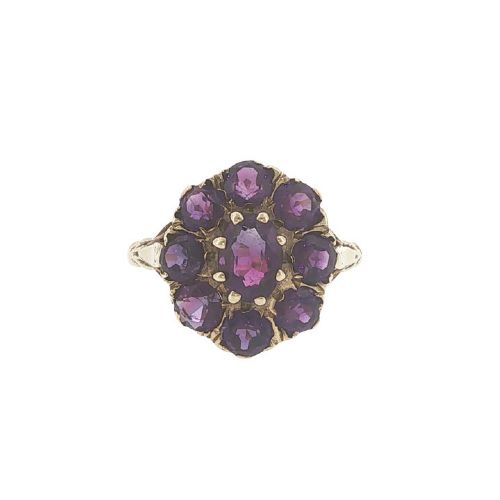
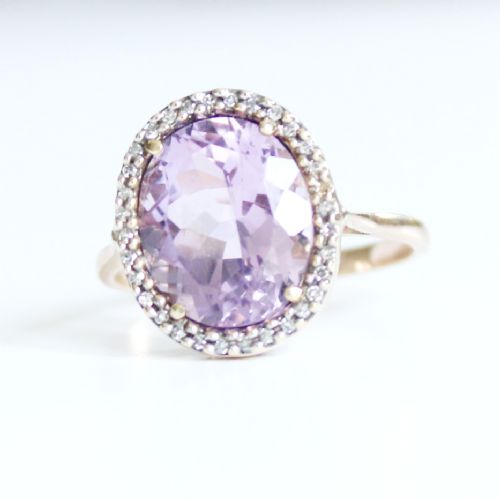
The layout typically sets a vibrant purple stone at the heart of the design, encircled by smaller diamonds, pearls or contrasting gems to emphasise the central colour.
Buyers most frequently encounter Victorian and Edwardian gold examples alongside later twentieth century iterations, spanning both delicate halo formations and bolder cocktail styles.
How they were made
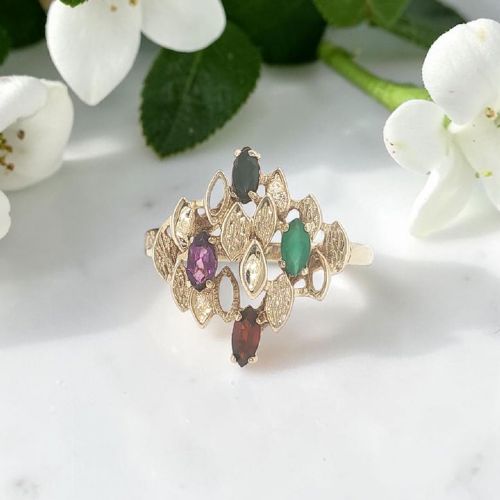
Jewellers utilised yellow gold, rose gold, white gold, platinum and silver as the foundational metals, pairing them with natural gemstones including diamonds, pearls and rubies.
Stones were cut into oval, emerald, pear or round shapes and secured within claw, halo or bezel settings by hand, often incorporating detailed shoulders and openwork galleries.
Materials recorded across the archive include amethyst, diamond, pearl, ruby, emerald, sapphire, garnet, platinum and gold.
What varies in quality
The depth of colour and clarity of the central purple quartz dictate visual impact, with deeply saturated stones commanding greater attention than paler varieties.
The precision of the surrounding gem setting and the substantial weight of the precious metal band distinguish masterwork pieces from simpler commercial output.
The Amethyst Cluster Ring Glossary
- Cluster ring
- A ring design featuring a central stone encircled by a group of smaller gems.
- Halo ring
- A specific setting style where a central gemstone is completely ringed by a border of smaller pavé or claw-set stones.
- Paste
- Hand-cut lead glass used historically as a substitute for gemstones, found in antique cocktail jewellery.
- Mourning ring
- A memorial piece containing hair, miniature painting or dark stones such as amethyst, created to remember a deceased person.
Amethyst Cluster Ring: Frequently Asked Questions
How do I date an antique amethyst cluster ring?
Dating relies on examining the metal hallmarks, the cut of the surrounding diamonds or pearls, and the construction methods used in the gallery.
Georgian and Victorian pieces often feature closed-back settings or rose-cut diamonds, whereas Edwardian and Art Deco examples utilise platinum and finer millegrain edges.
Are amethyst cluster rings durable enough for daily wear?
Quartz has a hardness rating that makes it suitable for regular wear, provided the ring is treated with proper care.
Settings should be checked periodically by a jeweller to ensure the central stone and surrounding gems remain secure in their claws.
What metals are most common in vintage cluster rings?
Yellow and rose gold dominate the earlier nineteenth century examples, whilst platinum and white gold appear more frequently in pieces from the nineteen thirties onwards.
Silver also occurs in earlier cocktail rings alongside paste stones.
What is a de or dearest ring?
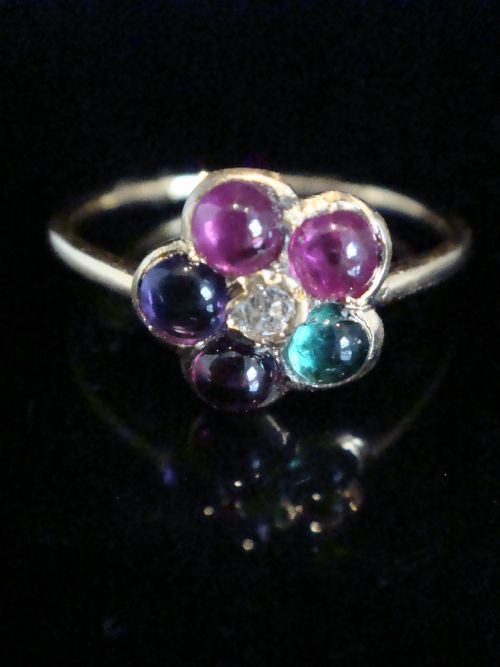
A dearest ring is an acrostic piece where the first letter of each gemstone spells out the word dearest, using Diamond, Emerald, Amethyst, Ruby, Emerald, Sapphire and Topaz.
These sentimental jewels were popular during the Victorian period as tokens of affection.