

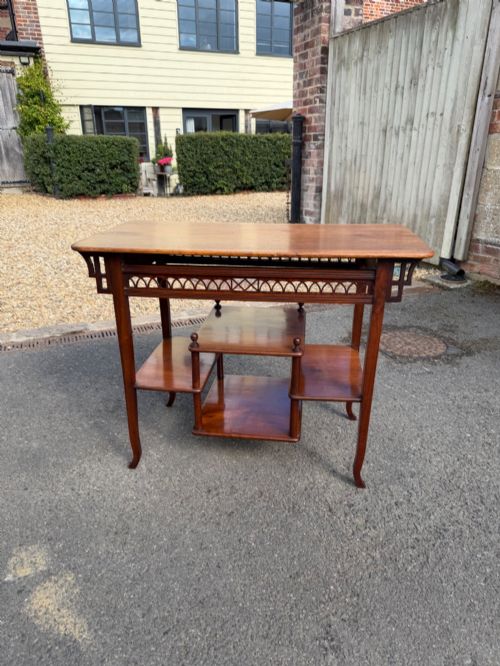
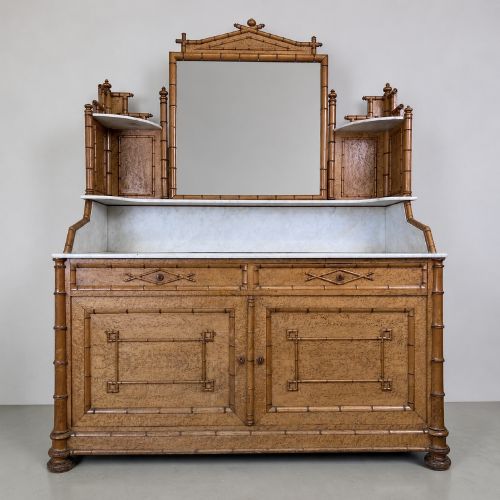


Aesthetic Style Table
An aesthetic style table brings late nineteenth-century linearity and Japanois or Anglo-Japanese refinement straight into a modern interior.
Aesthetic Style Table
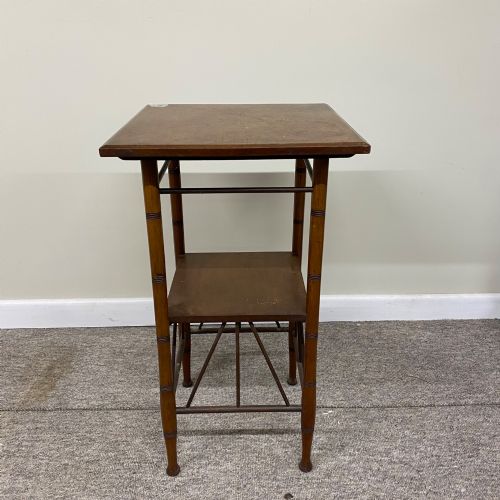
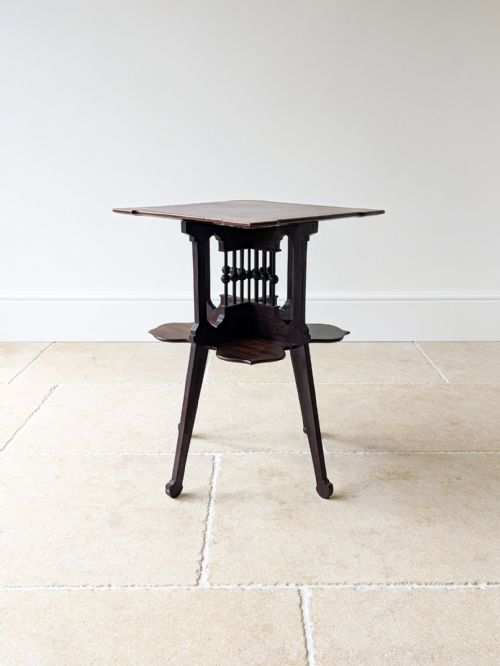
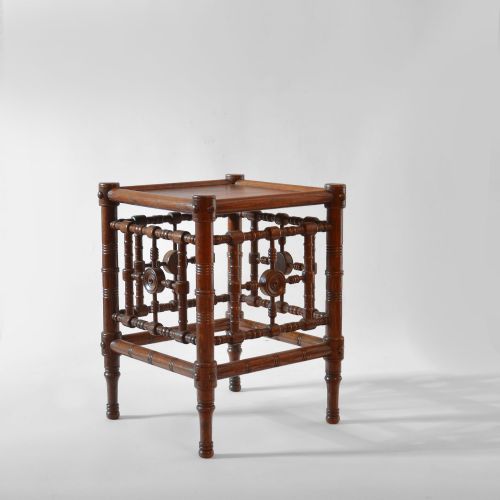
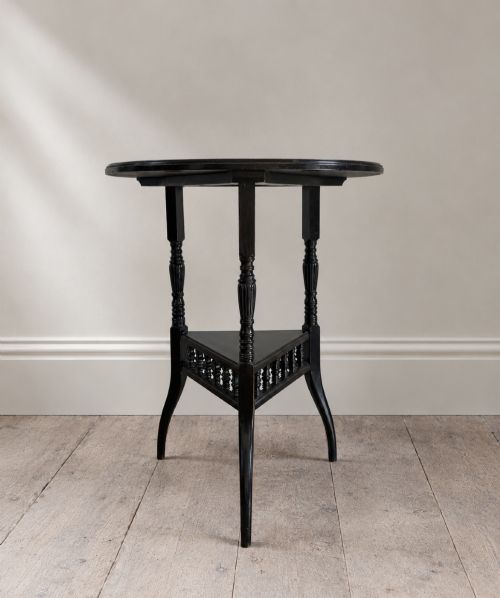
When you search for an aesthetic style table, you encounter forms that span side tables, occasional tables, writing tables, and console tables from the nineteenth century. These pieces reflect the broader Aesthetic Movement alongside Arts and Crafts, Anglo-Japanese, and Chinoiserie styles of the period.
The most common versions on this page are occasional and side tables built from ebonised wood or bamboo. They often feature two tiers or a clean, rectilinear profile associated with designers like E. W. Godwin.
Makers and retailers such as Liberty & Co., Howard & Sons, and Gillows shaped this vocabulary, producing everything from bamboo lamp tables to satin birch writing desks. The selection also includes occasional items like card tables and washstands sharing the same visual lineage.
Materials and construction
Makers utilised a diverse palette of timber, pairing mahogany, walnut, satin birch, and bird's-eye maple with ebonised finishes, lacquer, and bamboo. Brass hardware, marble tops, and woven reed details appear frequently across the pieces.
Construction methods balance traditional cabinet-making with lighter structural framing influenced by Japanese design principles. Ebonising created the dense, flat black surfaces characteristic of the movement, while bamboo and lacquered panels introduced contrasting organic textures.
Aesthetic Style Table Retail Price Guide 2026
Typical asking prices for aesthetic style table among the pieces listed under this phrase on Sellingantiques today, from the lower quarter to the upper quarter. They describe what is for sale here now, not the wider market.
Listings demonstrate a strong presence of ebonised wood and bamboo, paired with walnut, mahogany, and marble across nineteenth-century forms.
Distinctions in quality
Quality rests on the integrity of the materials and the precision of the joinery rather than ornate carving. Finer examples show crisp ebonising, well-fitted lacquer work, and stable bamboo framing that resists loosening over time.
Attribution to prominent firms or adherence to documented designs by figures like Godwin elevates a piece. Better tables maintain their original surface treatments, whether polished wood, gilding, or applied decoration, without heavy modern intervention.
Liberty & Co·Howard & Sons·Gillows·Wedgwood·Thomas Allen
The Aesthetic Style Table Glossary
- Ebonised wood
- Timber treated to resemble ebony, providing the dark, matte finish seen on many nineteenth-century frames. This technique defined much of the furniture produced during the Aesthetic Movement.
- Anglo-Japanese
- A design style combining British construction with Japanese structural restraint and motifs. It prioritises asymmetry, simple geometric lines, and exposed joinery.
- Crossbanded
- A method of applying a border of veneer perpendicular to the grain of the main surface. It frames table tops with a contrasting stripe of wood.
- Tiered table
- A multi-level table featuring an extra shelf below the main surface. These shelves offered additional display space for ceramics or small decorative objects.
Aesthetic Style Table: Frequently Asked Questions
What is an aesthetic style table?
It is a nineteenth-century table reflecting the philosophies of the Aesthetic Movement, focusing on simplicity, form, and cross-cultural inspiration.
These pieces often incorporate ebonised wood, bamboo, or Japanois motifs, departing from heavy Victorian ornamentation.
How do I date these tables?
Dating relies on material combinations, structural cues, and period characteristics primarily spanning the late nineteenth century.
Evidence from this era points to stylistic overlaps with Arts and Crafts and Anglo-Japanese design principles.
Where were these tables used?
They functioned as versatile furniture in drawing rooms, parlours, and studies for holding lamps, books, or decorative objects.
Lighter bamboo and ebonised versions allowed easy movement around the Victorian home to suit changing social layouts.
How do I care for ebonised wood?
Keep ebonised surfaces away from direct sunlight and excessive moisture to protect the dark finish from fading or lifting.
Dust gently with a dry, soft cloth and avoid chemical polishes that can degrade the matte or polished surface.