
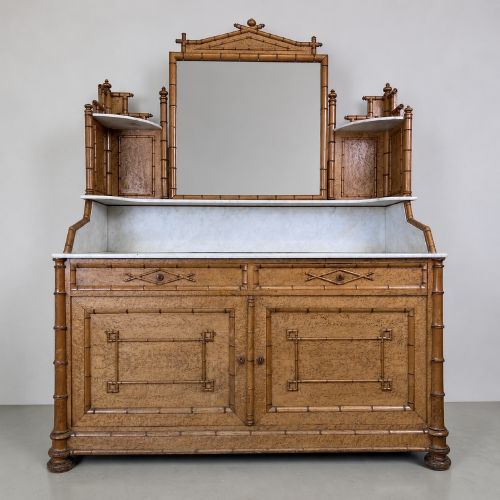


Aesthetic Movement Vanity
These aesthetic movement vanity pieces range from washstands to dressing cabinets, offering the distinct decorative forms desired by collectors of late nineteenth-century design.
Aesthetic Movement Vanity
An aesthetic movement vanity encompasses items such as dressing tables, washstands, and bedroom cabinets dating from the Victorian period. These pieces frequently surface alongside smaller accessories like jewellery boxes, scent bottles, and trinket dishes.
Collectors encounter ebonised wood, mahogany, walnut, and occasional faux-bamboo constructions across the listings. Many examples incorporate marble tops, painted mirror backs, or majolica panels reflecting the characteristic style of the eighteen-eighties and nineties.
How they were made
Cabinet makers utilised ebonised wood, walnut, mahogany, and occasional coromandel, frequently incorporating marquetry inlay and gilt detailing. Surfaces often featured painted panels or fitted brass hardware.
Larger furniture forms combined timber frames with inset marble slabs for washstands and dressing tables, while smaller items utilised glass, sterling silver, and fabric components.
Materials appearing across the inventory include brass, glass, marble, ebonised wood, walnut, mahogany, metal, and fabric.
What varies in quality
The sophistication of the timber work and the presence of decorative elements such as majolica panels, inlaid motifs, or sterling silver mounts distinguish finer examples. Simpler utilitarian pieces contrast with elaborately carved or painted dressing cabinets.
The integrity of original materials, including glass mirrors, brass fittings, and marble surfaces, determines the distinction between standard bedroom furniture and high-status aesthetic period items.
Collinson and Lock·James Hennell·Kate Greenaway
The Aesthetic Movement Vanity Glossary
- Ebonised wood
- Timber treated to resemble ebony, providing a dark surface popular in late nineteenth-century design. This finish allowed makers to create sharp contrasts with gilt highlights or inlaid details.
- Majolica
- Tin-glazed earthenware popular during the Victorian era. These colourful ceramic panels frequently appeared on cabinet doors and mirror backs.
- Bonheur du jour
- A light lady's writing desk featuring a raised cabinet with small drawers and shelves. These refined pieces often incorporated aesthetic movement styling.
- Bird's-eye maple
- A decorative timber figuring resembling small eyes in the grain. French makers utilised this material alongside faux-bamboo structures.
Aesthetic Movement Vanity: Frequently Asked Questions
What defines an aesthetic movement vanity?
These pieces originate from the Victorian period, spanning the late nineteenth century around eighteen eighty to nineteen hundred. They reflect the artistic reforms of the era through stylised ornamentation and dark ebonised finishes.
Forms include dressing tables, washstands, and smaller accessories such as jewellery boxes and scent bottles. They combine practical bedroom functions with distinct decorative sensibilities.
How do washstands differ from dressing tables?
Washstands generally feature marble tops designed to withstand water use during washing routines. They often include mirror backs and storage for basin sets.
Dressing tables focus on personal grooming, providing drawers and adjustable mirrors for hair and makeup. Both forms frequently employ ebonised wood, mahogany, or walnut.
What materials appear on these pieces?
Cabinet makers utilised ebonised wood, walnut, mahogany, and coromandel for the primary structures. Details often included brass hardware, glass mirrors, and fabric elements.
Certain items incorporate ceramic majolica panels or sterling silver mounts. Marble surfaces are particularly common on washstands and dressing cabinets.
How should I care for ebonised wood?
Ebonised surfaces require gentle dusting with a dry microfibre cloth to protect the dark finish. Avoid chemical polishes that can degrade the surface sheen over time.
Keep wooden items away from direct sunlight and excessive moisture fluctuations. Marble and glass elements on washstands benefit from simple damp wiping followed by immediate drying.