


Aesthetic Movement Bamboo Stand
An aesthetic movement bamboo stand brings late nineteenth-century Anglo-Japanese design into a room, offering lightweight utility and distinctive exotic character.
Aesthetic Movement Bamboo Stand
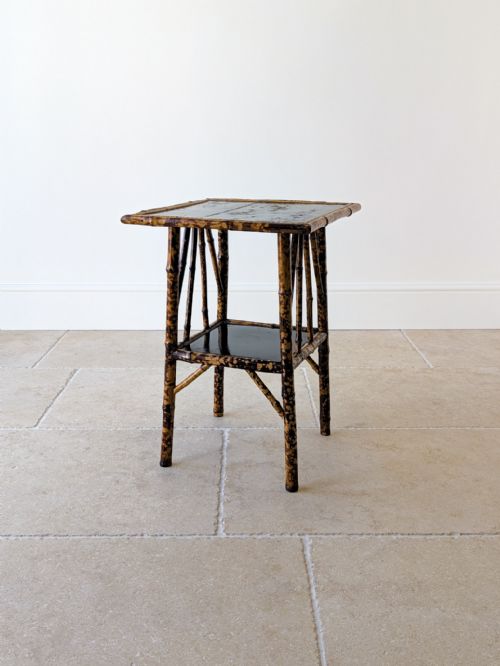
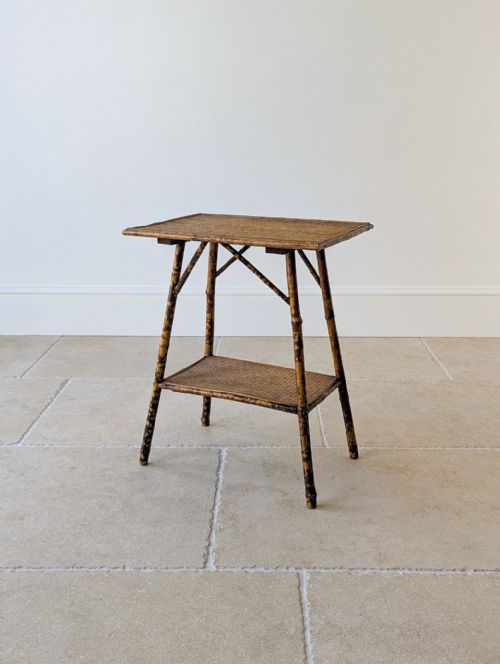
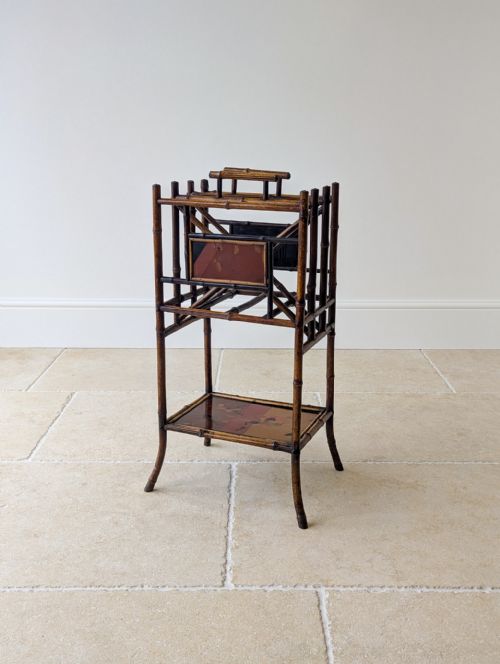
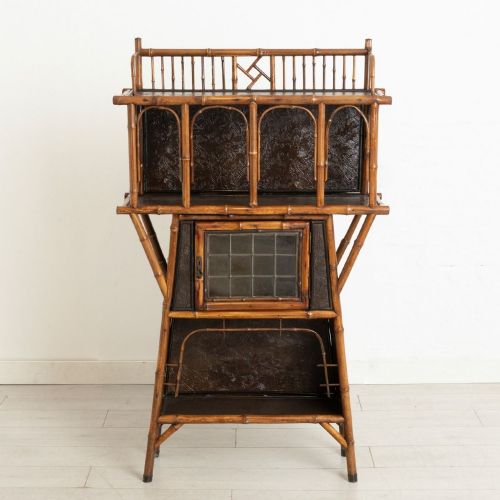
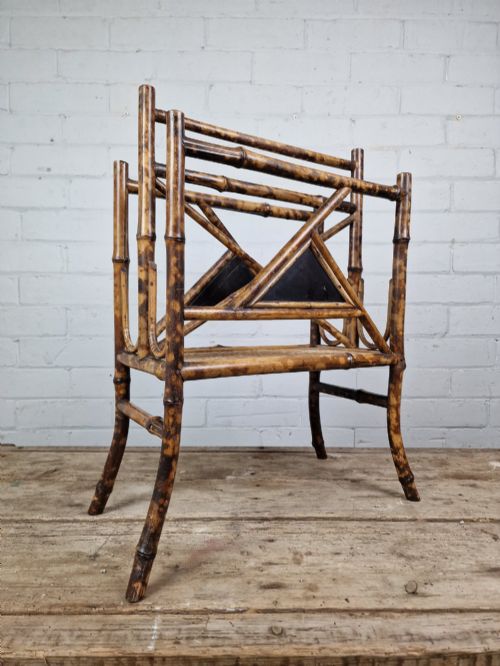
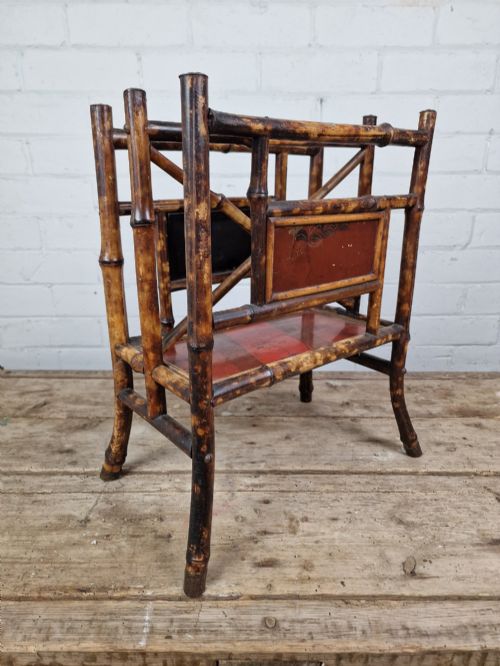
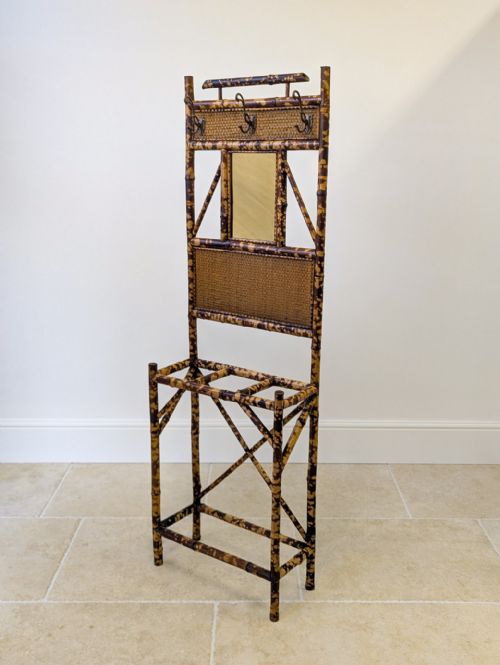
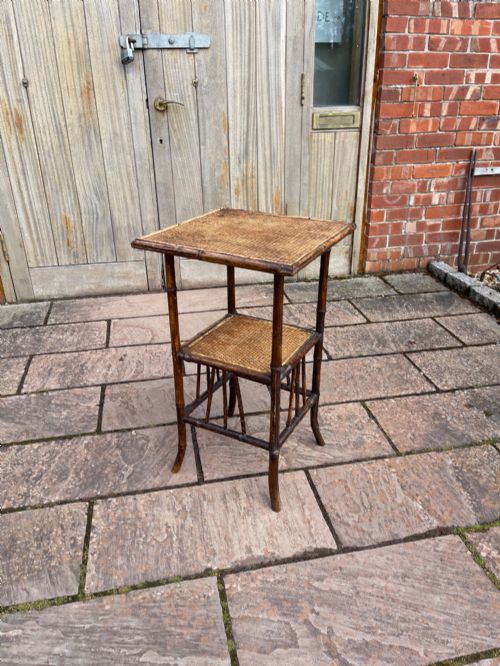
An aesthetic movement bamboo stand encompasses a range of domestic furnishings produced primarily during the Victorian and Edwardian periods, notably around eighteen-eighty to nineteen-ten. Buyers seeking this phrase encounter practical forms such as occasional tables, hall stands, umbrella stands, and magazine racks.
The aesthetic movement and Anglo-Japanese styles heavily influence these pieces, drawing on East Asian motifs and naturalistic forms. Alongside genuine bamboo, items frequently incorporate faux bamboo in wood, rattan, and cast iron.
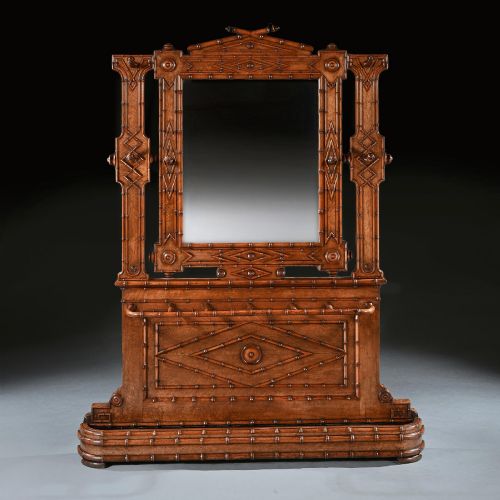
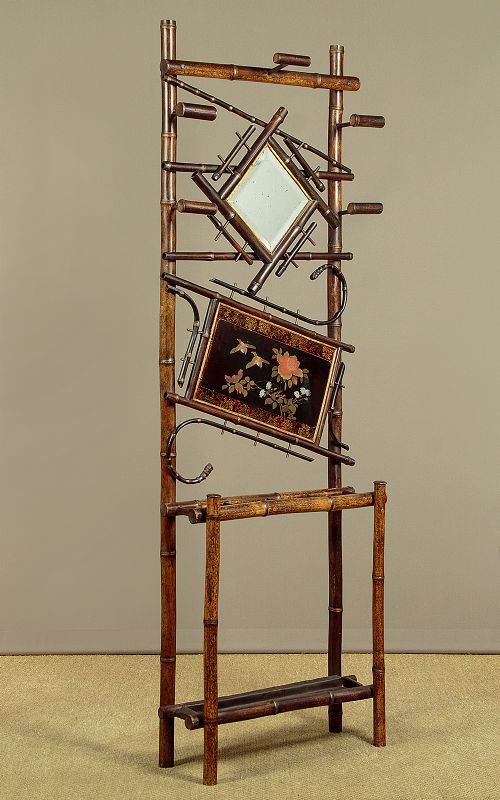
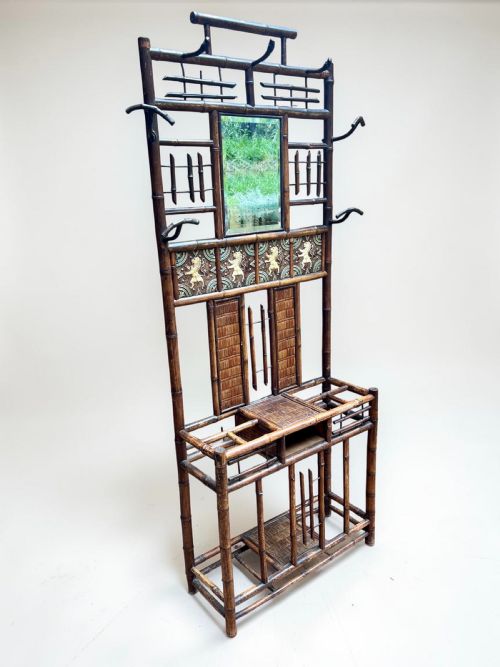
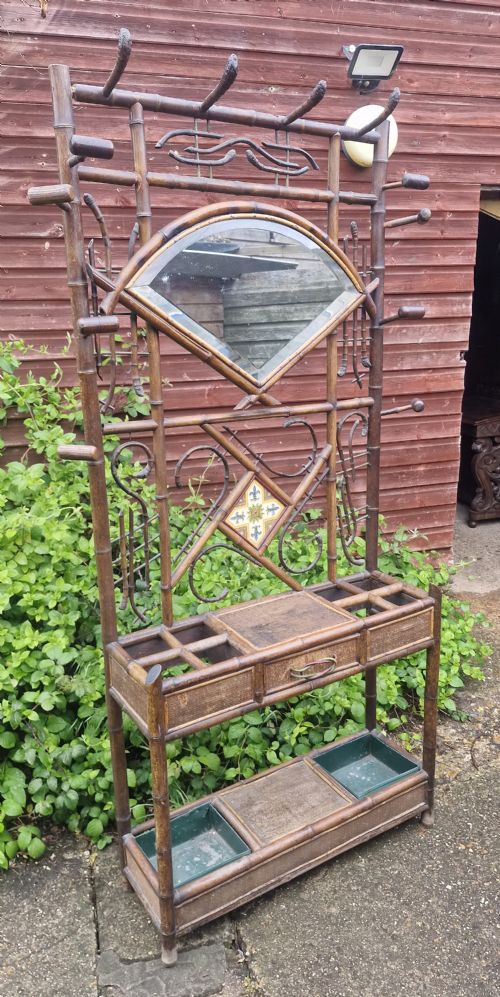
Originating domestically and through import connections, these stands served various functional roles in nineteenth-century hallways, parlours, and drawing rooms. The selection on this page reflects diverse domestic requirements, from compact side tables to tall combination hall stands with mirrors.
How they were made
Maker construction relies heavily on natural bamboo and tiger bamboo, often paired with secondary woods like mahogany and birdseye maple, or simulated through painted faux bamboo. Workshops integrated specialised surfaces including lacquer panels, ceramic tiles, glass, leather, hessian, and woven reed.
Decorative surface techniques distinguish the genre, employing hand painting, decoupage, chinoiserie motifs, and Japonisme styling. Structural components are occasionally secured with metal brackets and cast iron elements, particularly in umbrella and stick stands designed for heavy daily use.
Victorian households apparently needed endless places to stash reading matter, resulting in bamboo magazine racks that double as impromptu art pieces.
What varies in quality
Quality in these stands rests upon the structural integrity of the cane joints and the precision of the secondary materials used, such as hand-painted lacquer panels or inlaid ceramic tiles. Superior examples display rigorous joinery and well-figured tiger bamboo rather than uniform plain cane.
The presence of specialised decorative elements, including cut crystal components, silver-plated details, or integrated mirrors and leather inserts, elevates a piece. Maker attribution, such as work associated with Liberty and Company, further separates standard production items from exceptional workshop outputs.
Leonard Wyburd·Liberty and Co
The Aesthetic Movement Bamboo Stand Glossary
- Aesthetic Movement
- A late nineteenth-century design ethos prioritising visual beauty over narrative or moral function. It drew heavily on Japanese art and decorative traditions.
- Anglo-Japanese
- A hybrid design style combining British domestic furniture forms with Japanese artistic influences and construction motifs. This aesthetic defined much of the high-end production in late Victorian interiors.
- Tiger Bamboo
- Bamboo exhibiting natural dark mottled markings resembling tiger stripes. Makers prized this variant for its decorative surface pattern.
- Faux Bamboo
- Wood, cast iron, or other materials carved or painted to replicate the segmented nodes of natural bamboo. It provided structural rigidity while maintaining the exotic aesthetic.
Aesthetic Movement Bamboo Stand: Frequently Asked Questions
What is an aesthetic movement bamboo stand?
An aesthetic movement bamboo stand is a piece of late nineteenth-century furniture designed under the influence of Japanese art and the broader aesthetic movement. These items include occasional tables, hall stands, and magazine racks created for domestic utility.
They combine natural or faux bamboo with materials like lacquer, ceramic tiles, and leather to achieve an exotic, lightweight look suitable for Victorian drawing rooms and hallways.
How were bamboo hall stands used?
Bamboo hall stands served as multifunctional entryway furniture in Victorian homes. They typically incorporated mirrors, umbrella wells, and coat hooks into a single compact footprint.
Households utilised them to organise outerwear and walking sticks while presenting an artistic, fashionable interior to visitors upon entering the home.
How do I date a bamboo stand?
Dating relies on examining the construction materials, hardware, and stylistic markers recorded across the Victorian and Edwardian eras. Pieces from the eighteen-eighties and eighteen-nineties frequently feature aesthetic movement Japonisme motifs and hand-painted lacquer panels.
Later examples stretching into nineteen-ten and nineteen-twenty often adopt simpler construction methods or heavier wood elements while retaining the underlying bamboo or faux bamboo aesthetic.
What maintenance do bamboo stands need?
Maintenance requires keeping the pieces away from excessive moisture and direct sunlight to protect the natural cane and applied lacquer surfaces. Gentle dusting with a dry or slightly damp cloth preserves the finish without damaging delicate bindings.
Care should be taken with variants incorporating leather inserts, glass, or ceramic tiles to ensure surrounding joints remain stable.