


Adjustable Task Lamp
An adjustable task lamp provides directed illumination for reading and work, spanning brass desk models and chrome floor lights from the early twentieth century.
Adjustable Task Lamp
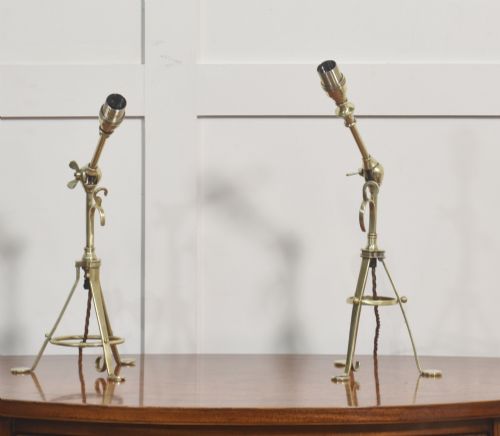
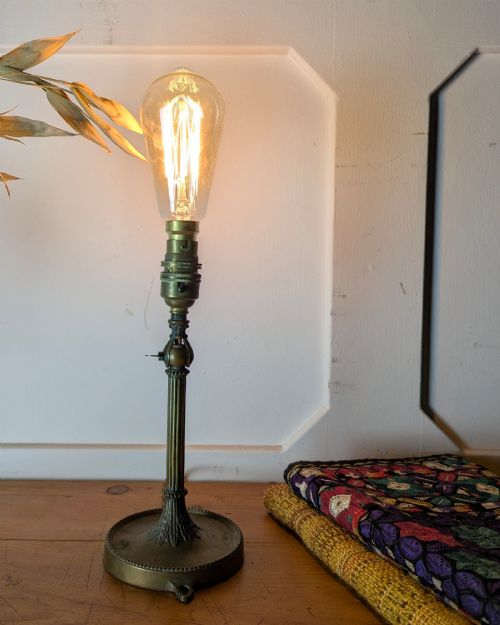
When you search for an adjustable task lamp, you encounter utilitarian lighting designed to focus light precisely where needed. The examples seen here predominantly take the form of desk lamps and table lamps, alongside floor lamps.
The selection ranges across the nineteenth century, Edwardian era, 1900, 1910, 1920, 1930, and 1940. Brass desk lamps from the Edwardian period and the 1920s appear most frequently, alongside Art Deco chrome pieces.
Makers such as W.A.S. Benson, Herbert Terry, Hawkins, and Pirouette shape the upper tier of these designs. Styles extend from Arts & Crafts and French Industrial to Art Deco and Mid-Century.
Materials and Construction
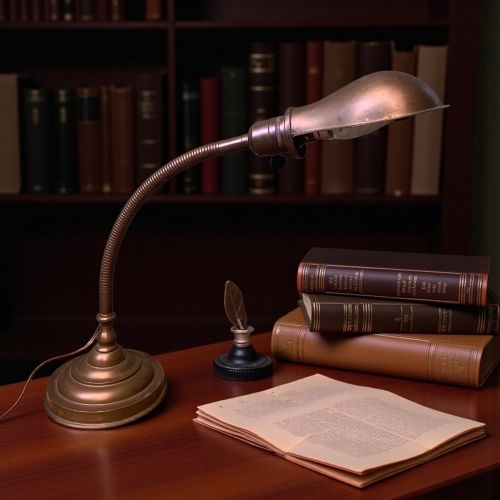
Metal forms the backbone of these pieces, utilising brass, chrome, steel, cast iron, bronze, and copper. Articulated arms and swan necks rely on rigid metallic tubing combined with flexible joints or pivots.
One persistent lamp arrives paired with a shell-shaped base, proving that early engineers occasionally let marine life dictate desk decor.
Material Integrity and Mechanics
Quality rests in the weight of the metal and the precision of the joints. Heavy brass, solid bronze, and thick cast iron indicate superior construction compared to lighter assemblies.
The sophistication of the articulation, whether through sliding brass collars, balanced springs, or weighted swan necks, separates standard utility pieces from finer creations by makers like Herbert Terry or W.A.S. Benson.
W.A.S. Benson·Herbert Terry·Pirouette·Hawkins
The Adjustable Task Lamp Glossary
- Swan Neck
- A curved metallic arm resembling a swan's neck that allows directional adjustment of the shade. This form is common in Edwardian desk lamps.
- Anglepoise
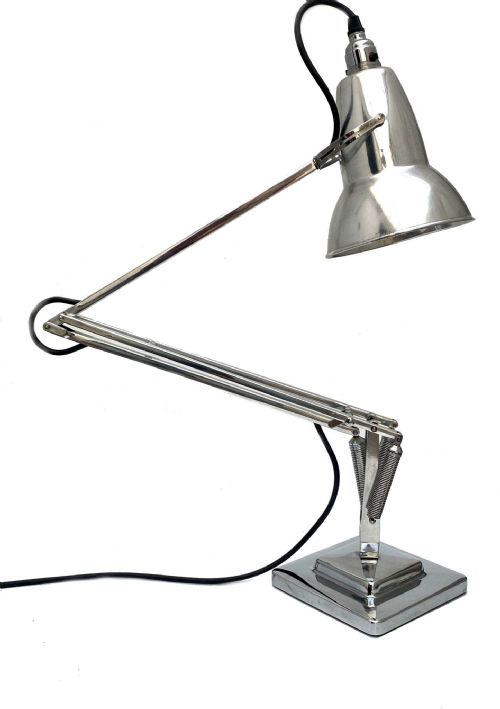
- A spring-balanced articulated arm system invented in the twentieth century. It holds position firmly at any angle.
- Bouillotte Lamp
- A traditional adjustable table lamp featuring a central shaft and a central shade that can be raised or lowered on the stem. These often incorporate brass or toleware.
- Articulated
- Jointed or hinged to allow movement and repositioning of the lamp head. This mechanism enables precise task lighting.
- Tole
- Painted or lacquered sheet metal used traditionally for lamp shades. It provides a durable, coloured surface.
Adjustable Task Lamp: Frequently Asked Questions
How do I identify an Edwardian adjustable task lamp?
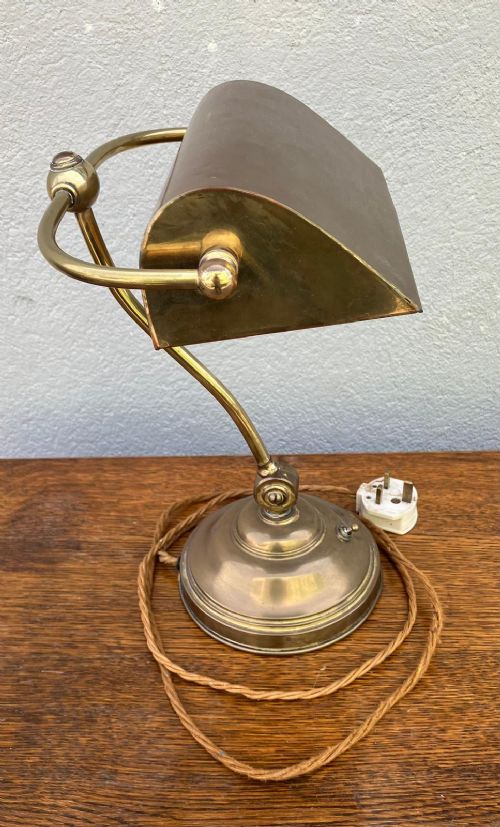
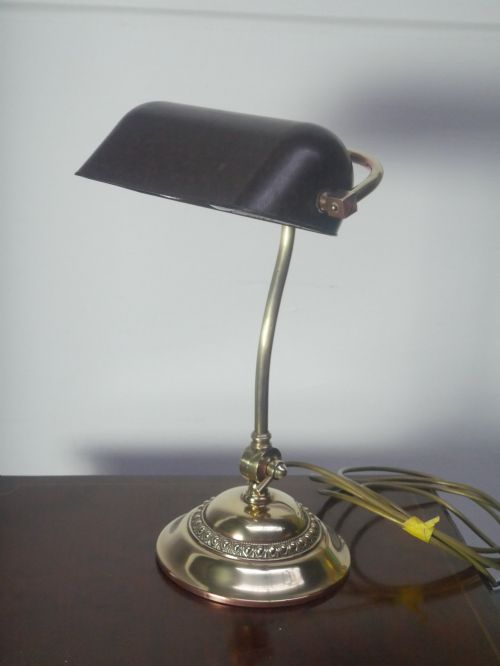
Edwardian examples typically feature polished brass construction, often paired with green glass bankers shades or porcelain fittings. They rely on simple swan neck curves or screw-adjusted joints rather than complex spring systems.
Look for traditional craftsmanship characteristic of the early twentieth century, such as heavy cast bases and patinated metal surfaces that show age.
What is the difference between Art Deco and Edwardian models?
Edwardian task lamps favor warm brass, copper, and traditional forms like the bankers lamp or swan neck desk light. They lean towards Arts & Crafts or classic turn-of-the-century aesthetics.
Art Deco versions from the 1920s and 1930s introduce chrome, steel, and streamlined Machine Age designs, including early Anglepoise lamps and shell-shaped shades.
Can I use modern bulbs in these vintage lamps?
Most antique and vintage task lamps accept standard modern screw or bayonet bulbs, provided the wattage matches the original electrical requirements. Many pieces have been rewired for contemporary safety standards.
Check the lampholder and wiring condition before daily use to ensure compatibility with modern electrical supplies.
Where should I place a floor lamp version?
Adjustable floor lamps suit reading corners, studies, or beside armchairs where directed downward illumination is useful. Their articulated chrome or brass arms allow you to project light over furniture.
Ensure the heavy cast iron or metal base sits on an even surface to balance the extended reach of the arm.