



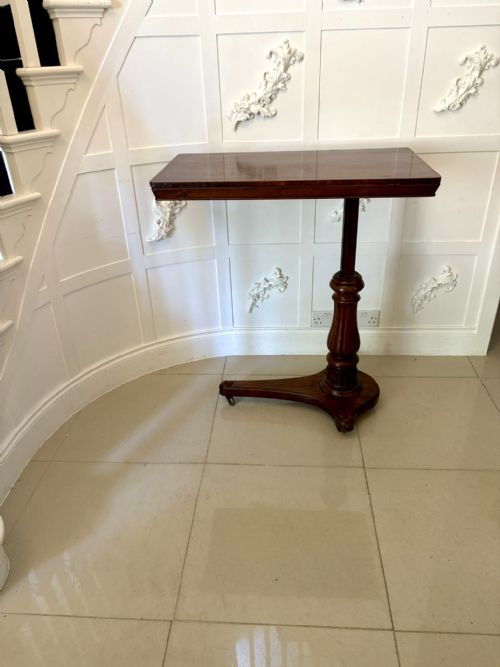


Adjustable Side Table
An adjustable side table serves practical needs with mechanical movement, combining height or angle adjustments with compact surfaces suited for reading, writing, and bedside use.

Adjustable Side Table
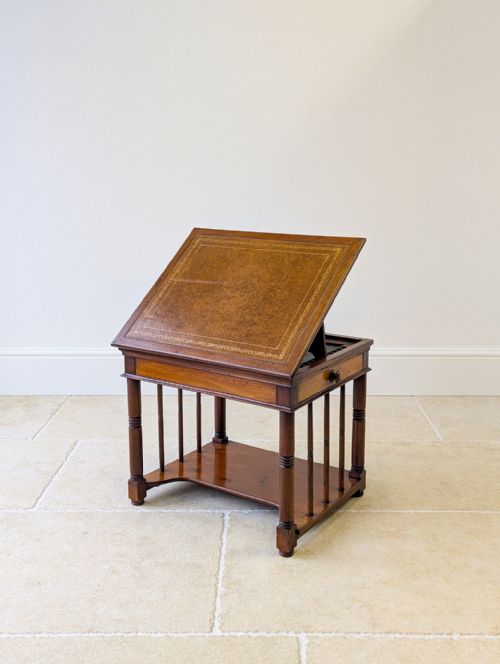
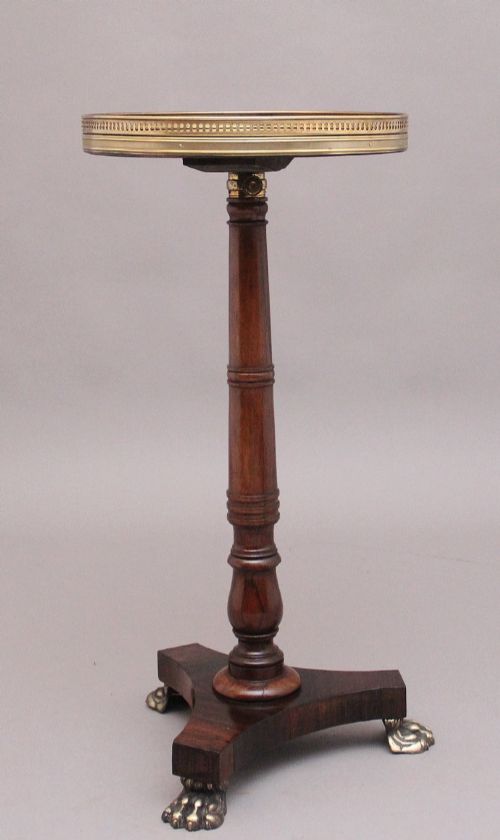
When you search for an adjustable side table, you encounter pieces designed for utility and movement across the Georgian, Regency, Victorian, and Edwardian eras. The examples seen here range from reading and writing tables to occasional tables, candlestands, and display stands.
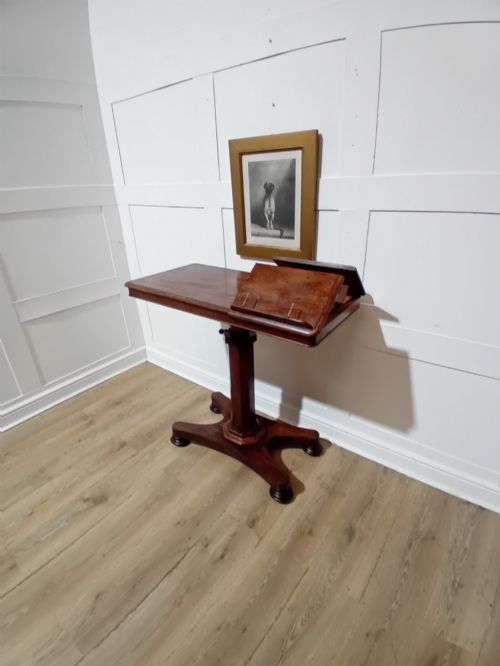
The version you are most likely to meet on this page is a mahogany table from the nineteenth century or the Victorian period. These often incorporate mechanisms for altering height or tilting tops for books and papers.
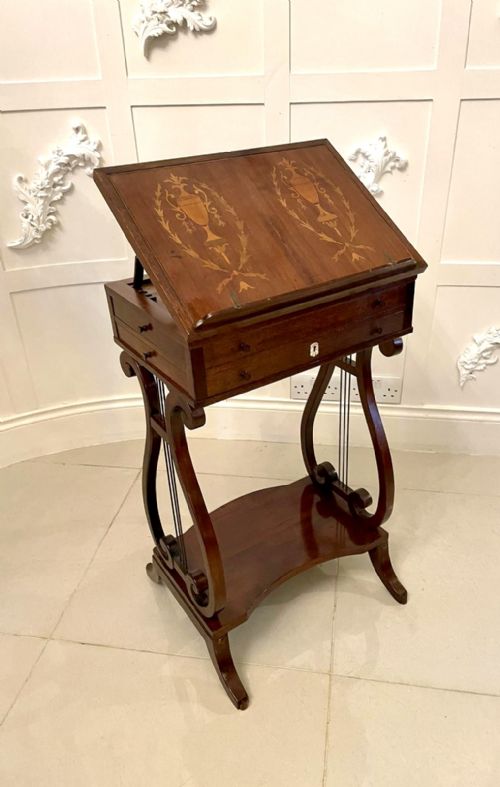
Makers and designers adapted these surfaces for specific domestic tasks, producing variants such as chairside reading tables, music stands, and telescopic occasional tables. The focus remains on functional movement built into traditional furniture forms.
Materials and construction
Timbers such as mahogany, walnut, rosewood, satinwood, and oak provide the structural framework for the tables and stands in the evidence. Cabinetmakers employed these dense hardwoods to support moving joints, telescopic shafts, and pivoting book rests without losing stability.
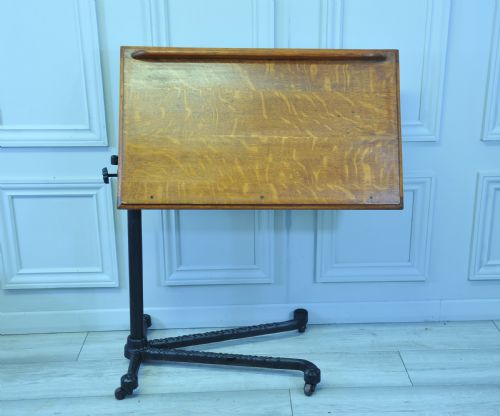
Brass and cast iron components enable the mechanical actions, serving as rise-and-fall stems, ratchets, and heavy weighted bases. Leather surfaces appear on writing variants, while secondary woods like pine support internal framing.
Adjustable Side Table Retail Price Guide 2026
Typical asking prices for adjustable side table among the pieces listed under this phrase on Sellingantiques today, from the lower quarter to the upper quarter. They describe what is for sale here now, not the wider market.
Listings feature mahogany as the dominant wood, accompanied by walnut, rosewood, and cast iron across nineteenth-century forms.
Distinctions in execution
The standard of a piece rests on the precision of its mechanical action and the integration of moving parts within the cabinetwork. Smooth movement in telescopic stems, ratchets, and screw mechanisms distinguishes finer workshops from basic production.
Timber selection and secondary detailing, such as finely turned columns, brass fittings, and inlaid veneers, separate utilitarian items from pieces finished for formal reception rooms.
Carters Of London·Swann & Millican·Gillows of Lancaster·Hostellet
The Adjustable Side Table Glossary
- Telescopic
- A mechanism allowing a shaft or pillar to slide within another to alter height. This design appears frequently in nineteenth-century occasional tables and candlestands.
- Ratchet
- A notched metal mechanism used to support and secure a reading desk or book rest at various angles. It allows the user to lock the surface in position.
- Candlestand
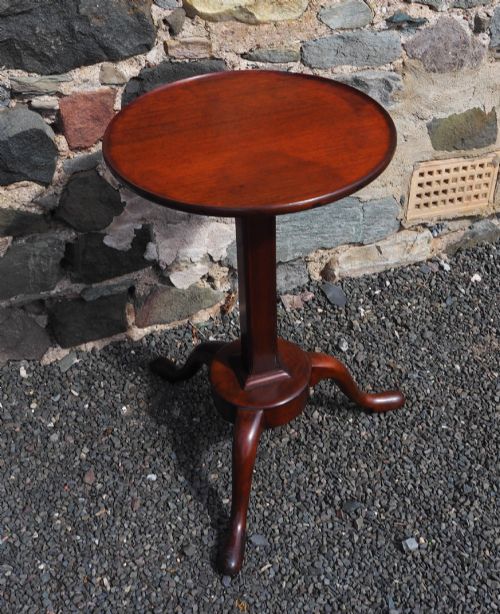
- A small, tall table intended to hold a candle or lamp, often featuring a pillar and tripod base. Early examples date to the mid-eighteenth century.
- Buffet
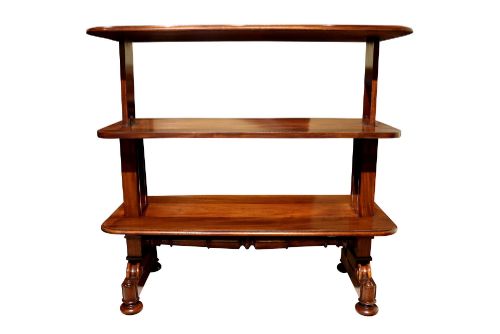
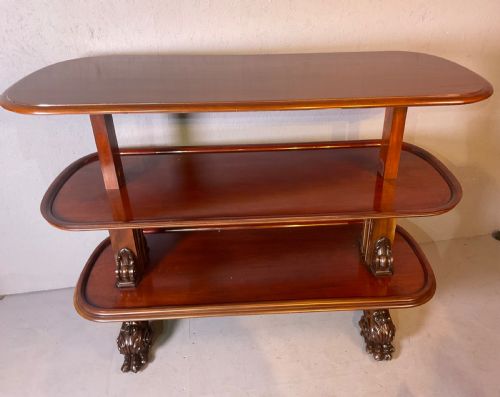
- A sideboard or serving table, sometimes built with multiple tiers for displaying or serving food and objects. William IV examples often feature rise-and-fall tiers.
- Pole screen
- A fireside panel mounted on an adjustable vertical pole to shield a person's face from the heat of an open fire. These share mechanical height adjustments with reading tables.
Adjustable Side Table: Frequently Asked Questions
What are adjustable side tables used for?
These pieces function as versatile furniture designed for reading, writing, and holding lamps or books beside a chair or bed. Their adjustable mechanisms allow the height or angle of the surface to change according to the task.
Historically, they served specific domestic roles in libraries, drawing rooms, and studies where a flexible surface was required for holding folios, music, or writing materials.
How do you operate the height adjustment?
Adjustment mechanisms vary depending on the period and design, utilising telescopic brass columns, wooden friction stems, or metal ratchets. Turning a screw or lifting a pillar releases the mechanism to alter the height.
Care is needed when operating older mechanisms to avoid straining the wood or brass components where they join the tabletop or base.
Are these tables sturdy enough for daily use?
Solid hardwoods like mahogany, walnut, and oak provide the structural strength necessary for regular use. Their heavy cast iron or tripod bases prevent tipping when the top is adjusted.
However, the moving parts require gentle handling compared to fixed furniture, as excessive force can wear down the internal ratchets and screws over time.
How can you tell the period of a table?
Dating relies on the combination of timber, hardware, and stylistic details such as Regency reeded legs or Victorian turned columns. The presence of specific metals like cast iron often points towards the mid-nineteenth century onwards.
Makers' marks or stamps, when present, offer a direct guide to the workshop and decade of manufacture.