



Adjustable Reading Desk Lamp
An adjustable reading desk lamp brings focused task lighting to a table, combining mechanical articulation with period metalwork.
Adjustable Reading Desk Lamp
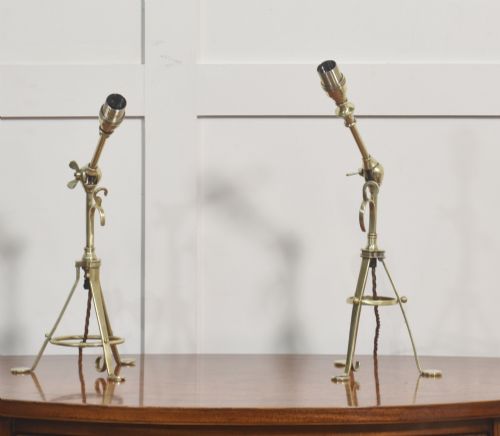
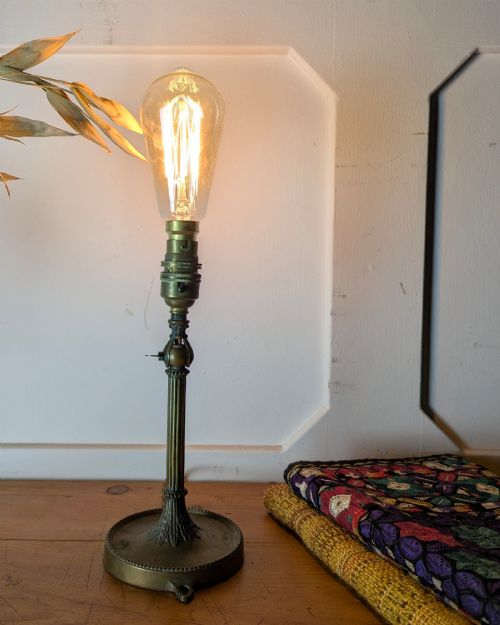
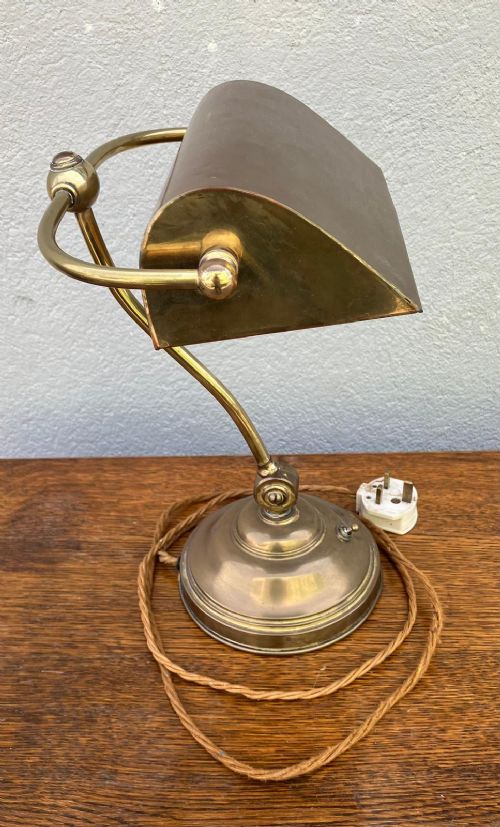
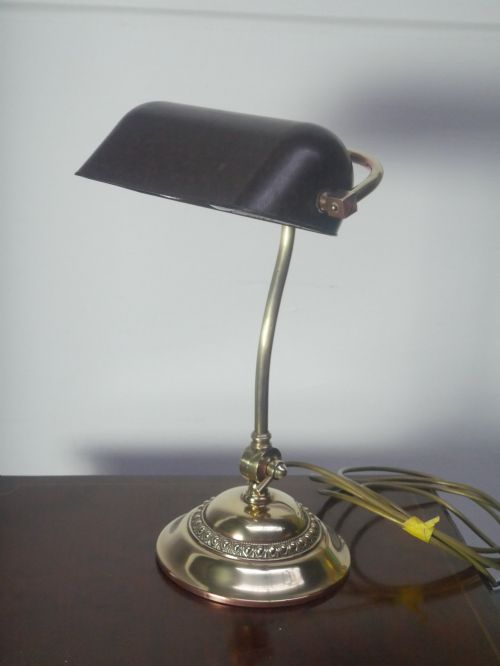
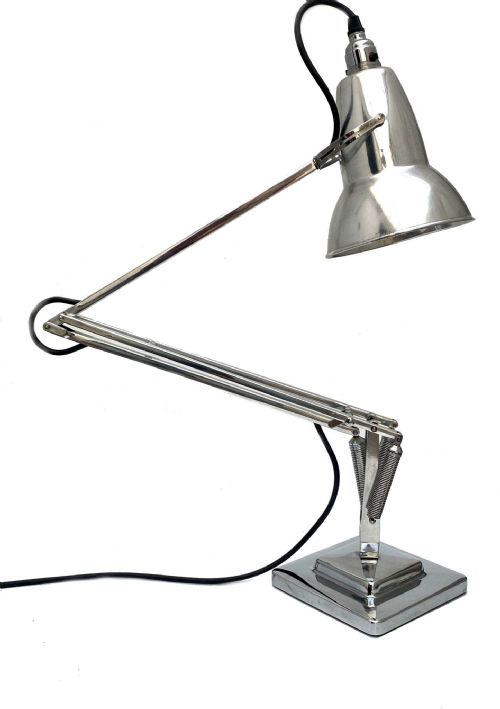
When searching for an adjustable reading desk lamp, you encounter functional task lighting spanning the late nineteenth century through to the mid twentieth century. These pieces include Bankers lamps, Arts and Crafts designs, and early industrial anglepoise fixtures intended for focused illumination.
Brass, bronze, and chrome dominate the forms, frequently paired with toleware, glass, or porcelain shades. Pieces originate from diverse contexts, ranging from English workshops and railway carriages to French salons and drafting studios.
Edwardian and Art Deco examples appear most frequently, demonstrating how domestic and professional spaces adapted to electricity and adjustable articulation during those decades.
Materials and Construction Methods
Workshops utilised cast brass, spun copper, and plated steel to build the rigid frames and weighted bases necessary to support movable arms. Articulation relies on mechanical joints, swan necks, or gimbal mechanisms that permit directional control.
Shades incorporate hand-formed toleware, blown glass, or pressed metal attached with galleries or screws. Surface finishes range from polished brass and gilt metal to painted green and gold toleware.
Listings span 1890 to 1940, encompassing Victorian, Edwardian, and Art Deco design movements.
Distinctions in Quality and Make
The sophistication of the mechanical adjustment mechanism separates standard utilitarian pieces from exceptional workshop productions. Heavier gauge metal, substantial weighted bases, and refined casting finish indicate superior fabrication.
The retention of original components, such as specialised shades, maker markings, and matched counterweights, defines the integrity of the object. Finer examples balance sculptural presence with precise articulation.
W.A.S. Benson·Herbert Terry·Pirouette·Wild and Wessel·Tiffany Studios
The Adjustable Reading Desk Lamp Glossary
- Toleware
- Painted or lacquered sheet metal used frequently for lamp shades. This technique creates a durable surface finished in colours like green or black.
- Swan Neck
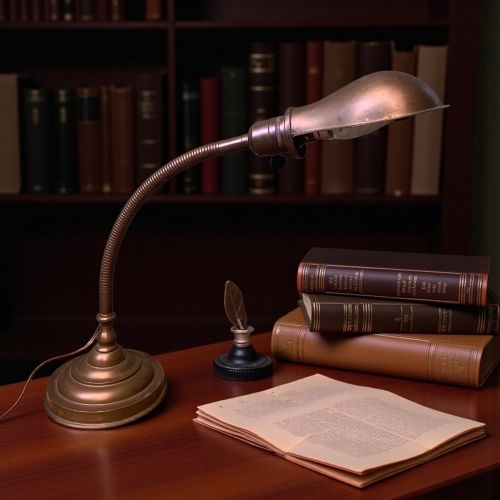
- A curved tubular metal arm that permits directional adjustment of the light source. It appears commonly on Edwardian and Art Deco desk lamps.
- Bouillotte Lamp
- A traditional adjustable table lamp featuring a central shaft and a shade that slides up and down on the stem. These often incorporate brass and toleware.
- Gimbal
- A pivoted ring mechanism that allows a lamp to remain level or adjust its angle on a ship or train. Such hardware reflects maritime and transport origins.
Adjustable Reading Desk Lamp: Frequently Asked Questions
How do I adjust the height on these lamps?
Articulation typically operates through sliding stems, counterweighted arms, or pivoting joints that permit directional positioning of the shade.
Heavier models use internal springs or external keys to secure the desired angle and height.
Were these lamps originally electrified?
Many surviving examples date from the transition between oil, gas, and electricity, leading to original adaptations or later conversions for domestic use.
Some pieces retain original switch mechanisms, fabric-covered cords, or fittings suited to specific period standards.
How do I distinguish an Edwardian model from an Art Deco one?
Edwardian designs favour traditional brass, classical proportions, and organic swan neck profiles suited to libraries and studies.
Art Deco pieces introduce chrome plating, streamlined machine age geometry, and geometric shades associated with modern offices.
What maintenance do antique metal lamps need?
Gentle dusting with a dry cloth preserves surface patinas on brass, bronze, and painted toleware without stripping historical finishes.
Wiring should be inspected by a qualified professional to ensure safety before connecting the lamp to modern power supplies.