



Adjustable Industrial Stool
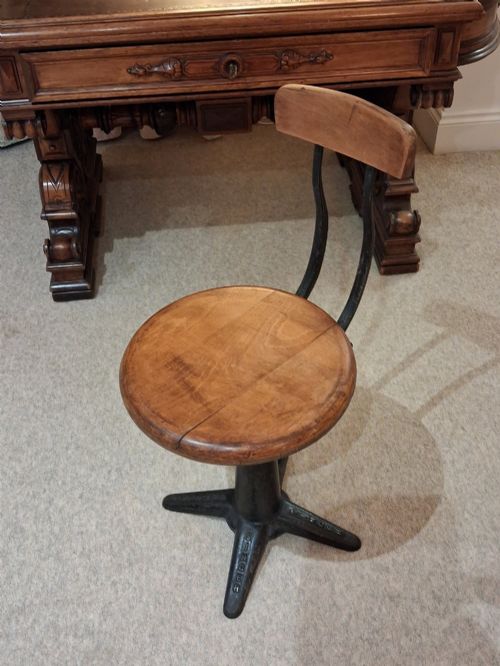
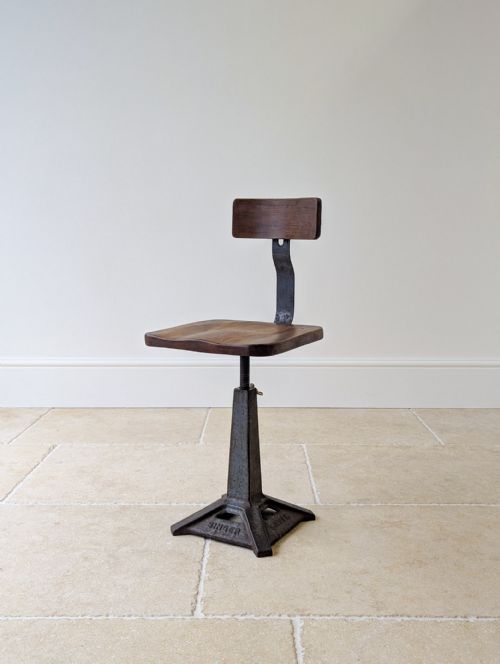
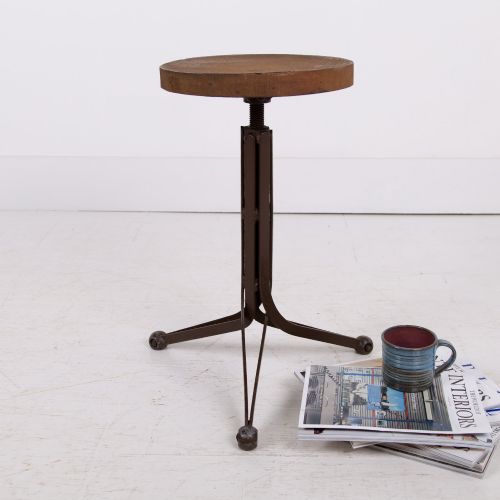
These adjustable industrial stool examples combine metal mechanisms with timber seats for practical seating that moves easily between workshop and home.
Adjustable Industrial Stool
An adjustable industrial stool serves as sturdy seating designed for factories, offices, and workshops, featuring mechanical height adjustments.
The selections found in this category span several periods including the Victorian era, the Edwardian period, and the 1930s.
Most items present forms such as office chairs, revolving stools, and bar stools constructed for utilitarian workspace environments.
How they were made
Maker construction relies heavily on durable metals like cast iron and steel to build heavy rotating bases and threaded height columns.
Seats utilise solid timbers such as elm, oak, and hardwood, shaped or planked to withstand demanding daily workshop use.
Adjustable Industrial Stool Retail Price Guide 2026
Typical asking prices for adjustable industrial stool among the pieces listed under this phrase on Sellingantiques today, from the lower quarter to the upper quarter. They describe what is for sale here now, not the wider market.
A good machinist stool still remembers the hum of the factory floor through every turn of its iron screw.
What varies in quality
Differences in quality often rest on the original manufacturer's reputation, such as established names like Singer or Rubery Owen, which denotes sturdier engineering.
The interaction between the metal screw mechanism and the wooden seat determines whether a piece maintains its structural integrity and smooth adjustment.
Singer Sewing Machinist·Rubery Owen·Evertaut Industrial
The Adjustable Industrial Stool Glossary
- Cast iron
- A heavy, rigid alloy poured into moulds to create solid machine bases and decorative structural legs. It provides the essential ballast for these heavy revolving seats.
- Revolving
- A motion allowing the seat top to spin continuously in either direction on a central threaded spindle or pin. This mechanism enabled workers to pivot easily between tasks.
- Elm
- A durable, tough hardwood frequently selected by makers for bench and stool tops due to its resistance to splitting under heavy impact.
- Machinist
- A workshop designation for equipment built specifically to seat operators at industrial sewing machines or lathe stations for long hours.
Adjustable Industrial Stool: Frequently Asked Questions
How do I adjust the height?
Most of these examples rely on a central threaded steel screw spindle. Turning the wooden seat clockwise or counter-clockwise raises or lowers the sitting position.
Older mechanisms often include a side lever or thumb screw to lock the spinning top firmly into place once the desired level is reached.
Can I use these outdoors?
While the cast iron and steel frames were originally built to endure harsh factory conditions, the wooden elements require protection from damp weather. Keeping them inside prevents the timber from warping and the metal from corroding.
Certain items like bistro sets might handle covered outdoor spaces better, but indoor environments suit the vintage finishes best.
Are these comfortable for daily seating?
The solid hardwood seats feature subtle depressions or saddles carved directly into the timber to fit the human form. They encourage upright posture during work tasks rather than lounging.
Adding a small cushion can soften the experience if you plan to sit for extended periods at a modern desk or kitchen counter.
How do I date an industrial stool?
Dating relies on observing the casting marks, fastener types, and the overall style associated with periods like the Victorian era or the 1930s. Simple flat-head screws and heavy ornate cast iron often point to 19th-century origins.
Later pieces from firms like Evertaut or Rubery Owen utilise streamlined steel components characteristic of mid-century workshop design.