




Adjustable Bookstand
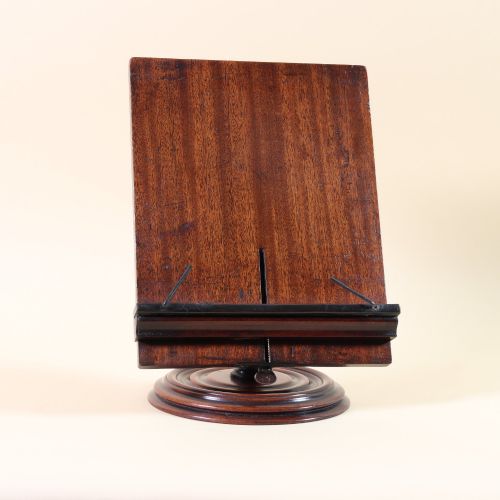
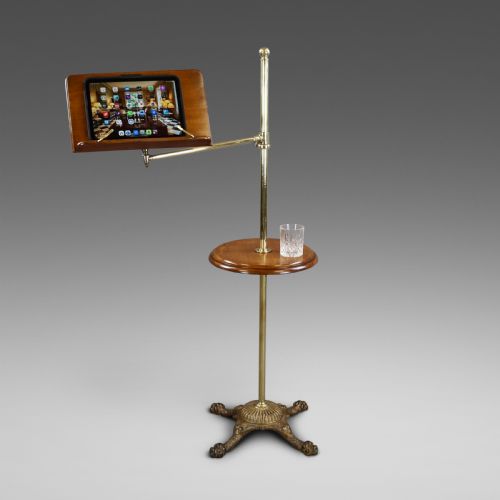
An adjustable bookstand offers a practical way to hold volumes steady at your desk, and these pieces span various woods and periods.
Adjustable Bookstand
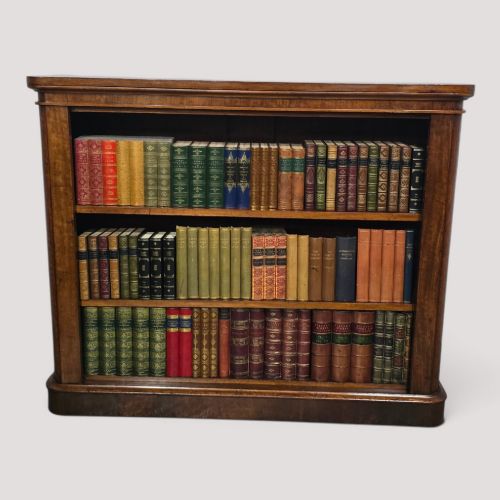
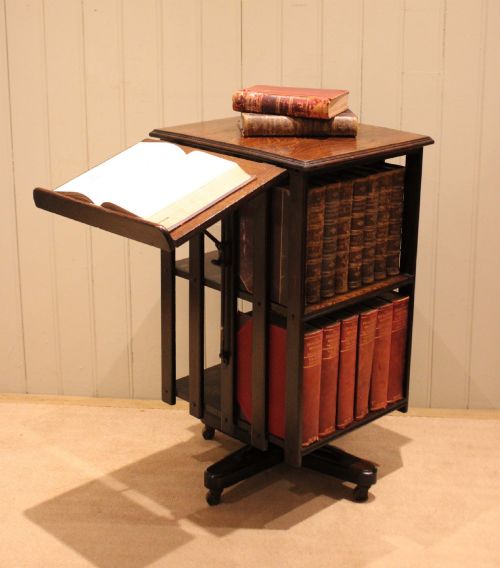
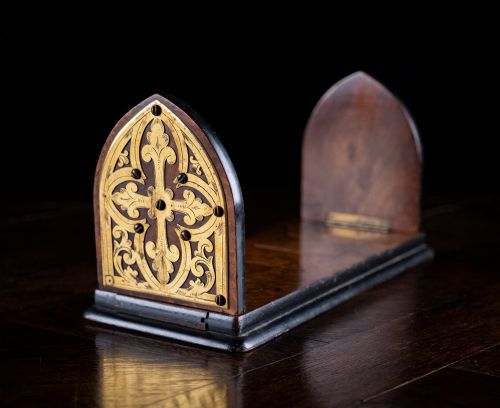
When you search for an adjustable bookstand, you encounter items designed to support reading material across tables and desks. The selection includes extending book slides, revolving bookcases with reading stands, and table top reading stands.
The objects date from the Regency period through to the 1930s, encompassing Victorian, Edwardian, Gothic Revival, and Jacobean Revival styles. Common forms on this page include mahogany book rests, oak extending slides, and walnut reading tables.
Makers utilised versatile designs for library and desk use, ranging from simple extending mechanisms to metamorphic tables. Oak and mahogany dominate the offerings, often fitted with brass hardware.
How they were made
Cabinetmakers constructed these pieces primarily in solid mahogany, oak, walnut, and coromandel, often incorporating brass mechanisms to allow the book stands to extend smoothly. Iron and cast iron appear in structural or mechanical elements.
The construction methods reflect the demands of nineteenth and early twentieth-century library furniture, combining robust timber frames with folding or sliding desk-top supports. Finishes highlight the natural grain of the hardwoods used.
Adjustable Bookstand Retail Price Guide 2026
Typical asking prices for adjustable bookstand among the pieces listed under this phrase on Sellingantiques today, from the lower quarter to the upper quarter. They describe what is for sale here now, not the wider market.
Some book slides are designated as novel rests, suggesting they kept Victorian serialised fiction propped up during tea.
What varies in quality
Quality in an adjustable bookstand rests on the choice of timber and the precision of the extending mechanism. Solid coromandel and finely figured mahogany represent the more decorative end of the spectrum compared to standard oak.
The refinement of brass mounts and the smooth operation of folding book rests or sliding actions distinguish finer library pieces from simpler utilitarian items.
The Adjustable Bookstand Glossary
- Book slide
- A desk accessory with expanding sides designed to hold a row of books upright between two ends. These slides adjust in width to accommodate varying numbers of volumes.
- Campaign
- A style of furniture designed for portability, typically featuring folding frames and brass corners. Pieces of this type are built for travel and ease of storage.
- Coromandel
- A dense, heavily figured exotic hardwood with dark brown and black streaks. It is frequently employed for decorative nineteenth-century desk accessories.
- Gothic Revival
- An architectural and decorative style drawing inspiration from medieval design, featuring pointed arches and heavy mouldings. This style appears on walnut and brass book slides from the nineteenth century.
- Metamorphic
- Furniture designed to transform from one form into another, such as an occasional table converting into a reading stand. These pieces utilise clever hinges and folding mechanisms.
Adjustable Bookstand: Frequently Asked Questions
What is an adjustable bookstand used for?
An adjustable bookstand supports books at a comfortable angle for reading or keeps a row of volumes neatly contained on a desk. They serve as functional library accessories.
These pieces were placed on top of desks, tables, or cabinets to hold working volumes or display decorative editions.
How do extending book slides work?
Extending book slides feature overlapping wooden sections that slide inwards and outwards to alter the overall length. This allows the holder to expand as more books are added.
Many incorporate brass hinges or sliding channels to facilitate smooth movement while keeping the book ends stable.
Which woods are common in these pieces?
Mahogany, oak, and walnut are the most frequently encountered timbers across these nineteenth and early twentieth-century items. Coromandel also appears on select decorative examples.
Cabinetmakers selected these hardwoods for their durability and attractive grain patterns, often pairing them with brass mounts.
How do I date an antique bookstand?
Dating relies on stylistic clues such as Gothic Revival motifs, Regency proportions, or Edwardian manufacturing details. The choice of timber and hardware offers further indication of the period.
Descriptive terms in the titles, such as Early Victorian or 1930, point towards the era of production based on construction characteristics.