
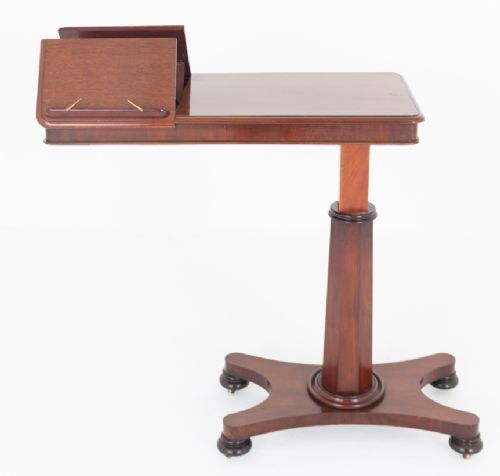


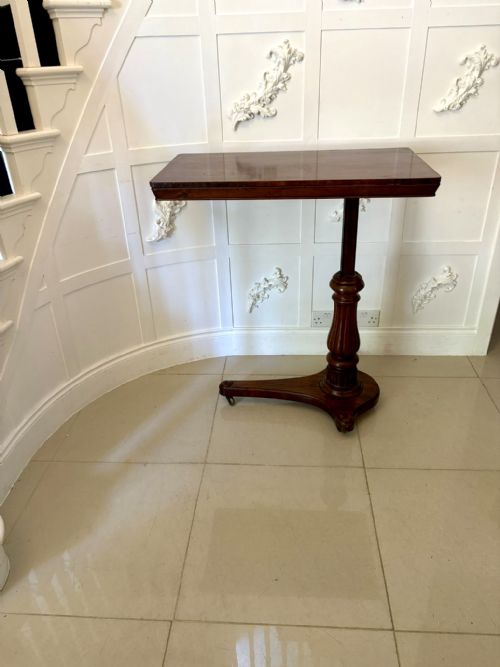
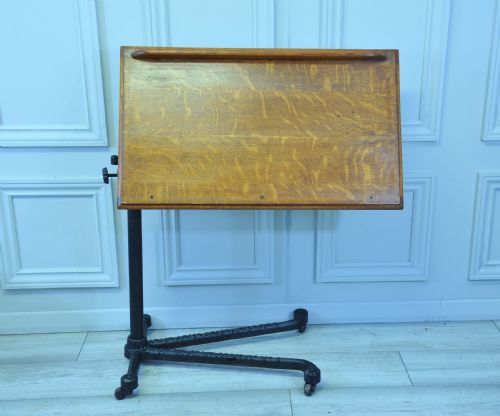


Adjustable Bed Table
These adjustable bed table pieces offer practical bedside and reading support, combining period timber work with mechanical height and tilt adjustments.
Adjustable Bed Table
An adjustable bed table serves as a functional reading and occasional surface, appearing frequently in Victorian, Edwardian, and Regency designs. These pieces often function as reading stands, side tables, or mobility aids intended for use beside a bed or chair.
The selection ranges from mid nineteenth century campaign pieces to later Edwardian and Art Deco examples. Mahogany and rosewood forms dominate the earlier periods, whilst later versions incorporate chrome, steel, and oak.
Materials and Mechanics
Cabinet makers utilised solid timbers such as mahogany, walnut, oak, and rosewood for the surfaces and framework. Figured veneers also appear on later nineteenth century reading tables.
Cast iron and brass components provide the mechanical strength required for adjustable stands and cantilever actions. Steel and chrome emerge in twentieth century over bed table designs.
Mahogany, oak, walnut, and rosewood appear frequently alongside brass and cast iron across the listed periods.
Craftsmanship and Mechanism
Superior examples display refined timber selection, such as figured walnut or dense mahogany, paired with robust cast iron or brass adjustment mechanisms. The smoothness of the tilting action and the stability of the base separate standard utility pieces from finer creations.
Maker signatures and patent stamps indicate higher workshop standards. The precision of the joinery and the condition of the folding or extending hardware determine the overall standard of the piece.
Carters Of London·Miles and Edwards
The Adjustable Bed Table Glossary
- Cantilever
- A rigid structural element supported at one end only. This design allows the table surface to project over a bed or chair without needing legs on both sides.
- Campaign table
- Portable furniture designed for travel and military use. These pieces often feature folding frames and removable parts for compact storage.
- Occasional table
- A small table intended for specific, intermittent use rather than central placement. These serve well beside seating and beds.
- Reading stand
- An adjustable surface designed to hold books or documents at an angle. They frequently incorporate ratchets or screw mechanisms for height and tilt control.
Adjustable Bed Table: Frequently Asked Questions
How do adjustable bed tables work?
These tables utilise mechanical joints, such as brass screws, cast iron ratchets, or cantilever frames, to alter the height and angle of the top surface.
Users can position the wooden surface over a bed, daybed, or chair to hold books, writing materials, or meals.
What materials are used in these pieces?
Construction relies heavily on hardwoods like mahogany, walnut, oak, and rosewood for the tops and structural frames.
Metal components, including cast iron, brass, steel, and chrome, provide the durability needed for the moving parts and bases.
Where were these tables used?
Historically, these items served bedrooms, studies, and sickrooms as versatile surfaces for reading, writing, and personal care.
Campaign versions were built for travel, whilst domestic variants suited daily use beside a bed or armchair.