





Accent Entry Table
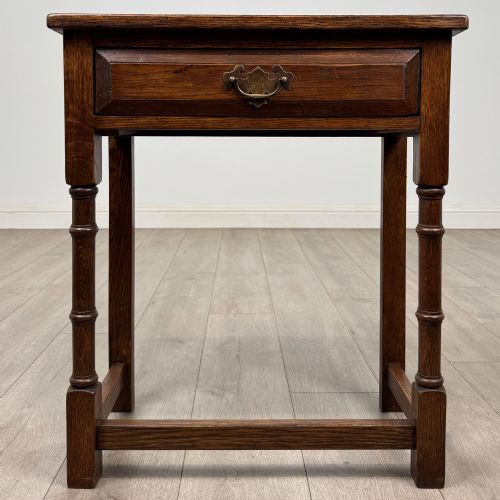
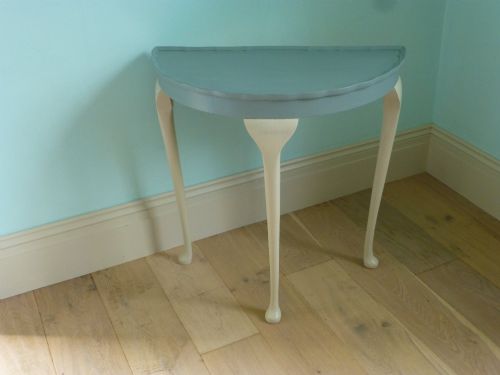
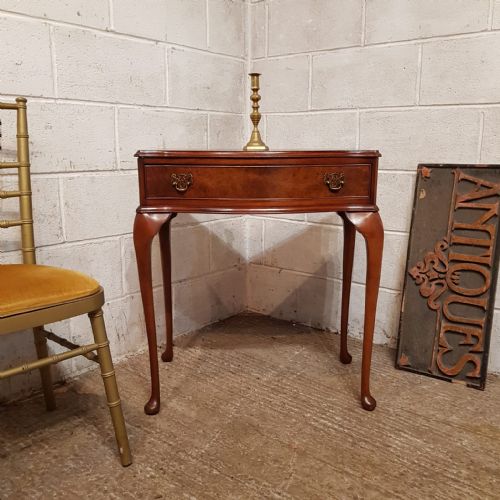
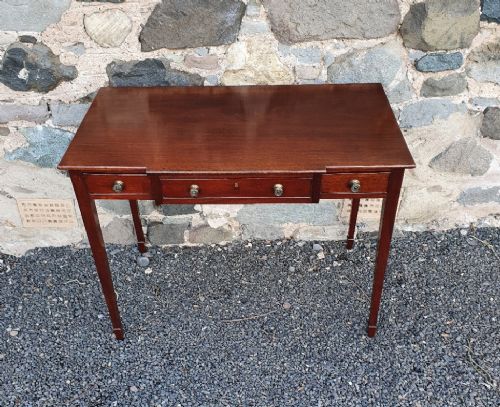
An accent entry table brings character to a hallway, with mahogany, oak, and painted wood pieces dominating this selection.
Accent Entry Table
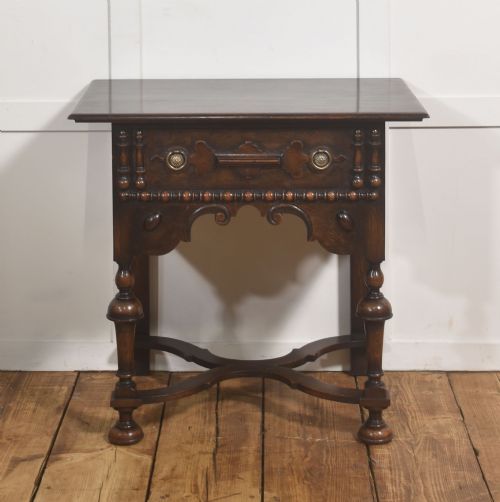
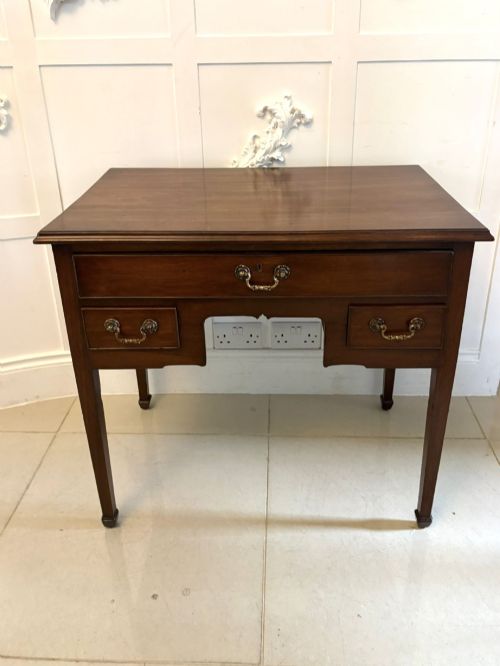
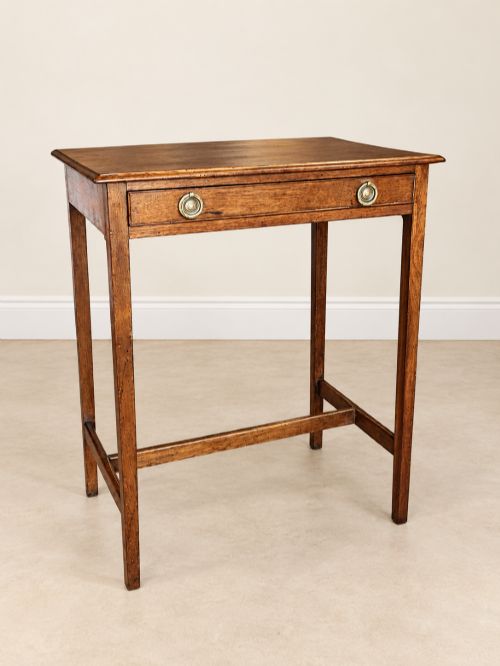
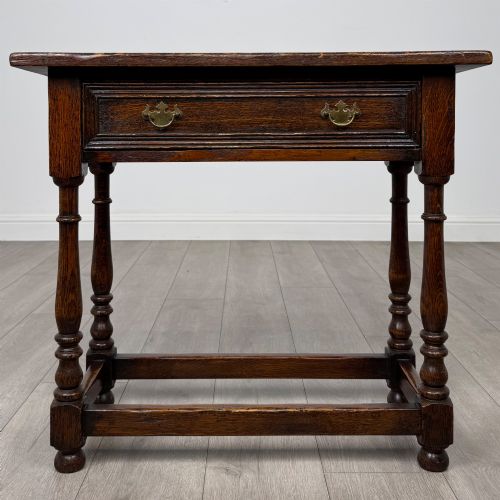
An accent entry table serves as a functional surface in a hallway or landing, taking the form of side tables, console tables, and lowboys. These pieces provide a practical spot for everyday items while establishing the decorative tone of an interior space.
The versions met most frequently on this page span the Georgian, Victorian, and Edwardian periods, alongside pieces from the early twentieth century. Common configurations include narrow side tables with single drawers and console tables designed to sit flush against a wall.
Origins vary across English country styles, French chateau influences, and regional revivals such as Jacobean and Queen Anne. Formats range from compact lamp tables to larger centre tables intended for prominent placement.
Materials and construction
Cabinet makers utilised a variety of timbers including mahogany, oak, walnut, burr walnut, birch, and rosewood. Pine and painted wood appear frequently in country and continental pieces, often paired with contrasting grain patterns.
Surface treatments and details involve brass hardware, carved gilt wood, and intricate inlays. Stone and marble tops are integrated into specific continental designs, providing durable surfaces on circular and oval frames.
Construction techniques follow traditional joinery methods appropriate to each period, from solid oak framing to delicate veneering on bureau and console structures.
Accent Entry Table Retail Price Guide 2026
Typical asking prices for accent entry table among the pieces listed under this phrase on Sellingantiques today, from the lower quarter to the upper quarter. They describe what is for sale here now, not the wider market.
Several tables include hidden single drawers, ideal for concealing stray keys and forgotten pocket change from centuries past.
Assessing quality and execution
The distinction between standard examples and finer pieces lies in the selection of timber, such as highly figured burr walnut or dense mahogany, and the precision of the cabinet work. Superior items display well-executed carving, balanced proportions, and thoughtful integration of materials like marble or stone tops.
Execution of decorative elements separates workshop output, where hand-carved details, crisp inlay work, and original brass fittings indicate a higher standard of manufacture compared to simpler utilitarian items.
The Accent Entry Table Glossary
- Lowboy
- A small oak or mahogany table with one or more drawers, originating in the Georgian period and frequently used as a side or hall table.
- Console table
- A table designed to be fixed against a wall, often supported by ornate brackets or legs and frequently featuring a marble or stone top.
- Demi lune
- A half-moon shaped piece of furniture designed to fit flat against a wall, common in painted and inlaid console designs.
- Centre table
- A freestanding table finished on all sides, intended to stand in the middle of a room or a large hallway.
- Burr walnut
- Timber taken from a tree growth that produces intricate, swirling grain patterns, utilised for decorative veneer on tabletops.
Accent Entry Table: Frequently Asked Questions
What is an accent entry table used for?
These tables provide a compact surface in hallways and entryways for holding keys, correspondence, and decorative lamps.
Their narrow proportions allow them to fit into transitional spaces without obstructing movement through the room.
How do I identify a Georgian hall table?
Georgian examples typically feature solid mahogany or oak construction with clean lines, bracket feet, and simple drawer configurations.
Construction details and timber density help distinguish authentic period pieces from later revivals.
Where should I place a centre table?
Centre tables are designed as freestanding pieces meant to be viewed from all angles, making them suitable for the middle of a spacious hallway or reception room.
They require adequate surrounding floor space to function effectively as a focal point.
What is the difference between a console and a side table?
Console tables are traditionally designed to stand against a wall, sometimes with wall-fixing brackets or specific front-facing decoration.
Side tables are fully finished freestanding units that can be moved easily between walls and corners.