



Academic Genre Scene Artwork
Academic genre scene artwork brings domestic narratives and historical interiors from the nineteenth century into focus through skilled realism.
Academic Genre Scene Artwork
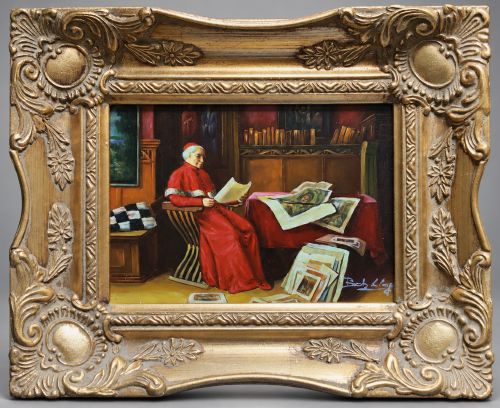
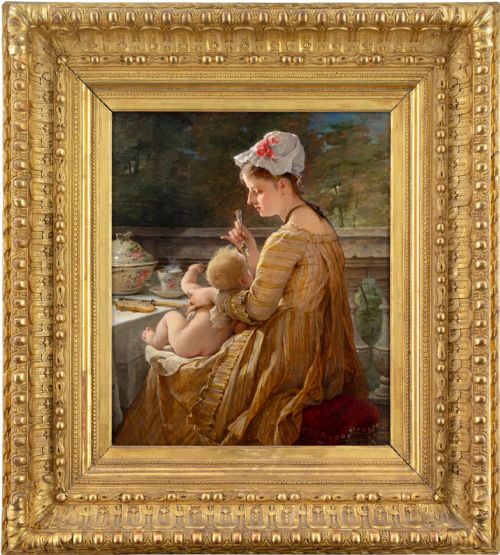
Academic genre scene artwork encompasses oil paintings depicting everyday life, historical moments, and interior narratives produced during the nineteenth century. These works frequently portray figures engaged in domestic tasks, leisure, or social interactions within detailed architectural settings.
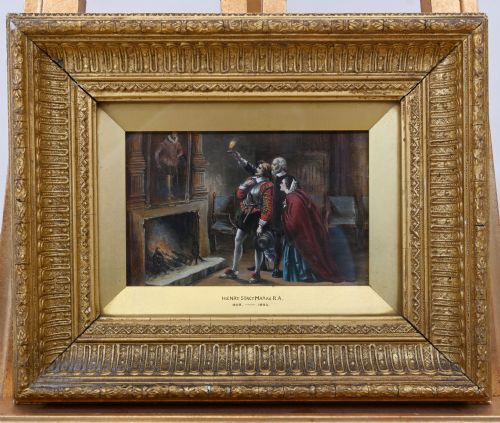
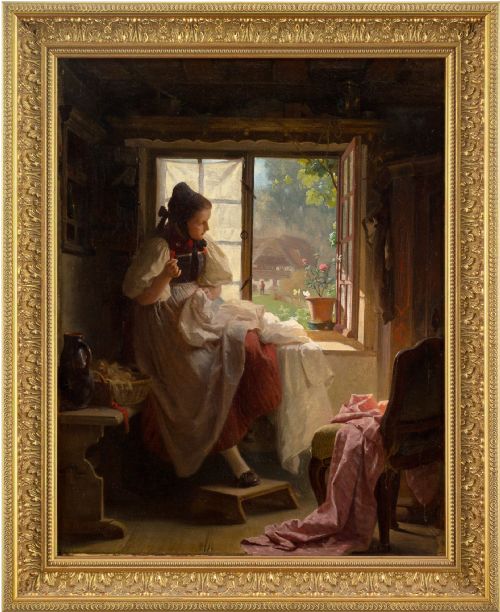
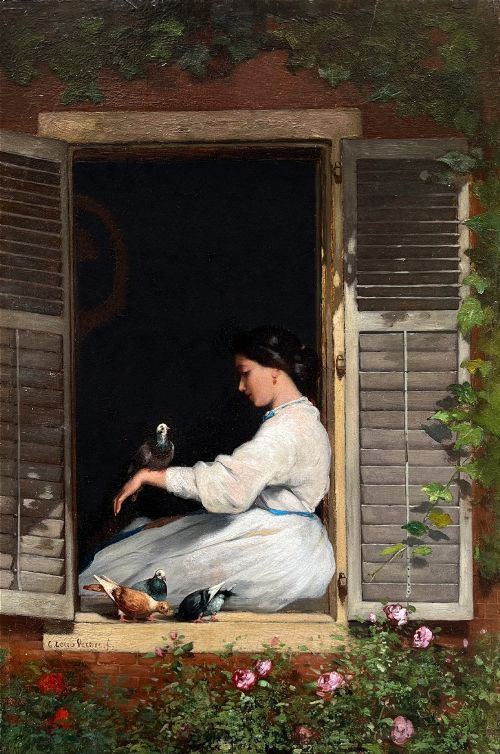
Buyers encountering this selection meet pieces originating from French, Italian, and wider European schools. Subjects range from quiet moments by a window to historical encounters and romantic vignettes executed with formal precision.
Materials and methods
These works are painted in oil paint upon canvas or occasionally panel, utilising the meticulous techniques taught by nineteenth-century art academies. Pigments are layered to achieve subtle shifts in light, shadow, and texture across drapery and skin.
Many examples are preserved in their original giltwood or gold leaf frames, which complement the tonal depth and academic finish of the paintings.
Academic Genre Scene Artwork Retail Price Guide 2026
Typical asking prices for academic genre scene artwork among the pieces listed under this phrase on Sellingantiques today, from the lower quarter to the upper quarter. They describe what is for sale here now, not the wider market.
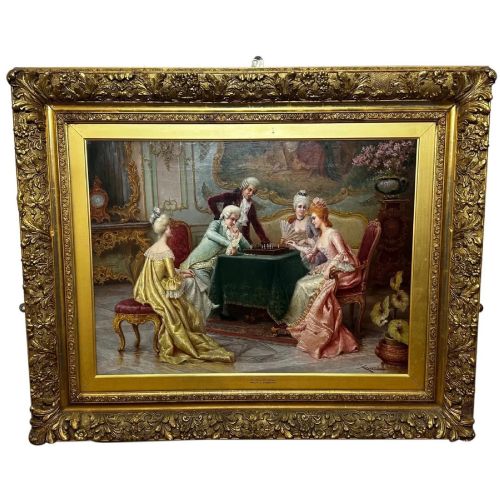
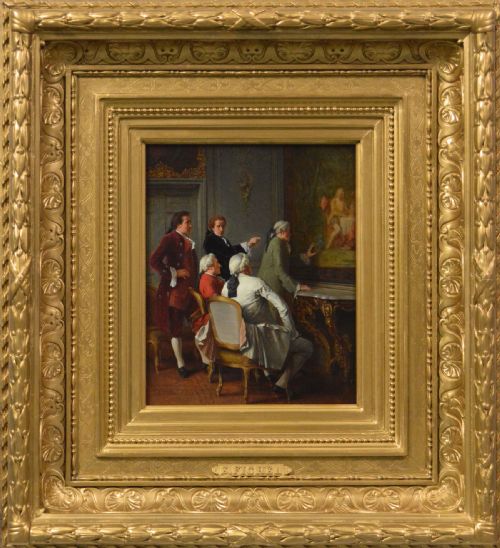
Several canvases capture elaborate nineteenth-century leisure activities, including unexpected indoor caresses and quiet moments of card-playing gentlemen.
Judging quality
Quality in these academic compositions rests upon the precision of draughtsmanship and the psychological nuance captured in the figures' expressions. Superior examples demonstrate a careful handling of light entering interior spaces and crisp rendering of surface textures.
The sophistication of the narrative composition and the handling of complex group interactions distinguish finer works from standard studio productions.
Adelaïde Salles Wagner·Max Kaltenmoser·Louis Charles Verwee·Benjamin Eugene Fichel·Charles Zacharie Landelle·Alfred Holst Tourrier·Thomas Couture·Théophile Emmanuel Duverger·Paul Viry·Federico Andreotti·Willem Johannes Martens·Marcel Brunery·Pompeo Massani·Edmund Alphonse Andre·Pauline Delacroix Garnier·James Bertrand·Jules Girardet·Pierre Louis Bouchard
The Academic Genre Scene Artwork Glossary
- Genre scene
- A painting depicting subjects from everyday life, typically involving ordinary people in domestic or social settings.
- Academic realisms
- A style of painting that combines rigorous academic training and precise draughtsmanship with realistic observation of subject matter.
- Oil on canvas
- Pigments bound in a drying oil, usually linseed, applied to a stretched woven fabric support.
- Giltwood
- Wood carved and treated with gold leaf or gold paint to create a decorative frame finish.
Academic Genre Scene Artwork: Frequently Asked Questions
What defines an academic genre scene?
These works depict narrative moments from daily life or history using the refined techniques taught by European art academies.
They emphasise accurate draughtsmanship, structured compositions, and detailed observation of interior spaces and costumes.
Where were these paintings produced?
The works originate primarily from European artistic centres during the nineteenth century, with strong representation from French and Italian schools.
Artists trained within official academic systems across the continent produced these highly finished canvases for exhibitions and private patrons.
How should I display an oil painting in a modern interior?
These works suit traditional or eclectic spaces, ideally hung at eye level on walls with controlled ambient lighting.
Ensure the canvas is kept away from direct sunlight and excessive moisture fluctuations to protect the oil paint and gold leaf framing.
How do I identify the period of a genre painting?
Period identification relies upon stylistic markers, costume details, artist signatures, and framing materials characteristic of the nineteenth century.
Examining the canvas preparation and stretcher bars on the reverse often provides additional evidence of the era of creation.