



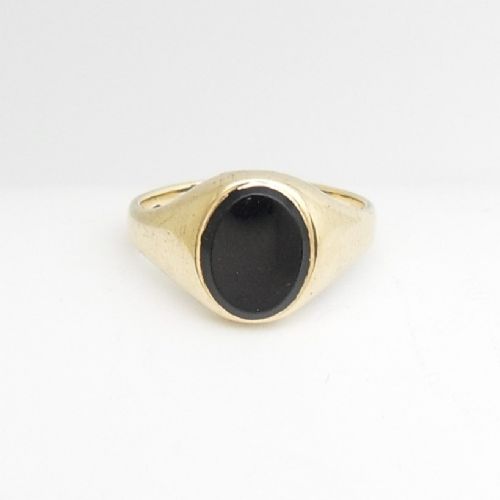


9ct Gold Seal
A 9ct gold seal represents a portable marker of identity and authority, crafted to stamp wax with a personal crest, intaglio, or monogram.
9ct Gold Seal
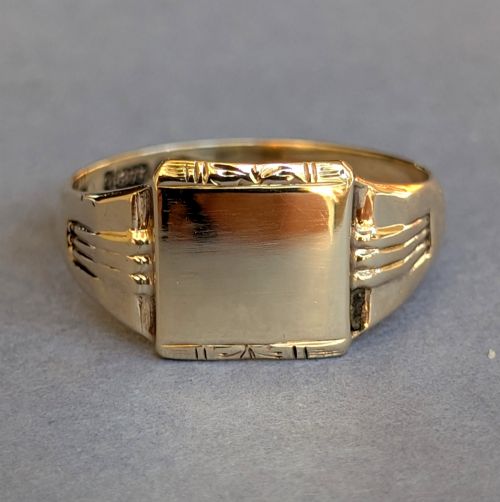
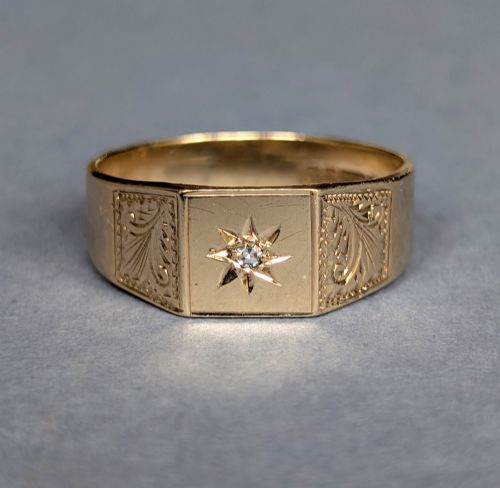
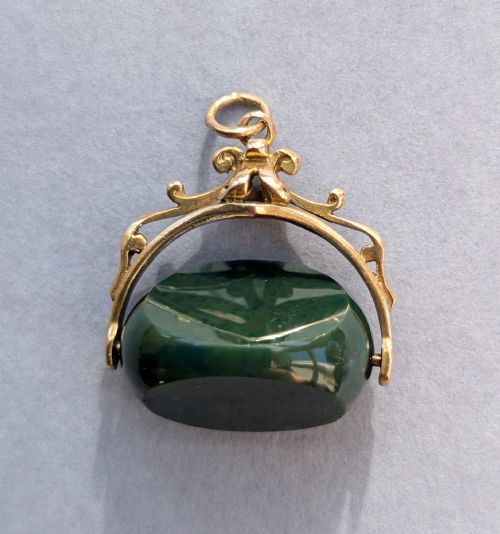
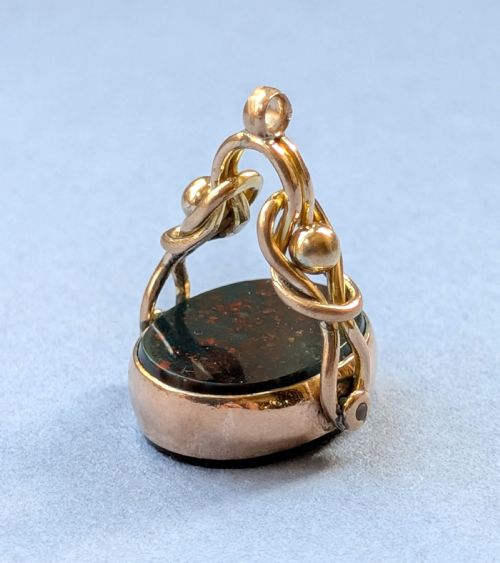
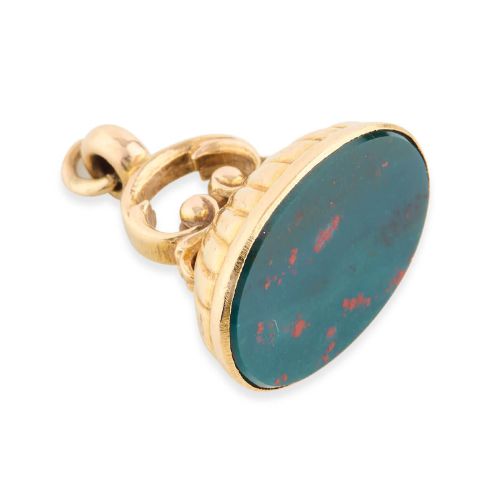
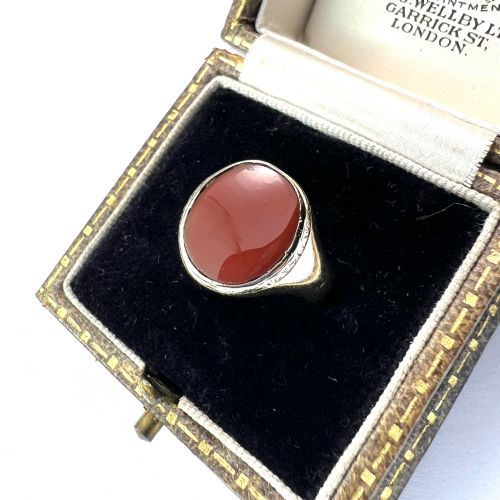
A 9ct gold seal encompasses spinning fobs, drop pendants, and signet rings designed to impress a design into hot wax. These pieces appear across Georgian, Victorian, Edwardian, and mid-century periods, reflecting shifting tastes in personal adornment and utility.
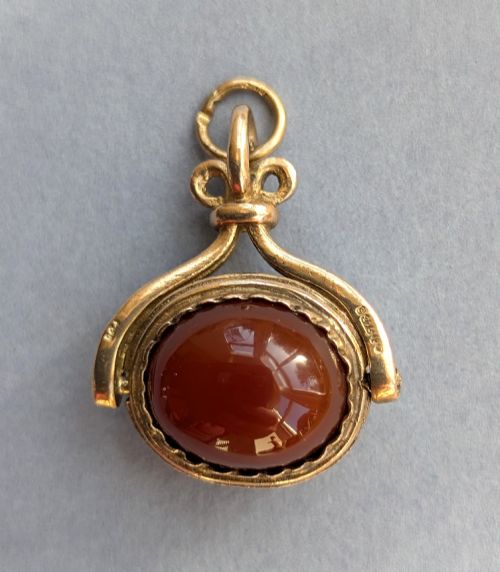
The form frequently combines a solid 9ct gold mount in yellow, rose, or standard hues with a hardstone base. The listings show a prevalence of spinning fobs and signet rings, often intended to be worn on watch chains or charm bracelets.
Origins stretch from the nineteenth century into the later twentieth century, capturing styles from the detailed intaglios of the Georgian era to the cleaner lines of the 1960s. Collectors find both single fobs and multi-seal charm bracelets among the selection.
Materials and construction
Makers utilised 9ct gold in yellow and rose tones to form the structural mounts, bezels, and swivel loops of each seal. This alloy provided a durable yet workable metal suited to detailed chasing, hollow stamping, and secure bezel settings.
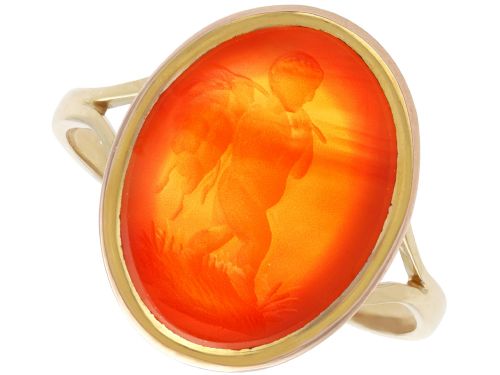
Hardstones such as bloodstone, carnelian, agate, and onyx form the striking faces of the seals. These minerals were cut, polished, and frequently engraved with intaglio designs, Roman figures, or personal names like Ann.
9ct Gold Seal Retail Price Guide 2026
Typical asking prices for 9ct gold seal among the pieces listed under this phrase on Sellingantiques today, from the lower quarter to the upper quarter. They describe what is for sale here now, not the wider market.
Some seals bear deeply cut Roman emperors, proving that miniature historical roleplay was entirely normal in the nineteenth century.
Assessing quality and craftsmanship
Quality rests in the crispness of the stone engraving and the weight of the 9ct gold mount. Finer pieces display deeply cut intaglios with sharp detail, whereas simpler items rely on plain polished stones or light gold stampings.
The complexity of the mechanism also distinguishes the work, seen in spinning fobs that pivot smoothly on well-fitted pins within their gold frames.
The 9ct Gold Seal Glossary
- Intaglio
- A design carved into the flat face of a hardstone so that it leaves a raised impression in sealing wax. This technique requires steady handwork by a skilled lapidary.
- Fob seal
- A small pendant designed to hang from a pocket watch ribbon or chain, featuring a hardstone matrix at the base. These were daily accessories for gentlemen and ladies in the eighteenth and nineteenth centuries.
- Spinning fob
- A swivel seal mounted on a central axis so the user can rotate the stone to display different faces or a blank side. It offers dual engraving options within a single mount.
- Bloodstone
- An opaque dark green chalcedony flecked with red jasper spots, frequently chosen for seal matrices. The stone provides a dark, formal surface for engraved initials.
- Carnelian
- A translucent orange-red variety of chalcedony prized for intaglio rings and fob seals. Its warm hue contrasts sharply against yellow and rose 9ct gold mounts.
9ct Gold Seal: Frequently Asked Questions
How do I wear a 9ct gold seal today?
Most people suspend these pieces from a sturdy neck chain as a pendant or attach them to a traditional pocket watch chain. They also appear clustered on charm bracelets alongside other gold trinkets.
The substantial loop on top of each fob accommodates most standard chains while keeping the stone securely displayed.
Can I still use these seals to stamp wax?
Many antique seals retain their original engraved intaglios, monograms, or crests and function perfectly well for stamping hot sealing wax. Pressing the stone gently into softened wax reveals the carved design clearly.
Care should be taken with softer stones to avoid scratching the polished matrix during repeated use.
How do I identify the period of a seal?
Dating relies on a combination of hallmarks, stone choices, and the prevailing style of the gold mount. Georgian and early Victorian pieces often feature heavy hand-chased mounts and deeply carved classical motifs, while Edwardian and mid-century examples show lighter proportions.
Assay office marks and date letters stamped into the gold provide precise years of manufacture where present.
What is the difference between yellow and rose 9ct gold?
The colour variation depends on the proportion of silver and copper alloyed with the gold. Rose gold contains a higher ratio of copper, giving it a distinct reddish hue popular during the Victorian and Edwardian eras.
Yellow gold retains a more traditional warm metallic appearance across all periods represented.