


9ct Gold Gemstone Earrings
These 9ct gold gemstone earrings bring together coloured stones and precious metal in drop, stud and dangle forms spanning the Edwardian era to the 1960s.

What 9ct Gold Gemstone Earrings Are
When searching for 9ct gold gemstone earrings, buyers encounter drop earrings, dangle earrings and stud drop earrings featuring stones set in precious metal. These pieces date across several distinct periods, including the Edwardian era, the 1920s, the 1950s and the 1960s.
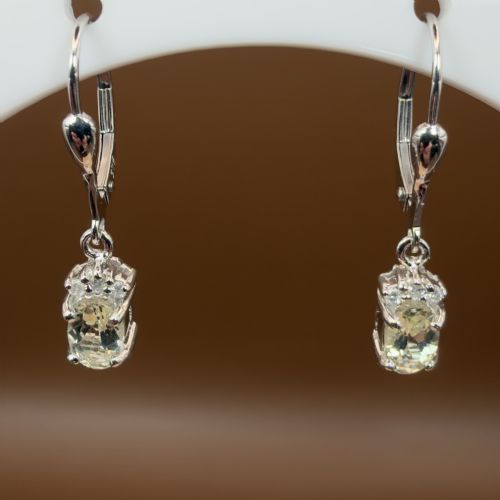
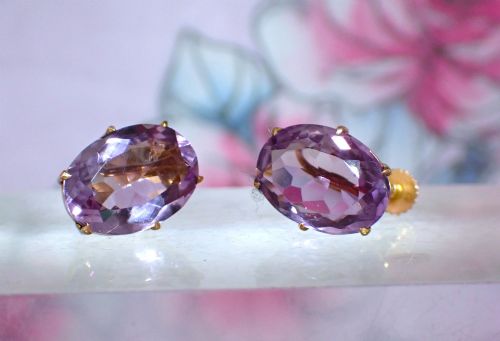
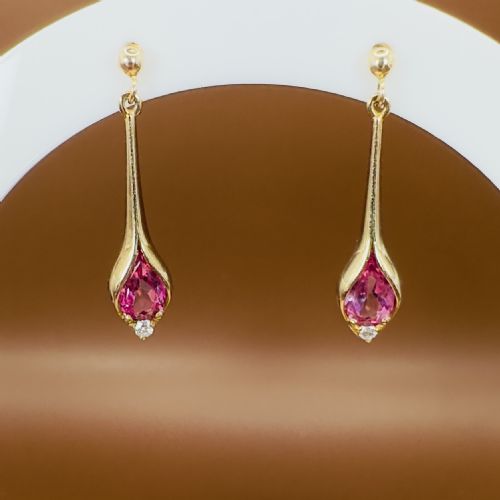
The selection on this page relies heavily upon mid-century designs alongside earlier Edwardian and Art Deco examples. Forms range from simple amethyst stud drops to intricate faceted pear cut pink topaz and white topaz combinations.
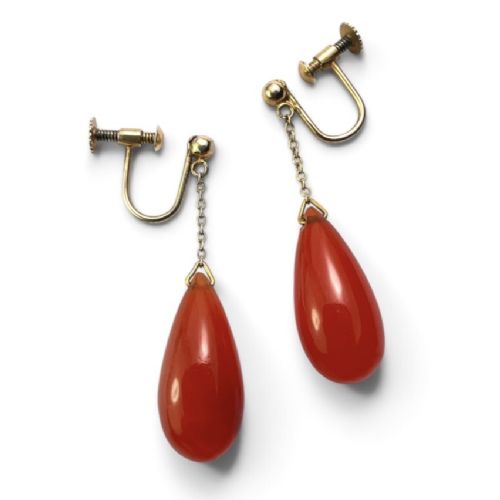
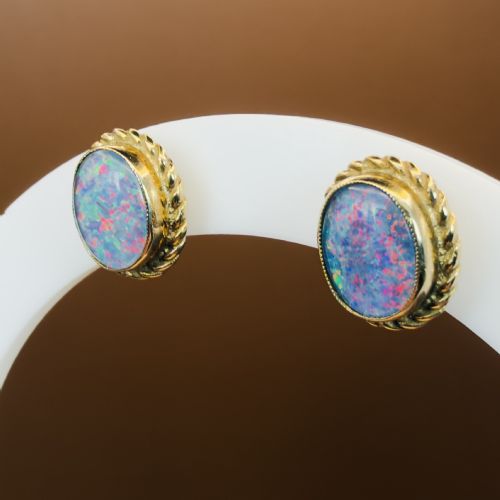
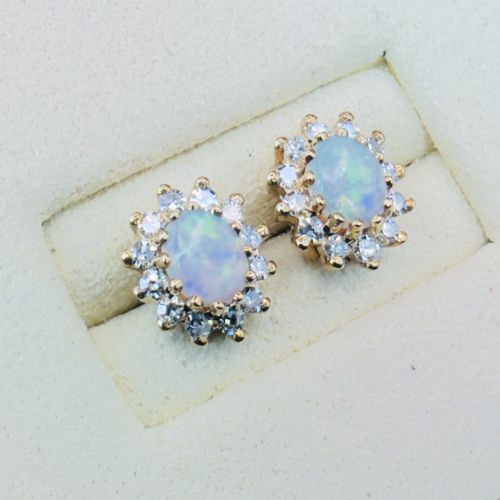
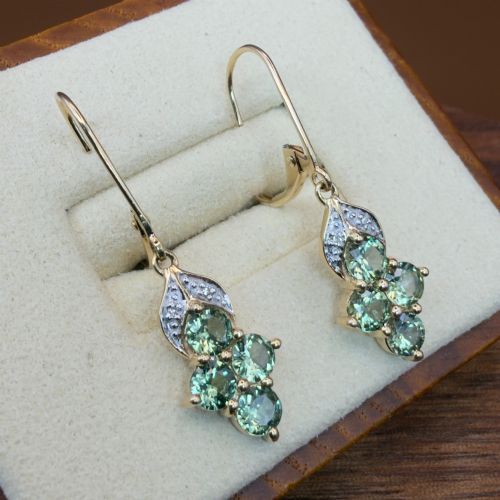
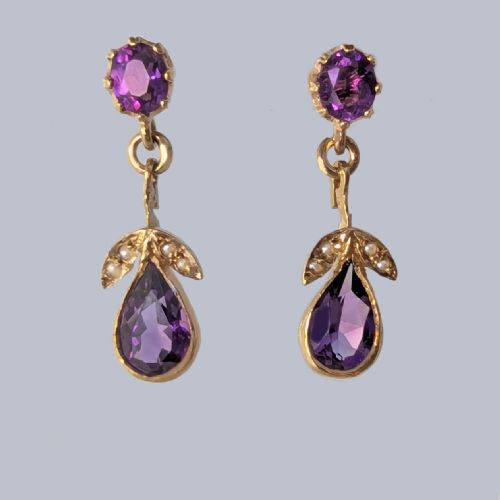
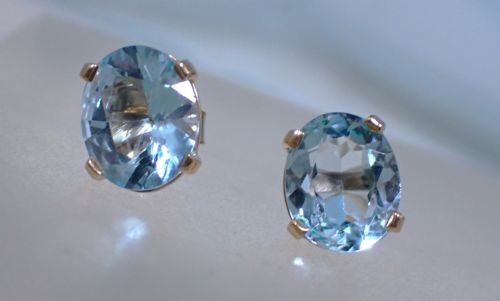
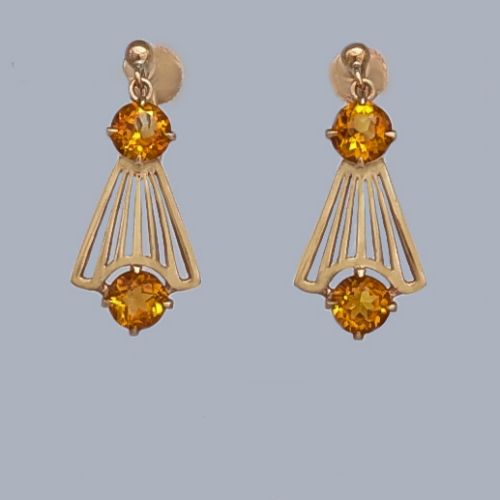
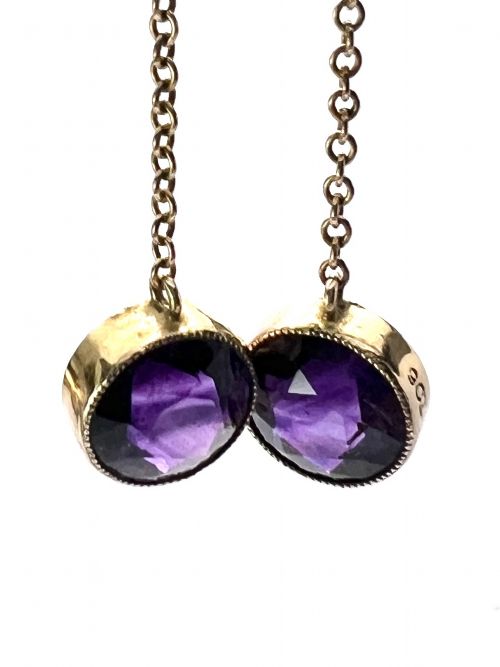
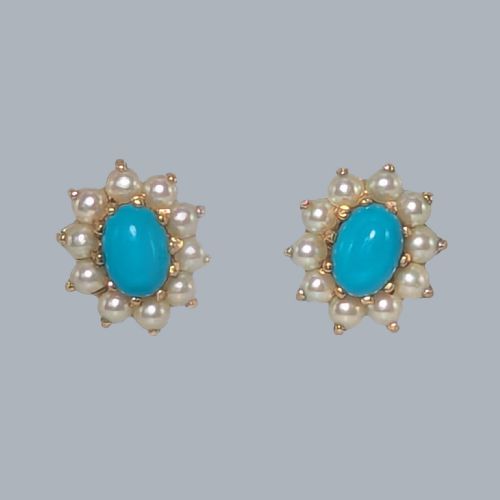
Gemstones seen across these listings include amethyst, citrine, pink topaz, white topaz, blue topaz and white chalcedony. Scottish agate also appears in archive pieces, demonstrating a varied palette of natural minerals set within gold frames.
How They Were Made
The construction of these earrings centres on 9ct gold and 9ct yellow gold, providing a durable yet accessible metal for fine jewellery. Goldsmiths shaped the metal into chains, settings and ear wires to suspend the various stones securely.
Gemstones such as amethyst, citrine and topaz underwent precision cutting, notably faceted pear cuts, to maximise light reflection within their gold settings. Earlier pieces often incorporate delicate chain links and teardrop bezel or prong settings typical of their period.
Retail Price Guide 2026
Typical UK retail prices for 9ct gold gemstone earrings, calculated from the Sellingantiques database of over a million retail prices indexed since 2003. This retail price guide relies exclusively on Sellingantiques data; no external sources or auction records are used, so the figures do not describe the wider market.
Even stones need a holiday occasionally, so store your topaz away from direct sunlight to keep their sparkle happy.
What Varies in Quality
The standard of these earrings rests largely on the clarity and cut of the gemstones paired with the gold work. Stones with crisp facet symmetry and deep, even colouration elevate a piece above simpler, more utilitarian designs.
Construction methods also define the tier of a pair, distinguishing between delicate, hand-finished chain assemblies from the Edwardian period and sturdier modernist stampings from the 1950s and 1960s.
The 9ct Gold Gemstone Earrings Glossary
- 9ct Gold
- An alloy containing thirty-seven point five percent pure gold, widely utilised in British jewellery for its durability and warm tone. This metal provides a robust framework for gemstone settings.
- Pear Cut
- A teardrop gemstone shape combining a brilliant-cut round end with a single tapered point. This cut is frequently seen in drop and dangle earring designs.
- Drop Earrings
- Jewellery pieces that hang slightly below the earlobe rather than sitting directly against it. They often utilise small chains or rigid bars for movement.
- White Chalcedony
- A microcrystalline variety of quartz presenting a milky, translucent appearance. It appears in antique Edwardian pieces, often shaped into smooth teardrops.
Frequently Asked Questions
What periods do these earrings cover?
The selection spans from the Edwardian era through the 1920s Art Deco period into the 1950s and 1960s.
Each era brings distinct aesthetic choices, moving from delicate wirework to bolder modernist gemstone arrangements.
Which gemstones are most common?
Amethyst and citrine appear frequently, alongside various shades of topaz including pink, white and blue.
Less common mineral variations such as white chalcedony and Scottish agate also feature in the historical record.
Are all these earrings for pierced ears?
The listings on this page consist of standard drop, dangle, and stud drop configurations suited for pierced ears.
Earlier historical styles occasionally utilised screw-backs or clips, though contemporary selections favour standard posts and hooks.
How do 1920s designs differ from 1960s pieces?
Pieces from the 1920s often reflect strict Art Deco geometric symmetry and fine detailing.
By contrast, 1960s examples lean towards modernist interpretations with prominent faceted stones and clean metallic lines.