


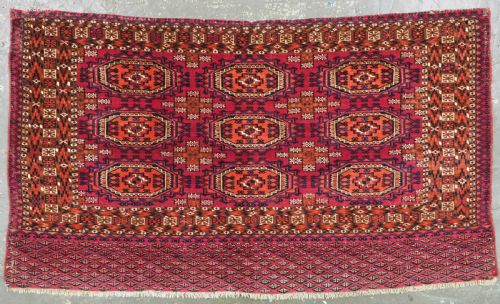


9 Gul Chuval
When you examine a 9 gul chuval, you hold a piece of Central Asian tribal weaving designed for nomadic storage.
9 Gul Chuval
A 9 gul chuval is a tribal storage bag face originating from Turkmen and Central Asian weaving traditions. These pieces typically display a specific grid layout featuring nine primary guls, which are traditional medallion motifs.
Most examples encountered on this page belong to the Tekke or Ersari Kizil Ayak tribes, often dating from the late nineteenth century. They served practical functions inside nomadic tents before surviving as textile art.
Materials and construction
Weavers utilised hand-spun wool for the pile, anchoring the dense knots securely onto a sturdy cotton or wool foundation. Natural dyes provided the deep crimson and madder tones characteristic of these tribal works.
Certain examples incorporate supplementary silk details or flat-woven elements along the elem borders to add textural contrast.
9 Gul Chuval Retail Price Guide 2026
Typical asking prices for 9 gul chuval among the pieces listed under this phrase on Sellingantiques today, from the lower quarter to the upper quarter. They describe what is for sale here now, not the wider market.
Some antique chuvals retain their original hanging loops, ready to be mounted just as nomadic families once hung them inside their tents.
Factors of quality
Knot density and handling of the pile distinguish finer examples from standard nomadic production. A very fine weave allows intricate guls and turreted motifs to appear sharp and well-defined.
The vibrancy and saturation of the natural dyes, alongside the preservation of the lower elem panel, determine the visual impact of the textile.
Tekke Turkmen·Ersari Kizil Ayak·Yomut Tribes·Saryk Turkmen
The 9 Gul Chuval Glossary
- Chuval
- A large tent bag used by Turkmen nomads for household storage. These items were traditionally woven in pairs and mounted on the interior walls of a yurt.
- Gul
- A primary medallion motif repeated across Turkmen carpets and bags. Each tribal group utilised distinct geometric variations to signify lineage and origin.
- Torba
- A smaller nomadic storage bag format compared to the chuval. These pieces functioned similarly within the tent interior.
- Tekke
- A major Turkmen tribal group known for exceptionally fine weaving and balanced palettes. Their chuvals frequently display precise technical execution.
9 Gul Chuval: Frequently Asked Questions
What is a 9 gul chuval used for?
Originally, these textiles functioned as large storage bags inside nomadic tents to hold bedding and personal belongings. Today, collectors display them as wall hangings or decorative rugs.
Their sturdy construction and flat-woven backs allowed them to withstand daily nomadic life while serving an aesthetic purpose within the dwelling.
How do I identify a 9 gul chuval?
Look for the characteristic arrangement of nine large primary medallions, known as guls, set across the face of the textile. Tribal attributions often rely on the specific drawing of these guls and the secondary motifs.
Different groups such as the Tekke or Ersari utilised distinct border designs and colour palettes that help establish origin.
How old are these textile pieces?
The examples documented here date primarily from the mid-nineteenth century through to around nineteen hundred. Natural dye usage and material analysis help confirm this period.
Weaving characteristics from this era reflect traditional nomadic methods before synthetic aniline dyes became widespread.
Can I hang a chuval on the wall?
Many collectors mount these tribal bags on walls to showcase the detailed pile work and decorative elem panels. Proper support distributes the weight evenly across the textile.
Ensuring the piece is clean and protected from direct sunlight preserves the wool pile and natural dyes over time.