


9 Carat Gold Trilogy
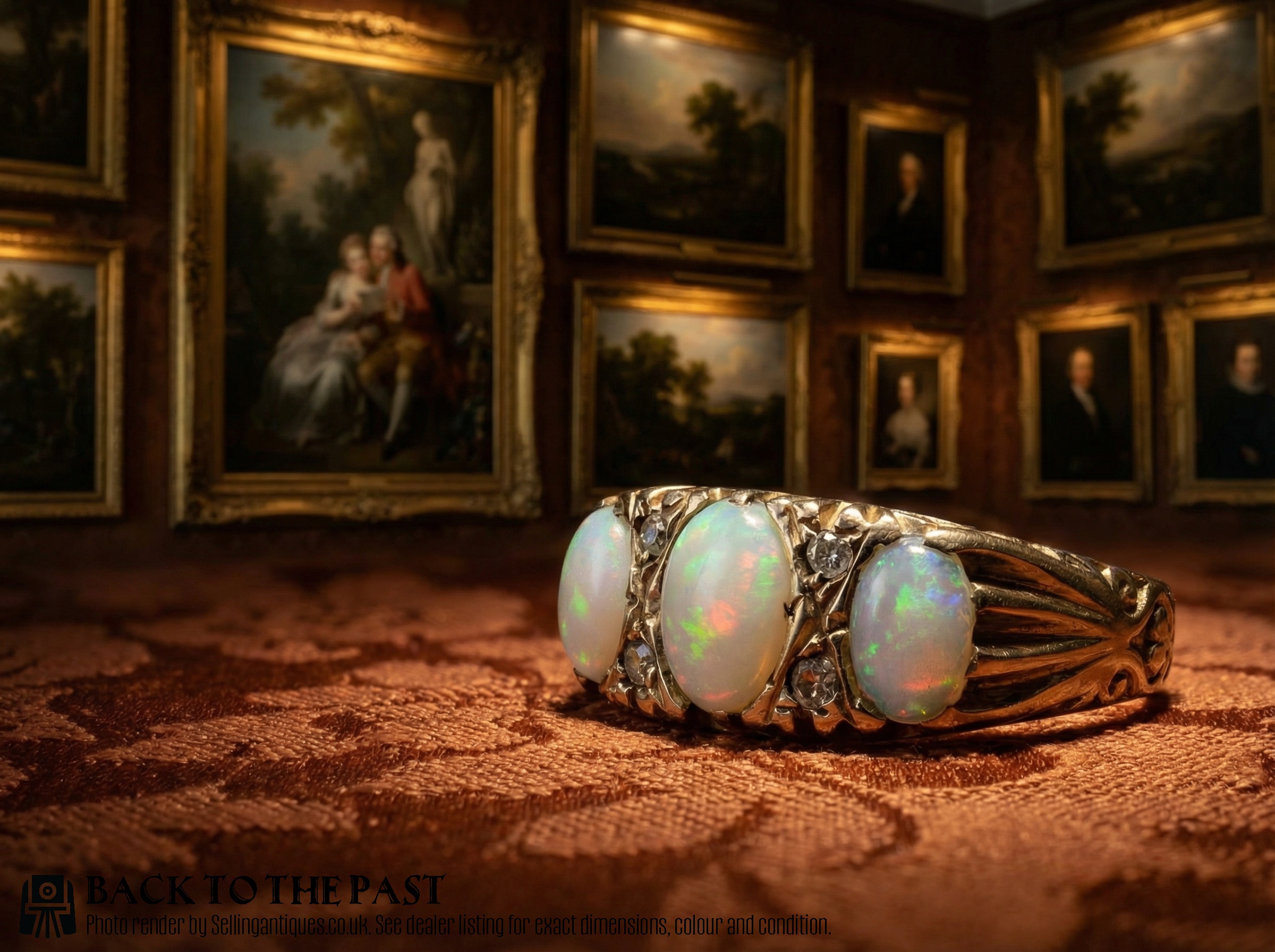
These pieces gather three stones on a single band, bringing together past eras and precious gems in a classic format.
9 Carat Gold Trilogy
Buyers seeking this configuration encounter rings fashioned from yellow and white metals, housing diamonds, rubies, sapphires, emeralds, pearls, and opals. The selection spans distinct historical eras, including gypsy settings and twist designs from the nineteenth and early twentieth centuries.
How they were made
Goldsmiths constructed these mounts using yellow gold, white gold, and platinum, frequently combining distinct metal tones to highlight the mounted gems. Stones such as old cut diamonds, cushion cuts, and pear cuts were secured by hand within claw settings, starburst patterns, or flush gypsy mounts.
The fabrication relies on traditional metalworking techniques appropriate to each period, from Victorian gypsy settings to the precise geometric lines characteristic of Art Deco manufacturing.
Some nineteenth-century makers cleverly hid extra gold weight inside the band so the ring would sit heavily and securely on the finger.
What varies in quality
Quality differences emerge in the natural origin and cut quality of the stones, particularly when comparing unheated rubies, natural sapphires, and old cut diamonds against standard commercial gems. The precision of the setting work and the preservation of original claw or flush mounts also dictate the standard of an individual piece.
The harmony of the three selected stones, such as matching proportions in a diamond trio or well-matched colour saturation in rubies and emeralds, determines the overall cohesion of the design.
The 9 Carat Gold Trilogy Glossary
- Trilogy
- A jewellery arrangement featuring three principal stones set in a row. This format often carries sentimental significance.
- Old cut
- A diamond cutting style prevalent before the modern brilliant cut, characterised by a smaller table and high crown facets. These stones display a distinctive pattern under candlelight.
- Gypsy ring
- A style where stones are flush-set directly into a thick metal band that tapers toward the back. This setting was popular in the Victorian era for daily wear.
- Columbian emerald
- An emerald originating from the mines of Colombia, known for a specific internal growth structure. These stones frequently accompany high-period mountings.
- Twist ring
- A band design where the metal curves around the central stones in a crossover motif. This style adds movement to a traditional multi-stone arrangement.
9 Carat Gold Trilogy: Frequently Asked Questions
What do the three stones represent?
The trio of stones traditionally symbolises the past, present, and future of a relationship. This sentimental meaning made the configuration popular for engagement rings across multiple decades.
Over time, the design also evolved into a favoured choice for milestone anniversaries and general dress wear, retaining its symbolic association.
How do I care for a vintage ring?
Vintage and antique jewellery requires gentle handling to preserve delicate settings and softer stones. Regular checks by a jeweller ensure the claws or flush mounts remain secure.
Remove rings before engaging in heavy manual work or swimming to protect the gold band and prevent stone loss.
Are all trilogy rings made of gold?
While gold in various purities and colours forms the basis of many historical pieces, platinum is also utilised. White metals frequently appear in twentieth-century designs to complement diamonds.
Inspect the interior of the band for hallmarks to confirm the specific metal composition of an individual piece.
How can I tell the period of a piece?
Stylistic clues such as gypsy mountings, twist bands, or geometric Art Deco lines help identify the era of manufacture. Hallmarks stamped inside the band offer official verification of the assay office and date.
Combining stylistic analysis with gemstone cutting characteristics provides a reliable method for dating antique jewellery.