
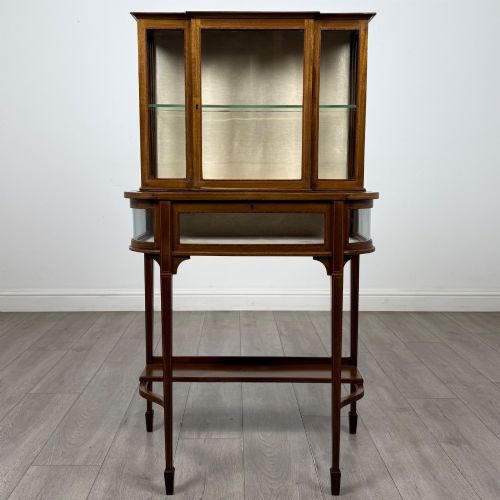
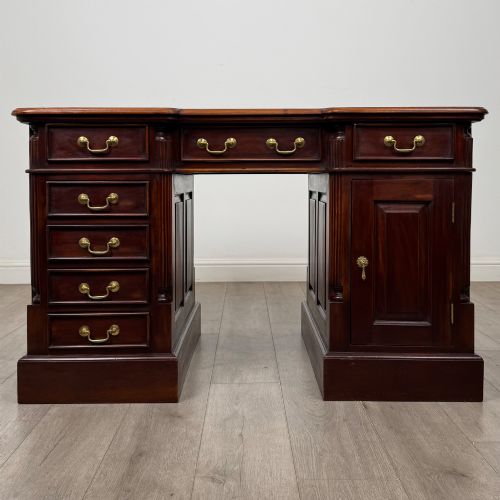
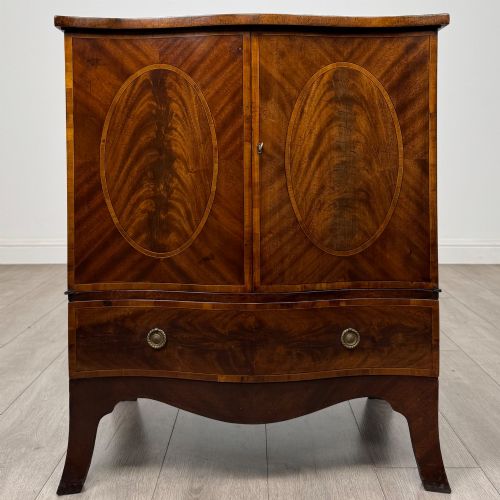
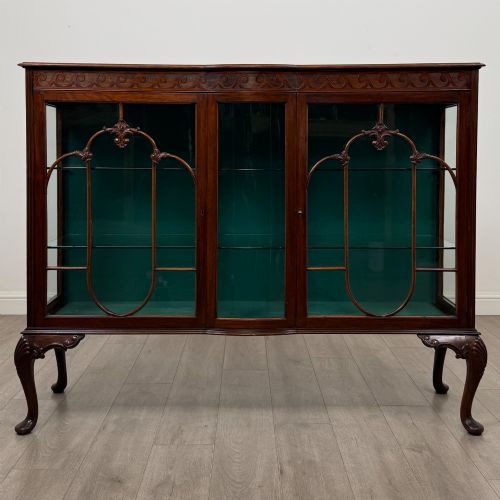
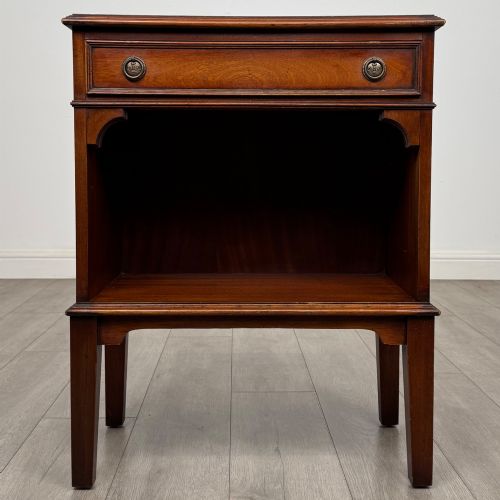
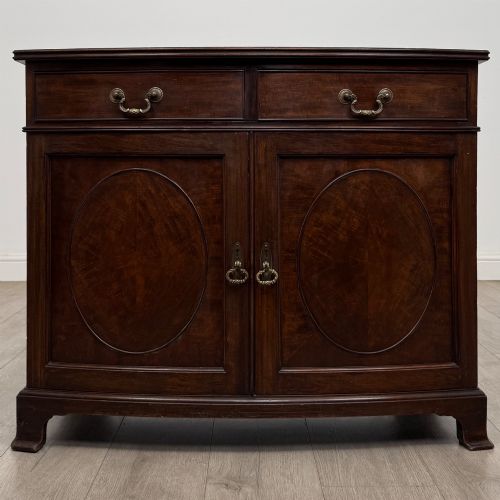


20th Century Mahogany Cupboard
A 20th century mahogany cupboard brings rich timber grain and useful storage to a room, drawing on Edwardian and revival designs.
20th Century Mahogany Cupboard
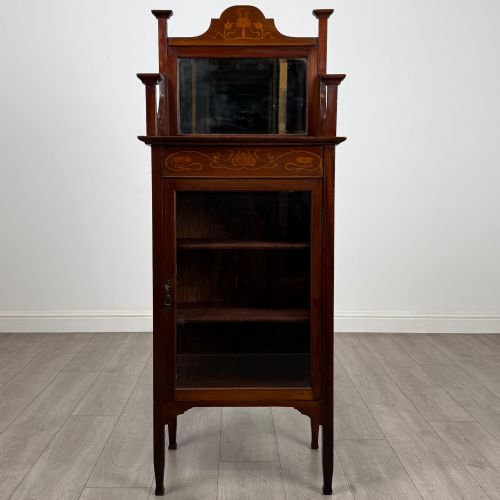
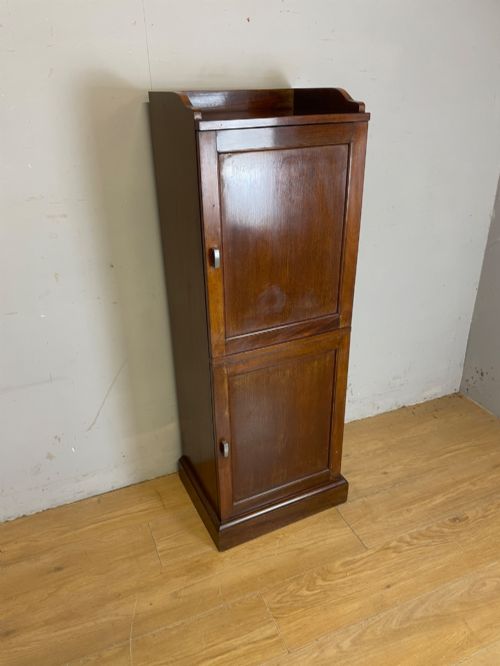
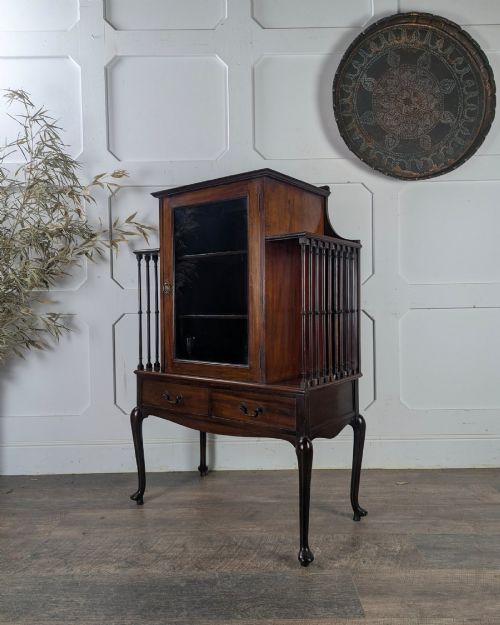
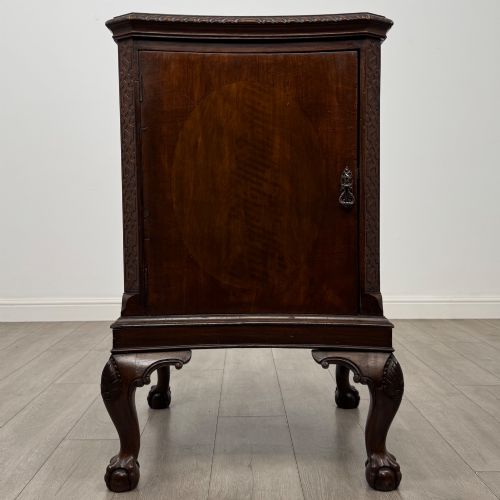
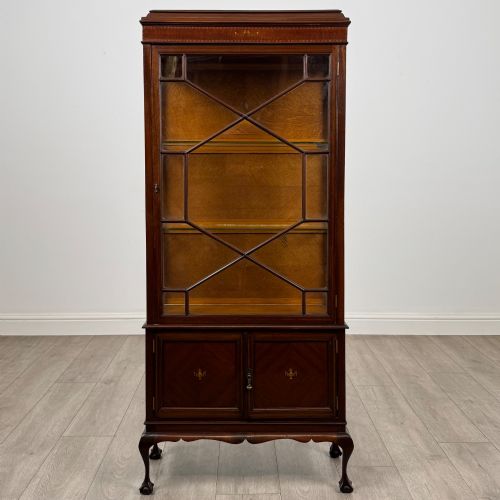
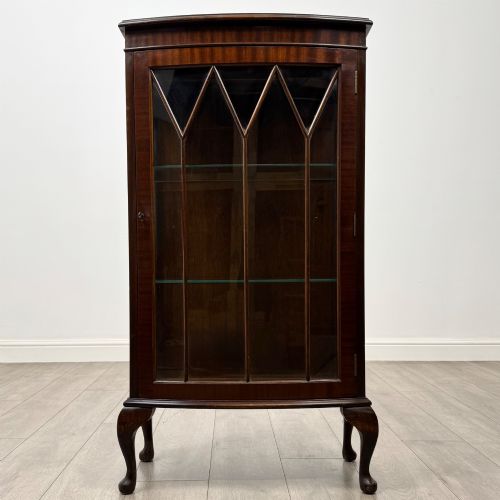
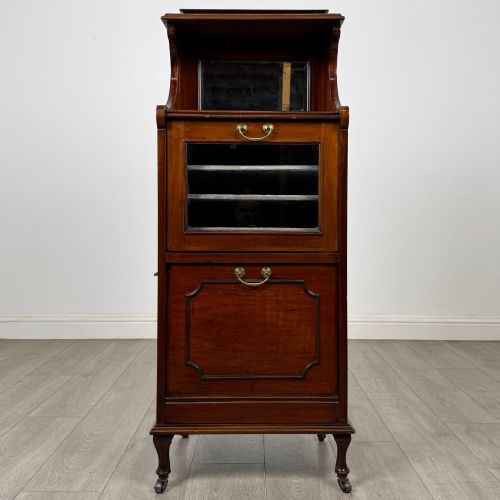
When you search for a 20th century mahogany cupboard, you encounter a wide selection of storage furniture made mostly during the Edwardian period and the early decades of the 1900s. These pieces range from compact bedside and corner cupboards to taller display cabinets, music cabinets, and filing drawers.
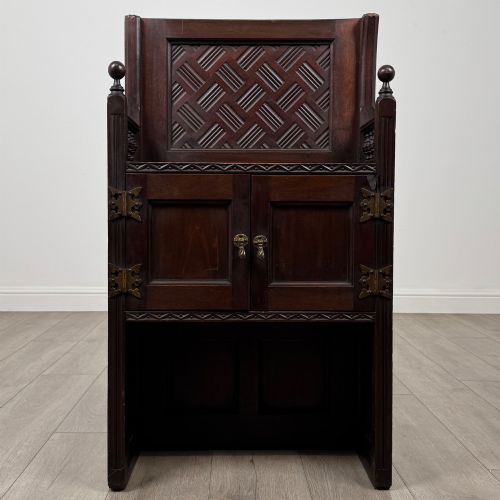
Forms also include hall seats with integrated storage, demi-lune cabinets, and pedestal desks. The overarching character stems from the rich dark timber, frequently enhanced with fruitwood inlay, satinwood banding, and brass fittings.
What varies in quality
Quality in these cupboards rests primarily on the selection of the timber and the crispness of any inlay or carved revival details. Pieces featuring finely figured mahogany veneers, delicate fruitwood marquetry, and substantial brass hardware sit at the upper end of the scale.
Construction methods and proportions also dictate worth, distinguishing standard utility pieces from workshop-produced items bearing maker signatures. The integration of curved elements, such as bow-fronts or serpentine doors, demands greater carpentry skill than straight-lined carcases.
The listings demonstrate that Edwardian workshops produced these cupboards using mahogany alongside brass, glass, mirror, satinwood, and fruitwood inlay.
Edwards & Roberts
The 20th Century Mahogany Cupboard Glossary
- Mahogany
- A durable tropical hardwood known for its deep reddish-brown colour and fine grain, widely used in quality cabinet making. It takes a high polish and accepts veneer remarkably well.
- Inlay
- A decorative technique where pieces of contrasting timber, such as satinwood or fruitwood, are inserted into depressions flush with the mahogany surface. This creates geometric lines or floral motifs.
- Serpentine
- A shape characterised by a line that curves outward in the centre and inward at the sides, often seen on cabinet fronts. It requires advanced woodworking skill to execute properly.
- Vitrine
- A glass-fronted display cabinet designed to showcase porcelain, books, or curiosities. These often feature internal shelving and glazed sides.
- Bow-front
- A convex, outwardly curved front elevation typical of select Edwardian cupboards and chests. The curve softens the angles of a room.
- Vernis Martin
- A simulated Japanese lacquer technique used on fine European furniture to create a glossy, decorative finish. It appears on select specialist display cabinets.
20th Century Mahogany Cupboard: Frequently Asked Questions
What styles define a 20th century mahogany cupboard?
These pieces draw heavily on Edwardian tastes, alongside Georgian Revival, Chippendale Revival, and Art Nouveau influences. Makers adapted older aesthetic vocabularies for contemporary homes, producing refined storage with classical proportions.
Decoration often includes subtle fruitwood inlay, satinwood banding, and polished brass hardware, bridging traditional craftsmanship with early 20th-century utility.
How do I distinguish between different cabinet types?
Cabinets vary by their intended function, ranging from glazed display vitrines and music cabinets with specialised internal shelving to compact bedside pot cupboards. Filing drawers and hall seats integrate storage into practical everyday furniture.
Form also separates them, with serpentine, bow-front, and demi-lune silhouettes offering distinct spatial footprints compared to standard rectangular corner or wall units.
Where should I place a corner cupboard?
Corner cupboards make efficient use of unused room angles, fitting snugly into domestic layouts without obstructing pathways. They work particularly well in dining rooms or hallways to display ceramics or store household items.
Pairing a pair of corner cabinets symmetrically creates a balanced focal point in a reception room, framing other furniture pieces effectively.
How do I care for mahogany surfaces?
Maintain the timber by dusting regularly with a soft, dry cloth and avoiding placement in direct sunlight or near heat sources. Excessive temperature fluctuations can cause veneers to lift or timber to warp.
Occasional treatment with appropriate wax polish nourishes the mahogany grain and preserves the deep lustre of the original finish without building up heavy residue.