
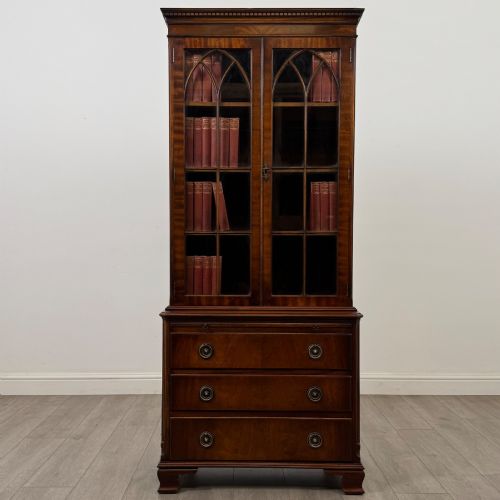
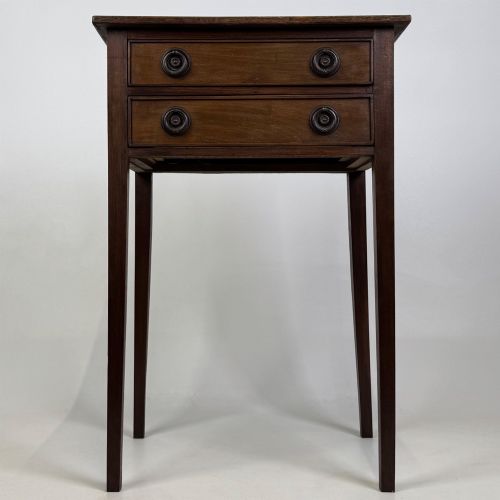
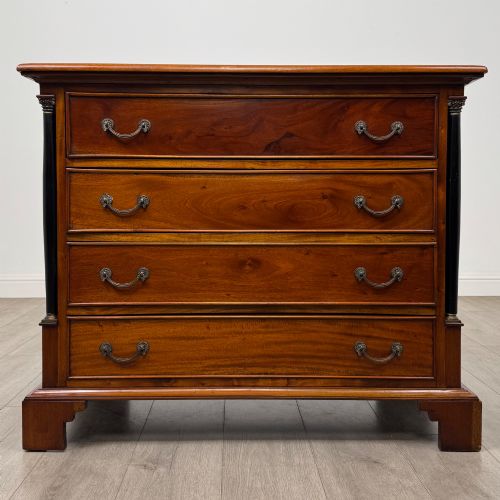
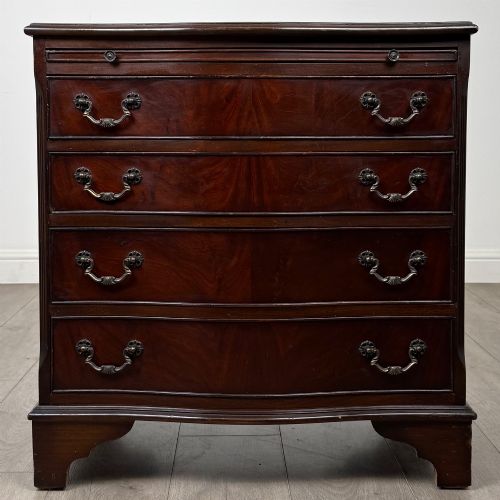



20th Century Mahogany Chest
Solid timber and refined proportions define a 20th century mahogany chest, providing enduring storage that anchors a traditional room.
20th Century Mahogany Chest
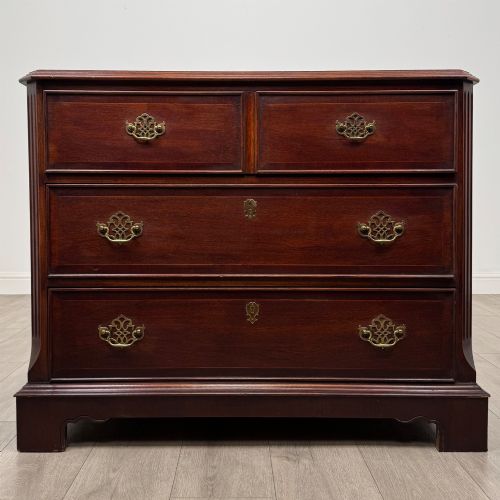
A 20th century mahogany chest typically takes the form of a chest of drawers, though variants such as tallboys, campaign styles, and bow fronts appear frequently.
Makers of the Edwardian period and the subsequent decades drew heavily on earlier design vocabularies, resulting in pieces shaped by Georgian Revival, Regency Revival, and Queen Anne styles.
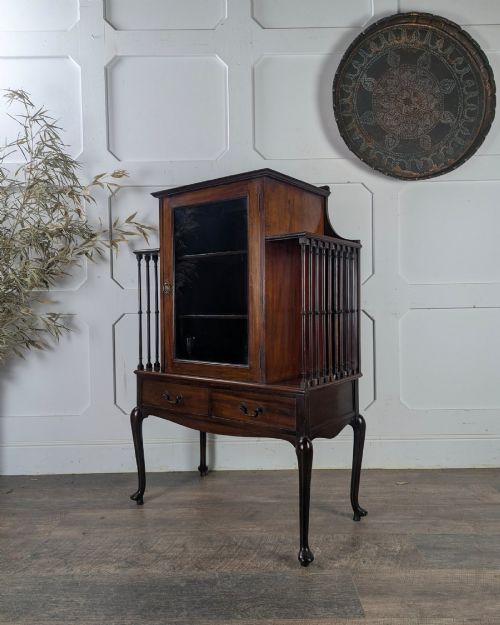
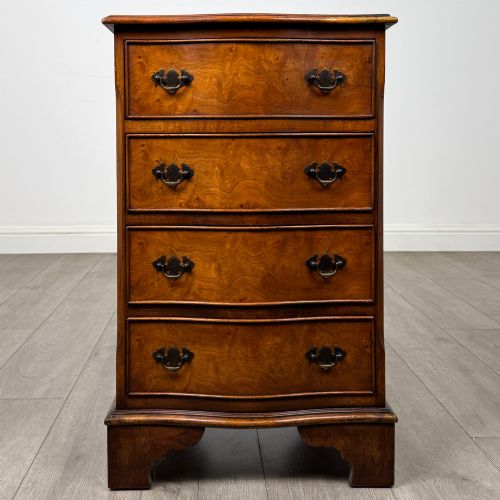
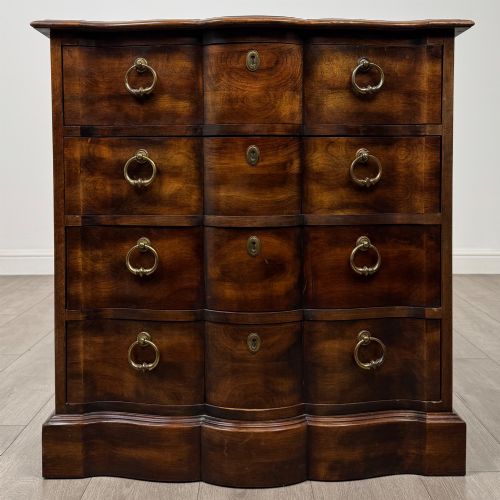
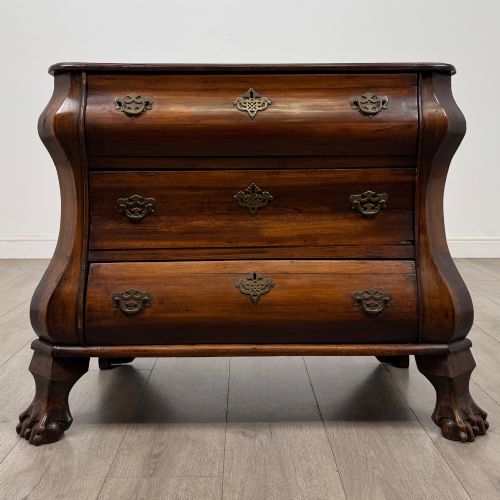
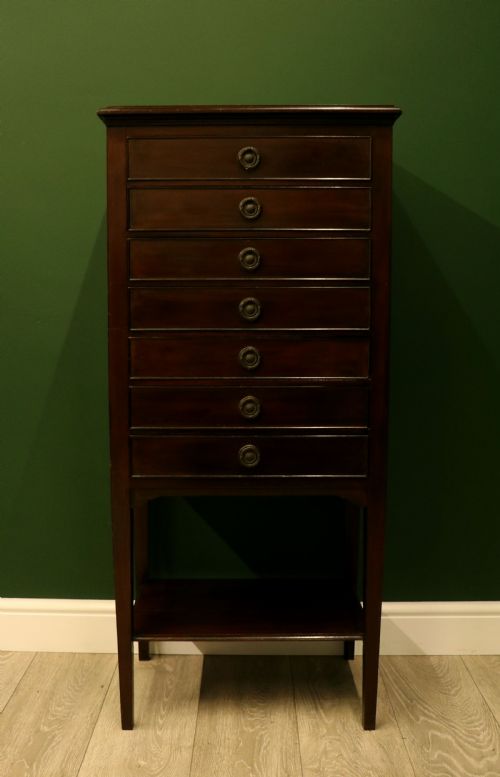
The pieces on this page span several decades of early and mid-century cabinet making, leaning heavily into compact proportions like small, narrow, and serpentine formats.
Materials and construction
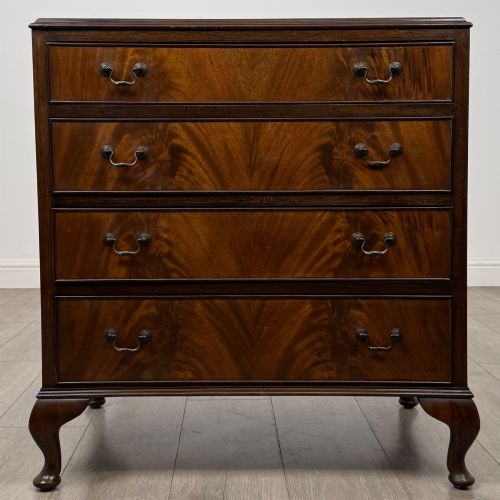
Cabinet makers built these pieces using solid mahogany and flame mahogany veneers, frequently accented with boxwood inlay, ebonised wood, and brass hardware.
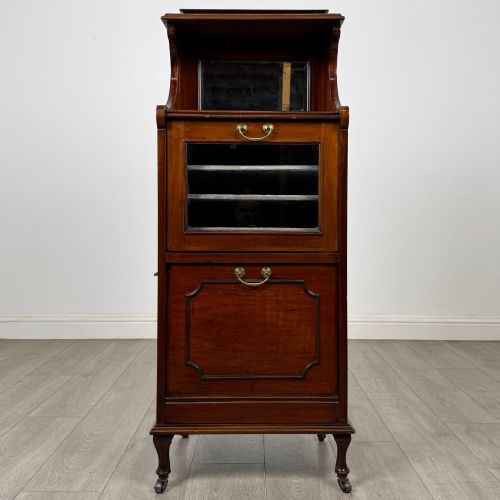
Secondary timbers such as oak and hardwood provided internal structure for drawers and carcases, whilst specialised pieces incorporated glass panels or marble tops.
Specimen chests equipped with carrying handles hint at collectors carefully transporting tiny treasures long ago.
Understanding quality
The distinction between standard production and exceptional execution lies in the selection of timber veneers, such as richly figured flame mahogany, and the crispness of inlaid details.
Joinery execution dictates longevity, visible in the tightness of drawer dovetails, the smooth motion of serpentine or bow fronts, and the integrity of brass handles and carrying fittings.
Hickory Chair
The 20th Century Mahogany Chest Glossary
- Serpentine
- A curved front shape featuring a convex centre flanked by concave sides. This undulating profile requires expert carpentry to execute smoothly.
- Flame mahogany
- A veneer cut from the fork of the mahogany tree where branches meet the trunk. It creates a distinctive, feather-like flame pattern.
- Tallboy
- A tall chest of drawers, often constructed as one chest stacked upon another. This form maximises vertical storage capacity.
- Bow front
- A convex, outward-curving front facade popular in Georgian and revival cabinet making. It softens the linear angles of a standard room.
- Campaign style
- Portable furniture built in sections with brass corners and recessed handles for military transport. These pieces combine practicality with distinct hardware.
20th Century Mahogany Chest: Frequently Asked Questions
How do I style a mahogany chest in a modern room?
Pair the deep reddish-brown timber tones with neutral walls to let the natural wood grain stand out as a focal point. Minimalist accessories placed on top balance the traditional weight of the piece.
Position the chest in a bedroom or hallway where its practical storage capacity can be utilised daily. The rich grain patterns complement both contemporary textiles and vintage furnishings.
Were these chests made for travel?
Most standard chests were designed for domestic residential use in bedrooms and living spaces. Their solid construction prioritised permanent placement over mobility.
However, specific examples designated as campaign style were built with sectional dismantling and brass carrying handles in mind. Those particular pieces originated for military officers on the move.
How do I identify an Edwardian mahogany chest?
Edwardian pieces often display lighter framing, delicate boxwood stringing, and influences from Georgian or Regency revivals. Makers of this era frequently produced smaller, more manageable proportions.
Look inside the drawer linings and examine the backboards for period construction traits like hand-cut dovetailing. The combination of Edwardian styling and rich mahogany timber points directly to the early 1900s.