







20th Century Dog Painting
These pieces of 20th century dog painting capture canine character across canvas and bronze, bringing enduring charm and historic presence to any room.
20th Century Dog Painting
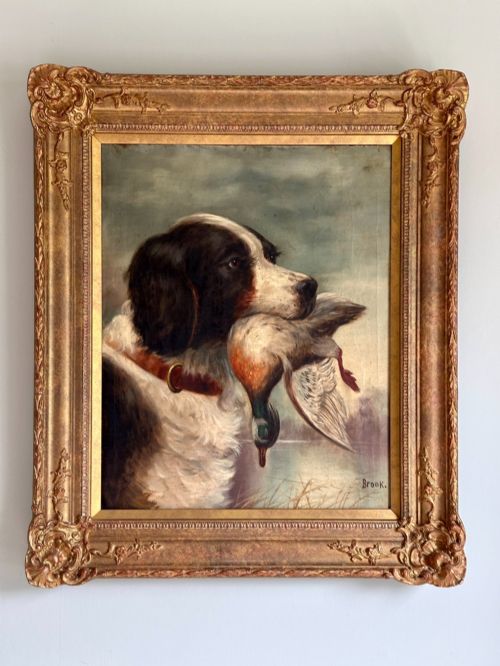
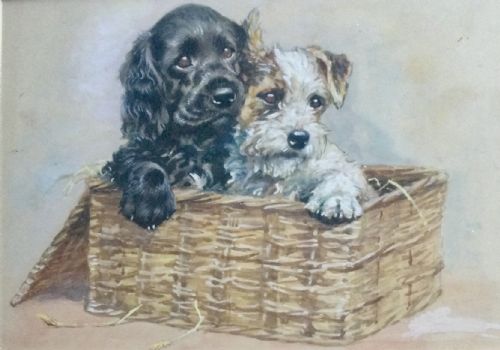
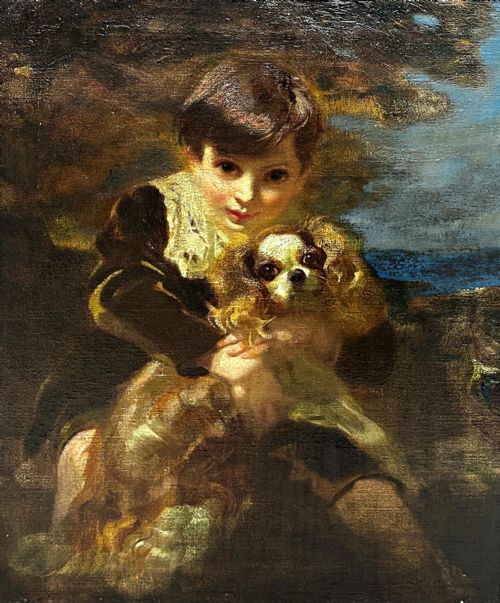
A 20th century dog painting brings domestic loyalty and sporting heritage into focus through oil paint, watercolour, and mixed media. Buyers seek these portraits to connect with historical breeds and the artists who recorded them with precision.
The selections available range from intimate terrier studies and spaniel watercolours to large oil portraits of gun dogs and working breeds. Works span the decades from the Edwardian era through the interwar period to the mid-century.
Framed oils on canvas and board predominate, alongside works on paper and sculptural interpretations. Each piece reflects the changing artistic approaches to animals across the decades.
Materials and construction
Artists worked primarily in oil paint applied to stretched canvas or wooden panels, utilising the rich pigment depth to render texture and coat markings. Watercolours on paper also capture lighter, more immediate expressions of spaniels and terriers.
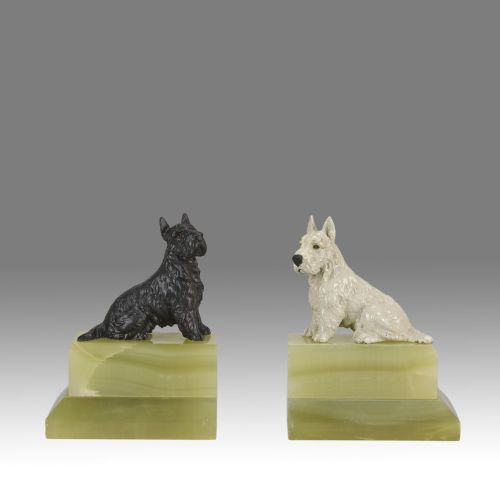
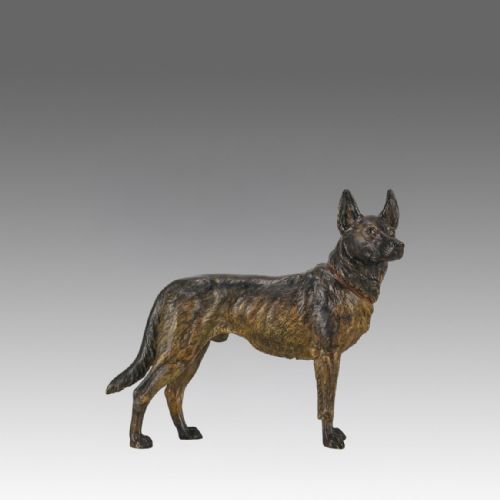
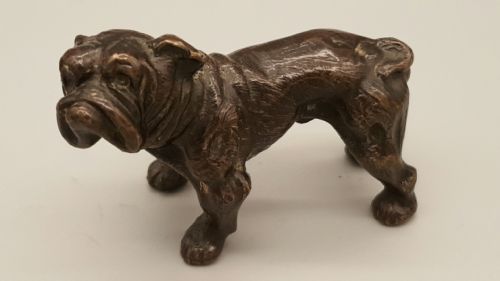
Sculptural works utilise bronze and cold-painted bronze, often mounted on onyx or wood bases to create functional bookends and ornaments. The cold-painting technique requires careful manual application of polychrome pigments over cast metal.
20th Century Dog Painting Retail Price Guide 2026
Typical asking prices for 20th century dog painting among the pieces listed under this phrase on Sellingantiques today, from the lower quarter to the upper quarter. They describe what is for sale here now, not the wider market.
Listings feature works spanning from 1900 to 1960, utilising canvas, cold-painted bronze, wood, gilt, onyx, and oil paint across various painting and sculptural forms.
Distinctions in quality
Quality rests upon the artist's ability to capture the specific anatomy and intelligent expression of the breed rather than a generic animal form. Superior brushwork defines individual hairs, muscle structure, and lifelike posture with assured economy.
The handling of light and background detail separates accomplished works from ordinary decorative studies. Strong provenance, legible signatures, and well-preserved original frames further elevate the standing of a piece.
Franz Bergman·LM Webb·Michael Lyne·Mabel Gear·Frank Owen Salisbury·E Tyrell·David W Haddon·Mabel Lucie Attwell·Fedor Van Kregten
The 20th Century Dog Painting Glossary
- Oil paint
- A slow-drying medium consisting of pigments suspended in a drying oil, typically linseed. This allows painters to blend tones smoothly and build rich textures.
- Cold-painted bronze
- Metal sculptures painted with non-heat-set cold paints, popular in Vienna during the early decades. The technique produces vibrant polychrome finishes on cast figures.
- Sporting art
- Depictions of rural pursuits, game, and working dogs in the field. This genre relies on accurate rendering of canine conformation and sporting interaction.
- Watercolour
- A painting method in which natural pigments are suspended in a water-based solution. It yields translucent washes well-suited to rapid studies of animals.
- Wood panel
- A rigid support surface used by painters before canvas became dominant. It provides a stable base for detailed brushwork and signed portraits.
20th Century Dog Painting: Frequently Asked Questions
How do I identify a 20th century dog painting?
Examine the materials, artist signature style, and framing methods typical of the period. Pigments and canvas types often provide clear clues to the decade of creation.
Compare the depicted breed characteristics and clothing styles with known periods such as the Edwardian era or interwar years to narrow down the date.
Where should I hang an oil portrait of a dog?
These works suit traditional studies, libraries, or living spaces where they add warmth and character to wood-panelled or neutral walls. Ensure the placement avoids direct, harsh sunlight to protect the pigments.
Pair framed canvases with complementary antique furniture or place bronze bookends nearby on a desk or bookshelf to tie the room together.
What is the difference between oil and watercolour dog paintings?
Oil paintings on canvas offer deep colour saturation and visible brush texture, making them durable focal points for room decor. Watercolours on paper provide a lighter, more delicate feel suited for intimate spaces.
Oils handle heavy layering and rich tones, whereas watercolours rely on the white of the paper to generate luminosity behind the subject.
How were cold-painted bronze dog figures made?
Artisans first cast the bronze figure in moulds, capturing fine details of the fur and expression. They then applied multiple layers of cold-drying paint by hand to finish the surface.
These pieces often served as functional items like bookends or car mascots, combining practical utility with decorative artistry.