




20th Century Coastal Oil
When you search for 20th century coastal oil, you uncover framed marine scenes and harbour views captured in pigment across the decades.
20th Century Coastal Oil
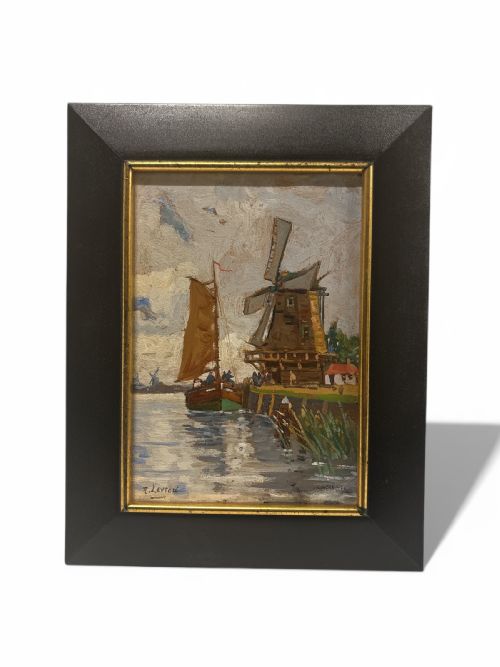
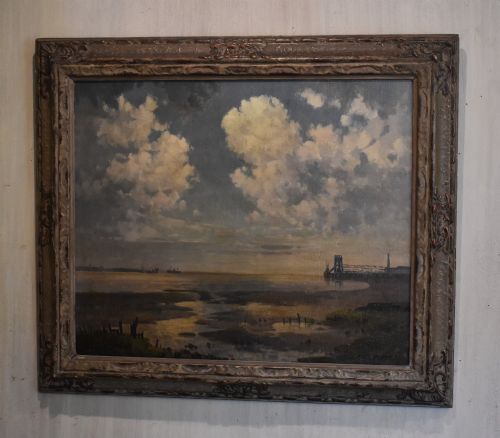
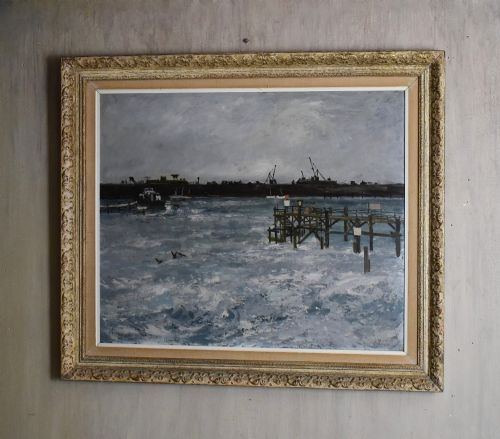
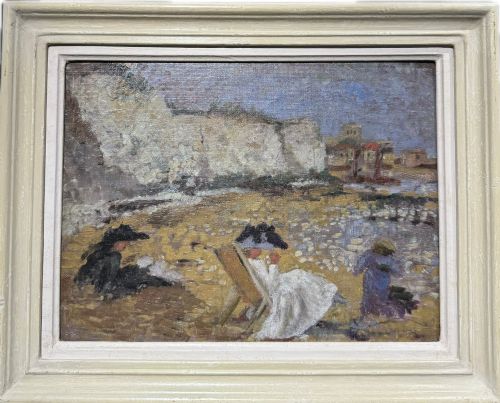
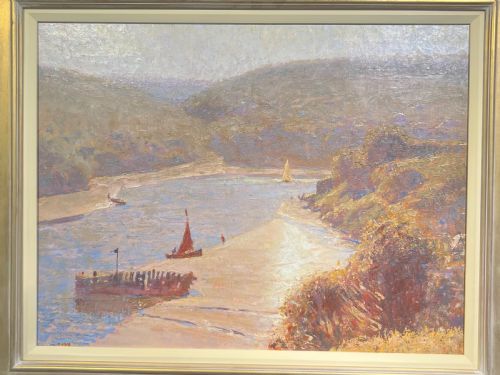
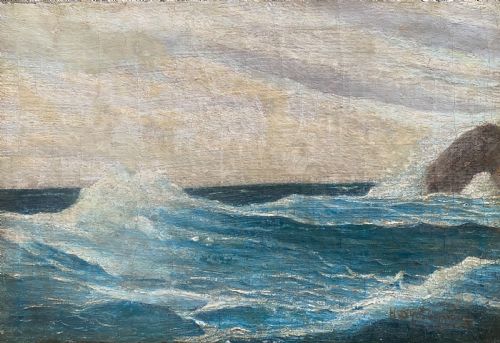
Collectors searching for 20th century coastal oil encounter marine landscapes, harbour views, and beach scenes painted between the Edwardian era and the nineteen-sixties. These works span British Impressionism, Post-Impressionism, and Mid-Century Realism, capturing shores from Yorkshire and Cornwall to the Mediterranean coast.
Most pieces met on this page are oil paintings executed on canvas or board, framed and signed by regional painters or international artists. Subjects range from quiet estuaries and fishing boats in choppy seas to sunlit French harbours and children playing on the sand.
Materials and techniques
Artists applied oil paint using brushwork and palette knives onto supports of woven canvas, rigid wood panels, or sturdy board. Pigments capture changing light across water, utilising the rich texture of oil to render skies, waves, and coastal architecture.
Finished works were frequently housed in wood frames, sometimes accented with gilt mouldings that complemented the maritime subjects.
Listings feature works from British, French, Canadian, and Brazilian artists working across the twentieth century.
Assessing quality and execution
Quality rests in the handling of light, atmospheric depth, and the confidence of the brushwork across the canvas or board. Stronger examples display a distinct command of maritime atmosphere, whereas lesser works rely on formulaic compositions.
The integration of colour to denote movement in water or the glare of a sunset separates accomplished plein air pieces from standard decorative output.
Kenneth Cozens·Clive Browne·Peter Brannan·Gustave Vidal·Gyrth Russell·Edward Seago·Owen Bowen·Herbert Royle
The 20th Century Coastal Oil Glossary
- Impressionism
- A style of painting emphasising loose brushstrokes and the accurate depiction of light and its shifting qualities. This approach dominates many coastal scenes from the period.
- Board
- A rigid flat substrate used instead of stretched canvas as a support for oil paint. Many smaller plein air works utilised this material for durability.
- Gilt
- A gold-coloured leaf or metallic finish applied to frames. It enhances the visual weight of marine paintings.
- Plein air
- Painting outdoors to capture the direct effects of light upon scenery. It accounts for the immediacy found in numerous harbour and beach views.
- Seascape
- A type of fine art depicting the sea, coastlines, or marine vessels. These form the core subject matter of the category.
20th Century Coastal Oil: Frequently Asked Questions
How do I date a coastal oil painting?
Dating relies on stylistic clues, framing materials, and artist biography records. Impressionist handling often suggests specific decades within the century.
Signatures, exhibition labels on the reverse, and the composition style help narrow down the exact period of execution.
Where were these marine paintings typically displayed?
These works hung primarily in domestic interiors, maritime offices, and coastal residences throughout Britain and Europe. They brought views of harbours and open water into urban or rural homes.
Today, they suit living rooms, studies, and hallways where traditional or mid-century decor prevails.
Are canvas and board paintings framed differently?
Canvas works usually require stretched wooden frames beneath decorative outer mouldings to maintain tension. Board panels are more rigid and sit directly within simpler wooden or gilt surrounds.
Both housing styles reflect the framing conventions popular during the period of creation.
How do regional British and French scenes differ?
British coastal paintings frequently capture the moody light and choppy seas of Yorkshire, Cornwall, and Scotland. French and Mediterranean works tend to feature brighter palettes and sunlit ports along the Riviera.
This geographical variation influences both the dominant colours and the specific architectural elements present in the works.