
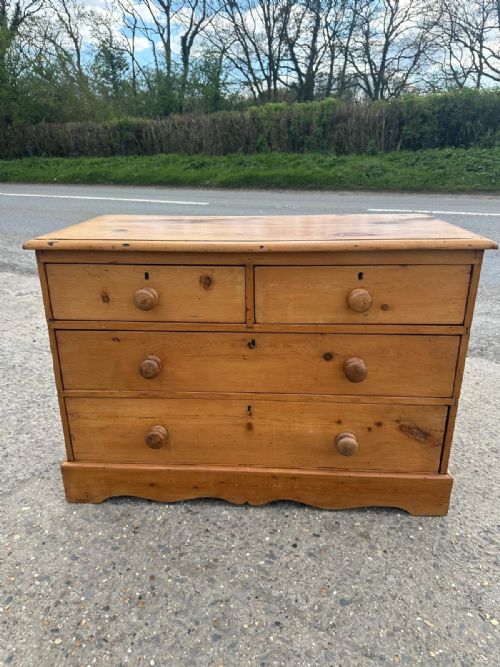

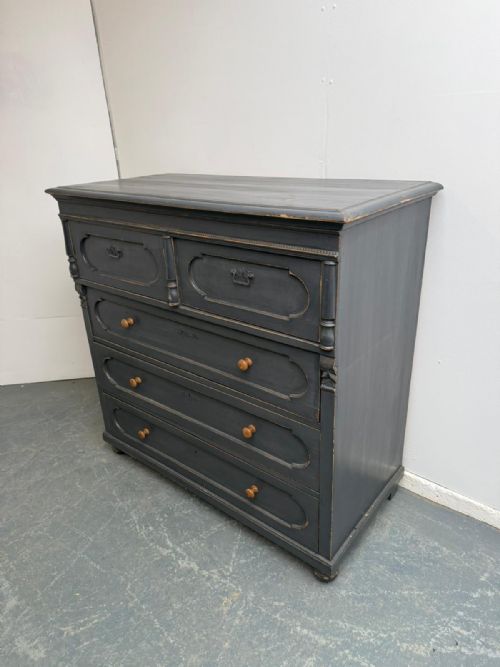


2 Over 2 Pine Chest
A 2 over 2 pine chest offers balanced bedroom storage with two smaller drawers above two larger ones, rooted in nineteenth-century utilitarian design.
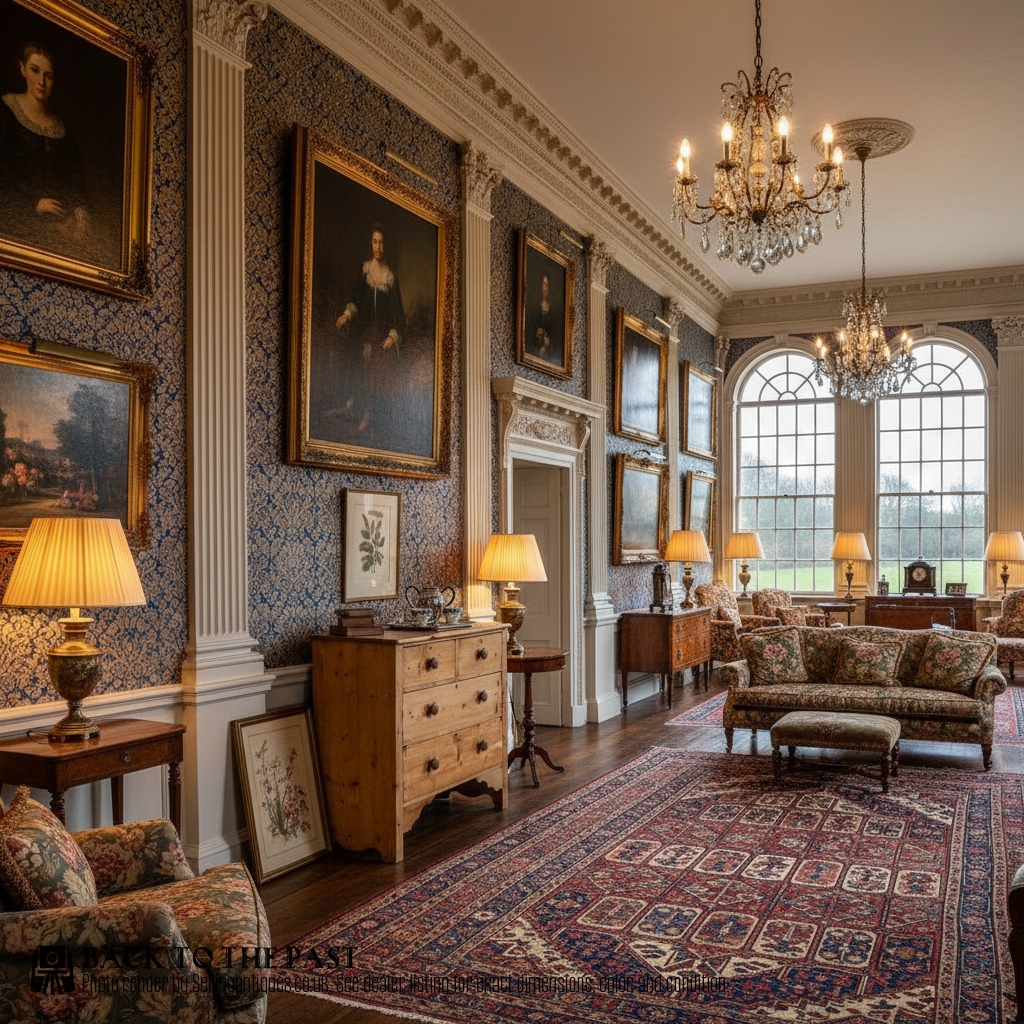
2 Over 2 Pine Chest
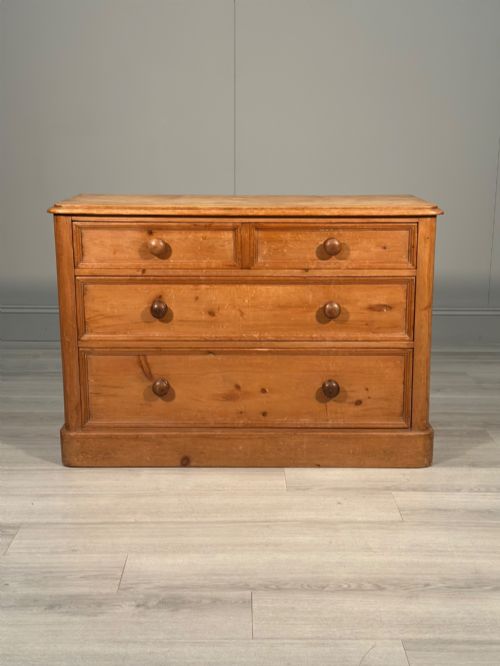
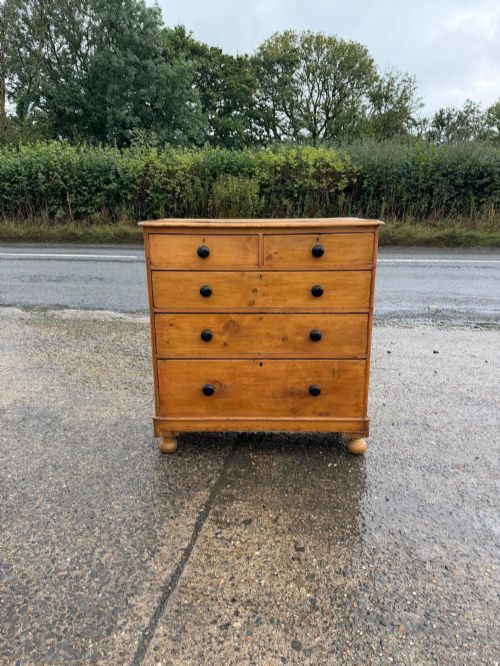
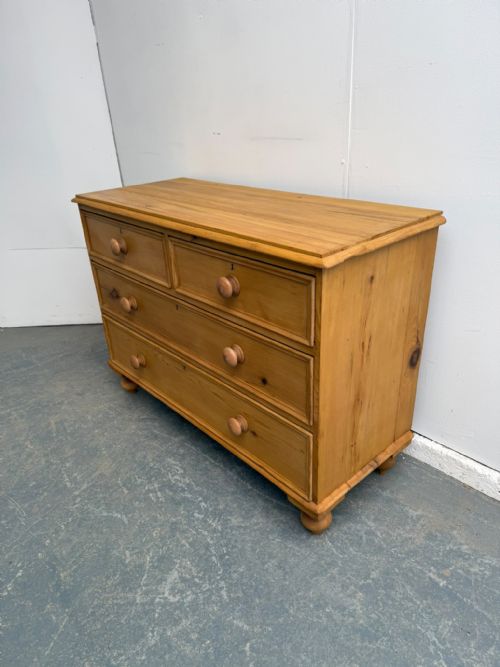
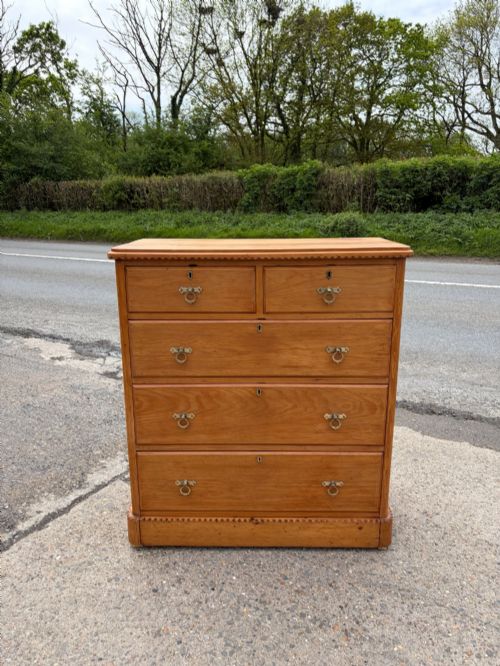
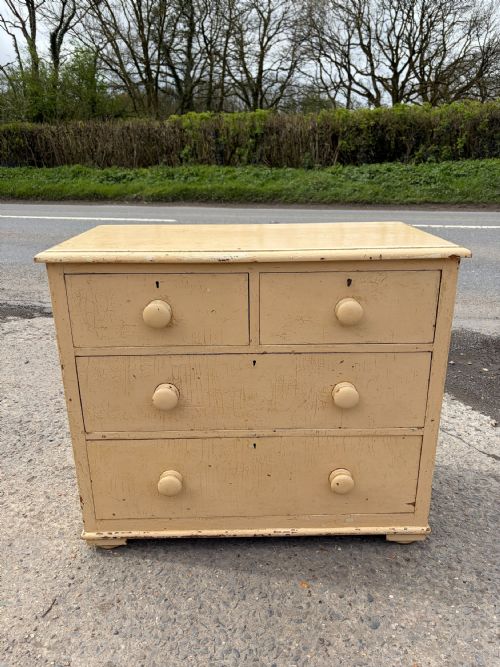
A 2 over 2 pine chest provides compact bedroom storage with a symmetrical drawer arrangement of two small drawers placed over two full-width drawers below. These pieces emerge chiefly from the Victorian and Edwardian eras, carrying the straightforward proportions typical of country and domestic furniture.
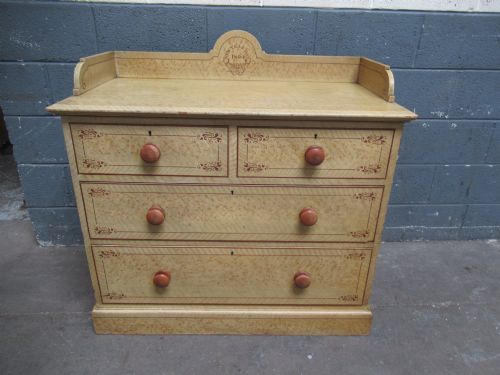
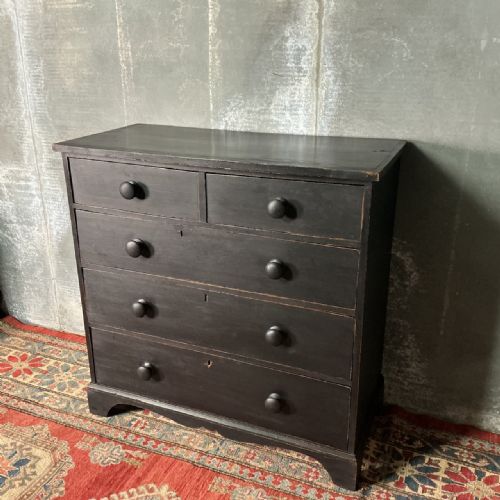
The layout distinguishes itself from taller formats by maintaining a lower profile, often finished with a shaped base or a simple gallery back. Examples appear in various guises, from bare wood surfaces to painted or stencilled finishes that reflect regional English and European traditions.
How they were made
Construction relies primarily on solid pine and pitch pine, shaped into carcases and drawer boxes using traditional joinery. Brass, iron, ceramic, and turned wood handles provide the hardware, while bun handles and porcelain knobs frequently furnish the drawer fronts.
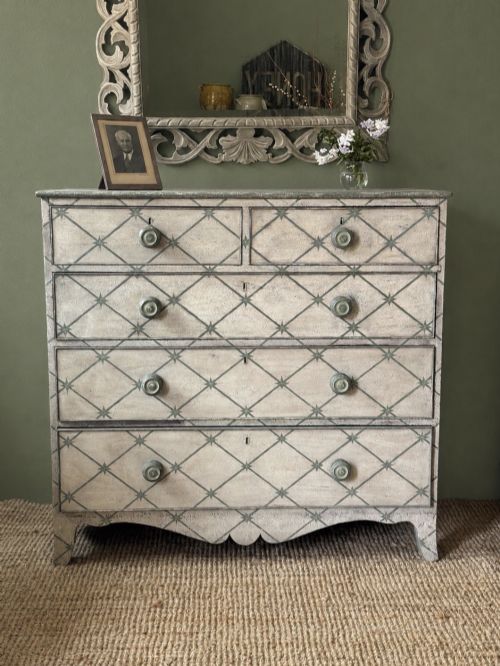
Surface treatments range from wax polishing to original paint, stencilling, and scumbling applied directly to the timber. These finishes preserve the underlying grain or conceal the softwood beneath historic coats of colour.
Some chests arrive bearing the cheerful ghosts of old stencil work, proving that Victorians loved a bit of pattern on their pine.
What varies in quality
Distinction across these chests rests on the integrity of the original surfaces and the retention of period details like bun handles and shaped bases. Scumbled, painted, or stencilled finishes that survive intact carry different qualities compared to pieces that have undergone stripping down to bare wood.
Proportion and timber selection also divide examples, with dense pitch pine and well-figured standard pine exhibiting tighter grain and sturdier carcase construction. The survival of original backboards, drawer linings, and hardware determines the character of each piece.
Howard and Sons
The 2 Over 2 Pine Chest Glossary
- Bun handle
- A small, rounded wooden knob turned on a lathe and fixed to a drawer front. These projections are typical of Victorian chest design.
- Scumbled
- A decorative paint technique involving translucent glazes dragged over a base coat to simulate graining or texture. This finish appears on period pine furniture.
- Pitch pine
- A dense, resinous softwood sourced mainly from North America and utilised for sturdy furniture carcases. It displays pronounced grain patterns.
- Gallery back
- A low wooden upstand attached to the rear top edge of a chest to prevent items from sliding off. Some versions feature shaped or wavy profiles.
- Stencilled
- A decorative method applying patterns through a cut-out template using paint. Surviving examples demonstrate vernacular ornamentation.
2 Over 2 Pine Chest: Frequently Asked Questions
What is a 2 over 2 chest?
A 2 over 2 chest is a set of drawers featuring two smaller drawers positioned above two wider drawers. This specific configuration creates a compact and balanced façade.
Such pieces serve primarily as bedroom storage furniture, offering compartmentalised space for smaller garments up top and deeper storage below.
How do I date a pine chest?
Dating relies on construction methods, hardware types, and overall style indicators like Victorian or Edwardian characteristics. Machine-sawn timber and specific handle styles help narrow the period.
Examining the backboards, drawer construction, and presence of original paint or wax finishes provides further chronological clues.
Are these chests always stripped?
Pine chests appear in both stripped bare wood and original painted or waxed surfaces. Many nineteenth-century examples retain historic paint layers, scumble, or stencilling.
Buyers encounter a mix of unpainted timber and pieces preserving their early decorative coatings.
How do I care for waxed pine?
Waxed pine benefits from occasional application of quality furniture wax to nourish the softwood and maintain the sheen. Avoid placing timber pieces near direct heat sources.
Routine dusting with a dry cloth prevents dirt accumulation on the antique surfaces.