




2 Carat Diamond Ring
A 2 carat diamond ring carries undeniable presence on the hand, combining substantial scale with historical craftsmanship from the early twentieth century onward.
What these rings are
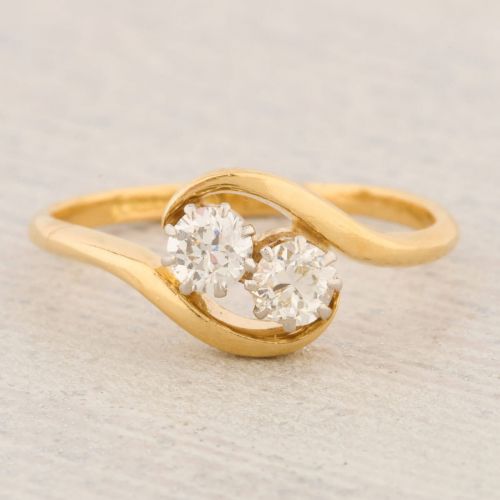
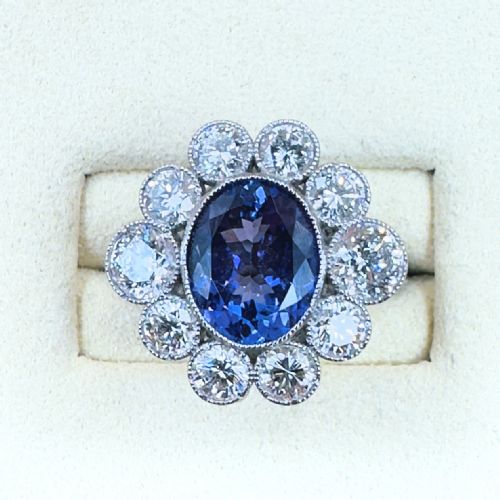
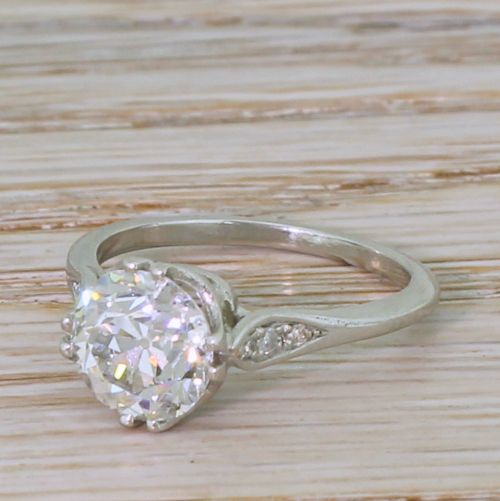
A 2 carat diamond ring brings together significant diamond weight and historical design, spanning periods from the early twentieth century through the mid-century decades. Buyers searching this phrase encounter solitaire rings, five stone arrangements, full eternity bands, and cluster formations originating from the Art Deco and mid-century eras.
The pieces available display distinctive cutting styles including old cuts, old mine cuts, and tapered baguette cuts, mounted in precious metals. Solitaire and multi-stone settings dominate the selection, often attributed to classic fine jewellery styles of the 1920s, 1930s, and 1950s.
How they were made
The materials recorded in these rings combine diamonds with platinum, 18ct white gold, and 18ct yellow gold. Metals are worked to securely house substantial stones through traditional claw, bezel, and channel settings suited to the period.
Gems within these mountings utilise historical cutting techniques such as old cuts and old mine cuts, which yield softer facet patterns than modern brilliant cuts. Artisans matched these stones into platinum or gold frameworks designed to maximise light return and structural integrity.
Retail Price Guide 2026
Typical UK retail prices for 2 carat diamond ring, calculated from the Sellingantiques database of over a million retail prices indexed since 2003. This retail price guide relies exclusively on Sellingantiques data; no external sources or auction records are used, so the figures do not describe the wider market.
Some diamonds carry the quiet charm of an open culet, a tiny flat facet at the base that lets you peer right into the heart of the stone.
What varies in quality
Quality across these rings rests upon the harmony between diamond cut, colour distribution, and the proportion of the setting. Stones displaying older facet arrangements hold individual character, where hand-cutting prioritises internal life and brilliance under low ambient light rather than mathematical symmetry.
The craftsmanship of the mounting itself dictates the overall distinction of the piece, separating standard production from finer goldsmithing. Heavier gauge platinum and gold settings maintain their structural form over decades, framing the central diamonds with balanced proportions.
The 2 Carat Diamond Ring Glossary
- Old cut
- A diamond cutting style prevalent before the advent of modern brilliant cuts, characterised by a smaller table, higher crown, and open culet. These stones project a distinct pattern of light reflection.
- Platinum
- A dense, durable precious metal frequently utilised in fine jewellery manufacture due to its strength in securing diamonds without heavy prongs.
- Solitaire
- A ring featuring a single central gemstone mounted alone on the band, designed to draw focus entirely to the main stone.
- Old mine cut
- An early diamond shape with a cushion outline and deep pavilion, typically found in pieces predating the twentieth century.
Frequently Asked Questions
What periods do these rings come from?
The available selection spans several distinct design eras, most notably the Art Deco period of the 1920s and 1930s alongside mid-century modern styling.
Items date from the early decades of the twentieth century through to the 1960s, reflecting the shifting aesthetic preferences of each decade.
How do old cut diamonds differ from modern ones?
Old cut diamonds are shaped by hand rather than by modern laser precision, resulting in deeper proportions and wider facets.
This historical cutting method produces a softer, more intimate sparkle that performs uniquely under candlelight or low indoor lighting.
Which metals are most common for these mountings?
Platinum and 18ct gold, both white and yellow, form the primary structural foundations for these historical pieces.
Platinum gained widespread favour during the Art Deco era for its strength, while yellow gold appears frequently across both earlier and mid-century designs.