
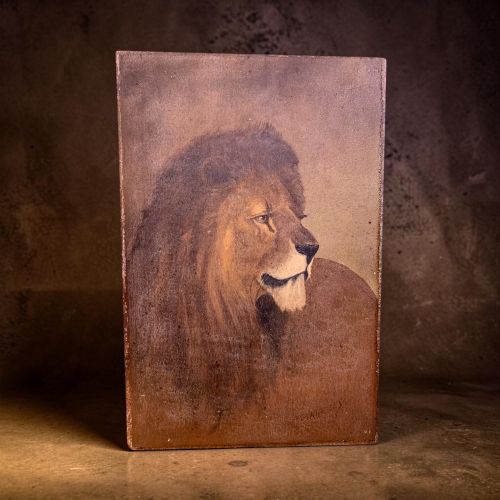


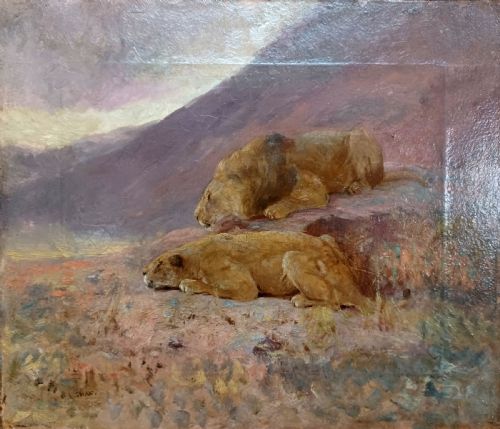


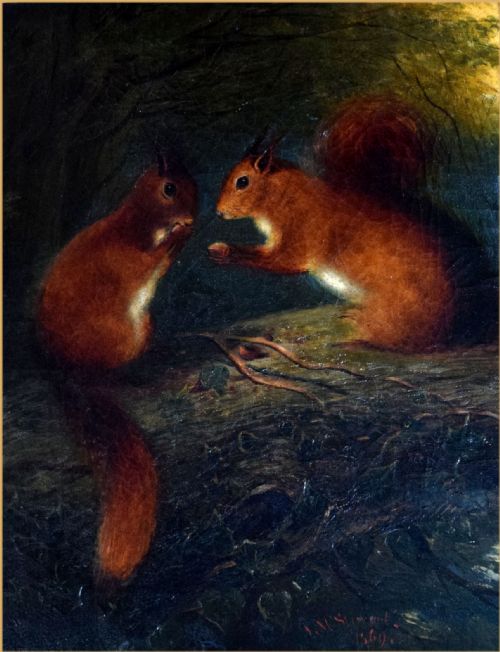
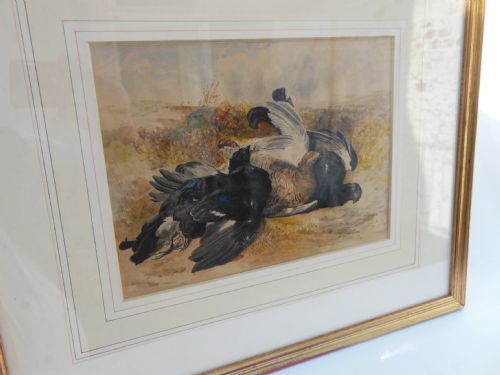
19th Century Wildlife Painting
These nineteenth century wildlife painting examples capture animals and birds in oil, pastel, and watercolour across the Victorian and Edwardian eras.
19th Century Wildlife Painting
A nineteenth century wildlife painting depicts animals, birds, and landscapes with creatures from the Victorian era up to the early twentieth century. Buyers encounter oil paintings on canvas alongside pastels, gouache, and watercolours showing subjects from deer and lions to ducks and squirrels.
The styles range from naive folk art and Victorian animalier to realism and sporting art. Pieces vary from intimate studies of birds to large landscapes featuring stags, bears, and hounds.
Makers and artists of the period include named painters alongside folk artists working in wood or on canvas. The primary focus remains the natural world rendered through nineteenth century artistic conventions.
Materials and methods
Artists of this period primarily used oil paint on canvas or wooden panels, applying pigments to build rich textures for fur, feathers, and natural surroundings. Watercolours and pastels on paper also appear, often paired with gouache for added opacity in detailed bird and landscape studies.
Support structures typically involve wooden stretchers for canvases or gilt frames housing paper works. Carved wooden sculptures occasionally supplement flat paintings within the broader category of nineteenth century animalier art.
Listings feature works executed in oil on canvas, pastel, gouache, and watercolour, alongside carved wood sculptures from the nineteenth century.
Quality variations
The execution of anatomy and natural movement separates standard decorative works from accomplished artistic achievements. Master painters render fur, light, and animal behaviour with convincing realism, whereas naive folk art pieces rely on charm and simplified form.
Materials and framing also influence the overall standard, with original gilt frames and stable canvas conditions preserving the integrity of the painting. The depth of the landscape and the expressiveness of the subject distinguish finer canvases from basic studies.
Joseph Knight·George Armfield·Cuthbert Edmund Swan·Thomas Blinks·Arthur Wardle·Constant Ludovic Artz·Geza Vastagh·William Crampton·James Malcolm Stewart
The 19th Century Wildlife Painting Glossary
- Animalier
- A nineteenth century artistic movement focused on the realistic depiction of animals. Artists in this tradition worked in both painting and sculpture.
- Gouache
- An opaque water-based paint used alongside pastels or watercolours. It provides dense highlights in bird and landscape compositions.
- Naive art
- Artwork created by self-taught artists lacking formal academic training. These pieces exhibit flat perspectives and charming proportions.
- Pastel
- A dry drawing medium composed of powdered pigment and a binder. It creates soft textures suited for atmospheric landscape and wildlife depictions.
19th Century Wildlife Painting: Frequently Asked Questions
What subjects appear in these paintings?
These works feature a diverse range of animals and birds, including lions, deer, bears, foxes, ducks, squirrels, and blue tits. The creatures appear either in focused wildlife studies or within broader countryside landscapes.
Artists captured both domestic wildlife and exotic predators, reflecting Victorian interests in naturalism and sporting art.
How do I care for a nineteenth century oil painting?
Keep paintings away from direct sunlight and fluctuating humidity to protect the canvas and oil pigments. Display them on stable interior walls where temperature changes remain minimal.
Dust the surface gently with a soft, dry brush without applying pressure to the paint layer.
What mediums were used during this period?
Artists worked primarily in oil paint on canvas, which allows for rich blending and deep tones. Watercolours, gouache, and pastels on paper also feature prominently in smaller bird and landscape studies.
Wooden supports and carved wooden forms occasionally appear alongside traditional canvas and paper works.
How can I tell the difference between folk art and academic realism?
Academic realism focuses on accurate animal anatomy, precise lighting, and naturalistic textures created by trained painters. Folk art pieces present simpler forms and flatter perspectives with a direct, unpolished charm.
Both styles date to the nineteenth century but serve different aesthetic preferences in a collection.